







“They wanted to see their children grow up, put them through school and live long enough to bury them.”
These are the chilling words of Berend Jagger, the father of Diana Jagger (29) and Roseltha Higoam (35), the two civilians who died in a suspected head-on crash near Mariental on Saturday.
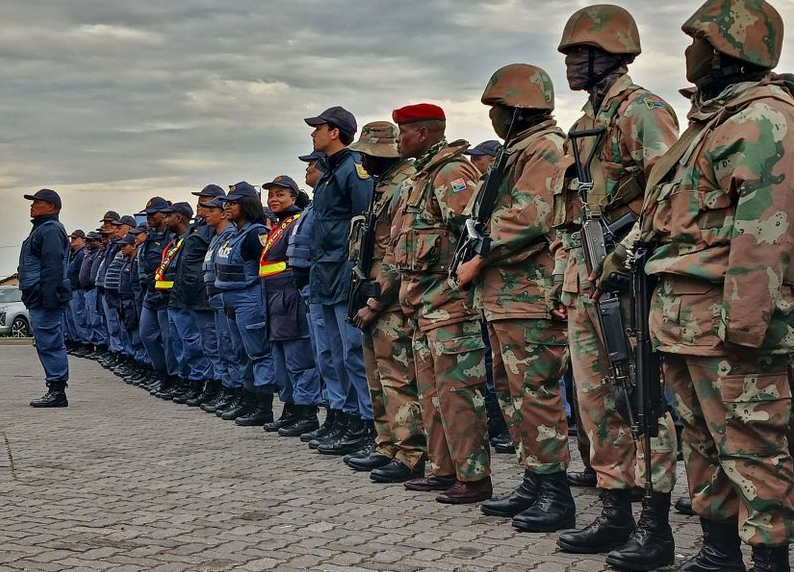
The sisters died in the collision between a Namibian Police van and a Namibian Correctional Service (NCS) vehicle about 10km outside of the town.
They were travelling in the police van.
The accident took the lives of 16 people: 14 police and correctional service officers, and the two sisters.
“Diana was eight months pregnant with twins.
She has five other children – a set of twin boys and girls, and with these two they would have been seven. But the twins did not survive.
“I thought we would still have time to care for one another as a family and to love one another, but that wouldn’t be,” Jager says.
He says receiving the news of the death of his two daughters was devastating.
“When I came home I asked what happened. How can I lose both in the same accident? It hurts me deeply.
“Becoming employed was their biggest dream to give their children a better life,” he says.
He describes Diana as a free-spirited person with a temper.
Roseltha, he says, was a people’s person and a straight-talker.
Esmerelda Higoam, the sisters’ elder sister, says Diana suffered an epileptic attack on Saturday morning, and the family called for an ambulance to come from Mariental to Withuis, 10km outside Mariental.
“There were no drivers and ambulances available, we were informed.
Then the hospital requested assistance from the police at Mariental to come and collect Diana and take her to the hospital. Roseltha accompanied her,” Higoam says.
That was the last time the family saw the two sisters.
The police report says the police van was carrying six passengers, while the correctional service vehicle had 13 occupants.
‘NEVER SAFE’
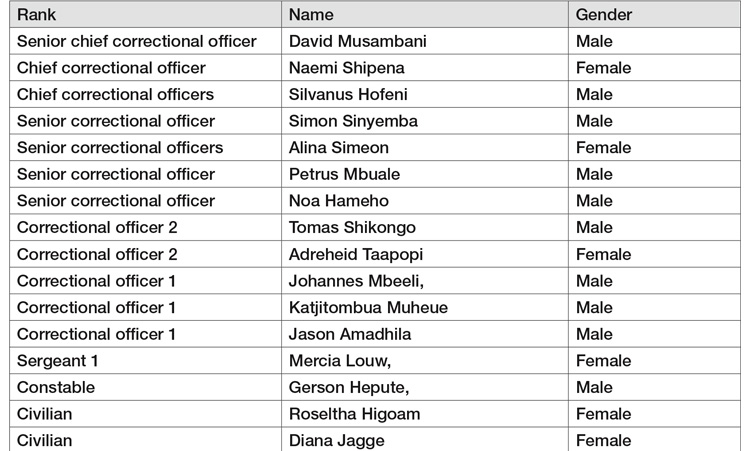
Aniita Taapopi, the sister of Adreheid Taapopi (51) of the NCS, who also died in the crash, says her sister always complained about their transport to work.
“I never feel safe in that transport,” Adreheid would say.
Taapopi says Adreheid often told her the vehicle was overloaded.
“It’s a small car,” she would say, according to Taapopi.
“But I think her boss was not listening to them,” she says.
She says Saturday was not Adreheid’s day to go to work, but that a colleague exchanged shifts with her.
“Perhaps it was just her day to die, as they say.”
Taapopi was 51 years old and had five children.