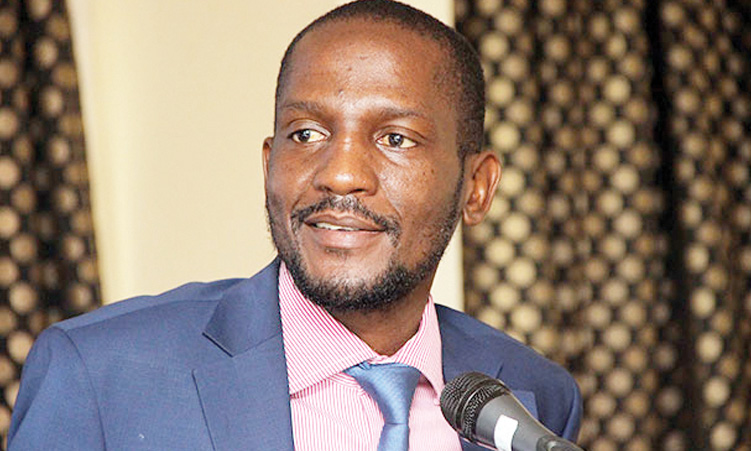
THE pace at which informal settlements continue to grow puts a service delivery burden on local authorities, says Samuel !Oe-Amseb, the president of the Association for Local Authorities in Namibia (Alan).
!Oe-Amseb says the annual operational budgets of local authorities do not meet the demand for electricity, street lights, rubbish removal, and the provision of sanitation and drinking water in informal areas.
“At many towns informal settlement residents don’t pay for services, but local authorities are responsible for all basic services, and to maintain such infrastructure,” he says.
!Oe-Amseb calls on NamWater, regional electricity distributors (REDs) and local authorities to jointly find mechanisms and strategies on how best to jointly deliver these services to informal settlements cost-effectively.
“REDs and NamWater should also consider writing off the outstanding debts of local authorities on a case-by-case basis to enable local authorities to have funds to do more in terms of basic needs,” he says.
Namibia is one of the countries in southern Africa where informal settlements are fast growing.
A 2018 equity model presentation by the Namibian Chamber of Environment shows that about 12 000 new informal homes are built each year in the country.
The report says Namibia will have more shacks than brick houses by 2025, while 79% of Namibian homes will be in urban areas and 46% of Namibian families will be living in shacks by 2030.
According to African non-profit organisation Institute for Security Studies, informal settlements will likely remain a feature of urban areas for many years, and, as such, local action framed by progressive national policy is needed to guide sustainable ‘less-regulated’ urbanisation.
AFFORDABLE HOUSING SCHEME
!Oe-Amseb was speaking at Alan’s first-ever land and housing strategic seminar on Monday.
He further called for the introduction of a national affordable housing scheme to address the housing shortage and to eliminate informal settlements.
He said such a scheme should allocate housing funds to local authorities annually to build resident standard houses.
“All those who benefit from the scheme should pay back directly to the national affordable housing scheme account for the fund to generate funds to assist the next beneficiaries,” !Oe-Amseb said.
To support the fund, all employed Namibians and politicians should contribute 1% of their basic salary to the scheme once a year, !Oe-Amseb recommended.
He said the cost of urban land requires local authorities to rethink making it affordable.
“The long and cumbersome bureaucratic laws, processes and policies for land management must be eliminated and streamlined. We must explore the available options and opportunities for technology to help local authorities find the best and most practical cost-effective housing models,” !Oe-Amseb said.
HOUSING BACKLOG
Meanwhile, minister of urban and rural development Erastus Uutoni, who also spoke at the seminar, said the country’s housing backlog of 300 000 housing units is mostly felt by low-income earners.
“It is no secret that 70% of this backlog is in the lowest income categories (income below N$1 500), which cannot access credit from financial institutions,” Uutoni said.
He said the government’s efforts in land and housing are being constrained by factors such as high input costs for land and housing development, and limited housing financing facilities – especially for low- to middle-income groups. Efforts are also being made at many local authorities to accelerate tenure security at informal settlements.
These include the issuance of certificates of acknowledgement of land occupation, while the formal processes of land ownership registration and transfers are underway, Uutoni said.
Since its inception in 2014, the mass housing programme has managed to complete and hand over 4 130 housing units to various local authorities and regions.
In an age of information overload, Sunrise is The Namibian’s morning briefing, delivered at 6h00 from Monday to Friday. It offers a curated rundown of the most important stories from the past 24 hours – occasionally with a light, witty touch. It’s an essential way to stay informed. Subscribe and join our newsletter community.

The Namibian uses AI tools to assist with improved quality, accuracy and efficiency, while maintaining editorial oversight and journalistic integrity.
Stay informed with The Namibian – your source for credible journalism. Get in-depth reporting and opinions for
only N$85 a month. Invest in journalism, invest in democracy –
Subscribe Now!