



A large number of emerging commercial farmers are facing challenges in servicing their loans, mainly with the Agricultural Bank of Namibia (Agribank). This is due to the impact of drought on their operations.
This was said by the executive manager of the Namibia Emerging Commercial Farmers’ Union (NECFU), Daniel Mahua, last Monday.
He was reacting to reports that Agribank had incurred a N$16.7-million loss for the year ending 31 March 2024 due to non-payment of loans by farmers badly impacted by drought.
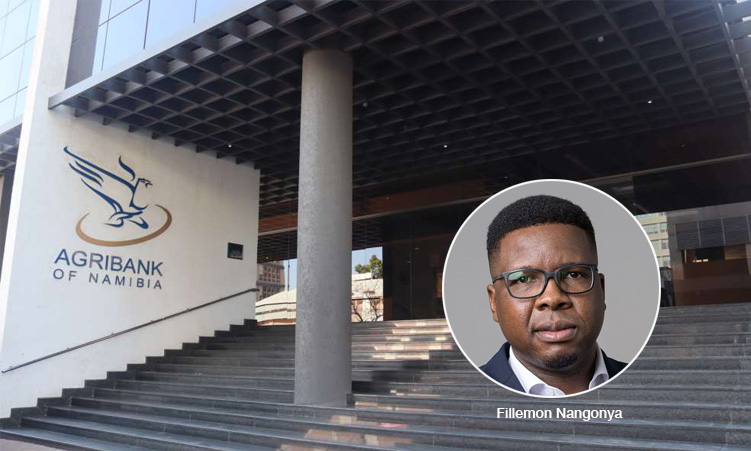
Although the bank’s spokesperson, Fillemon Nangonya, says the amount owed was far less than N$1 billion, he could not divulge the exact figure, which has been put at around N$500 million over the past five years.
Mahua said when emerging farmers signed 25-year loan agreements with Agribank, they did not consider the effect of climate change, which has devastated their farming operations through droughts.
“Most of our members who took Agribank loans under the Affirmative Action Loan Scheme are facing challenges servicing them because recurrent droughts have decimated their livestock herds and forced them to sell cattle at low prices, then fail to restock adequately when rains start, as cattle prices shoot up,” he said.
“This threatens to reverse the land reform programme because some have farms repossessed by the bank and sold to people with the money – usually the previously advantaged,” he said.
Mahua said the affirmative land reform programme should have been put under the Ministry of Agriculture, Water and Land Reform so the government could help the new farmers to transition to successful farming, as was the case in South Africa and even in then-South West Africa.
“The ministry orphaned the programme to the bank which, as a financial institution, has to operate under the rules governing banks,” he said.
Agribank has threatened to take legal action against defaulting farmers, including blacklisting them.
Mahua added that the government’s drought relief incentives were usually distributed too late to be of any help in sustaining the remaining herd.
He said the NECFU does not have means to help farmers with their loans, but gives advice on when best to sell livestock to service loans.
A number of schemes have been implemented over the years by the NECFU, the Namibia Agricultural Union (NAU), and the private sector to assist farmers survive the drought years.
This includes the ‘Dare to Care’ campaign under which communal, emerging and commercial farmers in distress across the country were assisted.
NAU executive manager Roelie Venter says farmers have experienced enormous financial pressure over the past few seasons due to drought and some were struggling with servicing loans, mainly with Agribank.
He declined to give more details because of confidentiality reasons.
“The costs of production have gone up by about 51% for the livestock farmer in consecutive droughts while the producer prices for weaners dropped by 10% since Dec 2017,” says the veteran farmer.
Venter adds that some areas of the country had not received rains this year and farmers are having to sell head of cattle and small stock at low prices but they will need more money, to rebuild their herds.
He says besides giving farmers up-to-date macro-economic information on which to base their decisions, the union also continuously engages Agribank and commercial banks on the financial challenges farmers experience in these difficult times.
He adds that while NAU is grateful for the help the government and the Bank of Namibia (BoN) extended to farmers to ensure their survival, its members are not out of the woods yet.
After president Nangolo Mbumba declared a state of emergency on 22 May 2024, following the worst drought the country has experienced in 100 years, the government made a N$825-million provision to assist drought-stricken communities during the 2024/25 season.
Under the scheme, the agriculture ministry provided a maximum subsidy of N$750 per large stock unit (head of cattle) to a maximum of 75 head of cattle and N$150 per small stock unit (goat and sheep) to a maximum of 375 units.
The maximum subsidy per farmer under the Marketing Incentive Scheme, to run from 1 April 2024 to 31 March 2025, was N$56 250.
BoN announced drought relief measures to assist farmers and agriculture business owners in the face of the crippling drought. These measures will be in force until October 2026.
“Banking institutions are required to implement relief measures, including the restructuring of loans, granting of loan moratoriums and emergency funding under preferential terms.
“This will ease the financial burden on affected clients while helping to stabilise the agricultural sector amid the persistent drought,” said BoN spokesperson Kazembire Zemburuka when he announced the relief measures in October last year.
– email: matthew@namibian.com.na