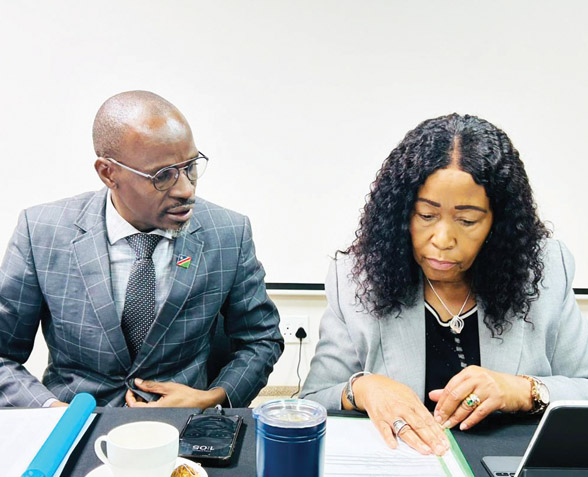



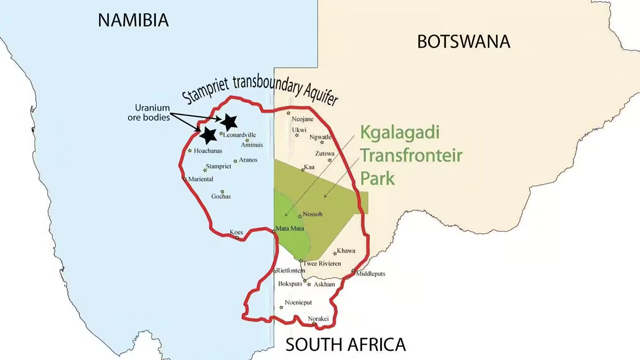
Two Cabinet ministers are on opposing sides of proposed uranium mining many fear would poison one of Namibia’s largest underground water systems.
Minister of agriculture, fisheries, water and land reform Inge Zaamwani-Kamwi says these mining projects remain on hold, while deputy prime minister and minister of industries, mines and energy Natangue Ithete has insisted the projects have been given the go-ahead by a parliamentary committee.
What is in-situ leaching?
In-situ leaching (ISL), also known as in-situ recovery (ISR) or solution mining, is a method of extracting minerals from underground deposits without traditional mining techniques.
This process is particularly used for minerals such as uranium, copper, and certain soluble salts.
HOW IN-SITU LEACHING WORKS
Initial steps:
Drilling: The process begins with the drilling of boreholes into the ore deposit. These boreholes allow access to the mineral resources located underground.
Fracturing: To enhance permeability and facilitate the flow of the leaching solution, techniques such as hydraulic fracturing may be employed. This creates pathways within the ore body.
Injection of lixiviant: A chemical solution, known as a lixiviant, is injected into the ore body through an injection well.
The composition of this solution varies based on the type of mineral being extracted.
For uranium, solutions often include acids or sodium bicarbonate. For copper, sulphuric acid is commonly used.
LEACHING PROCESS
Dissolution: The lixiviant solution circulates through the porous rock, dissolving the target minerals into a liquid form.
This process effectively extracts metals from their solid state without disturbing the surrounding environment.
Recovery: The solution containing dissolved minerals is then pumped back to the surface through extraction wells.
At the surface, this solution is processed to recover the desired metal.
THE ENVIRONMENT
ISL is often regarded as a more environmentally friendly alternative to conventional mining methods. It minimises surface disturbance and reduces waste generation, such as tailings and dust.
Monitoring wells are typically installed around the mining area to ensure groundwater remains uncontaminated during the leaching process.
APPLICATIONS AND LIMITATIONS
In-situ leaching is primarily used for:
Uranium mining: Approximately 48% of global uranium production uses ISL due to its effectiveness in extracting this mineral from deep deposits.
Copper mining: Historically practised since ancient times, ISL for copper has evolved with modern techniques like solvent extraction and electro-winning for recovery.
Soluble salts:
ISL is also effective for extracting evaporite minerals like potash and halite.
However, ISL has limitations. It requires specific geological conditions such as permeable rock formations and must be conducted below the water table to prevent contamination of groundwater sources.
Additionally, not all minerals are suitable for this method due to solubility constraints.
In summary, in-situ leaching represents a significant advancement in mining technology, offering a less invasive approach to mineral extraction while addressing some environmental concerns associated with traditional mining practices.
– Mining.doc is a United Kingdom-based research company for the mining industry.
In an age of information overload, Sunrise is The Namibian’s morning briefing, delivered at 6h00 from Monday to Friday. It offers a curated rundown of the most important stories from the past 24 hours – occasionally with a light, witty touch. It’s an essential way to stay informed. Subscribe and join our newsletter community.

The Namibian uses AI tools to assist with improved quality, accuracy and efficiency, while maintaining editorial oversight and journalistic integrity.
Stay informed with The Namibian – your source for credible journalism. Get in-depth reporting and opinions for
only N$85 a month. Invest in journalism, invest in democracy –
Subscribe Now!