





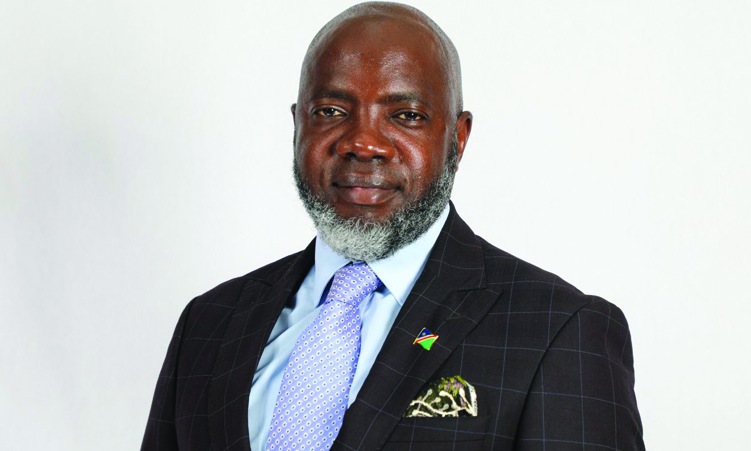
This week’s reshuffle of various ministries’ executive directors (EDs) has sparked concern over governance stability, staff morale, and a lack of transparency in government decision-making.
A political analyst has described the move as demoralising public servants as it could leave questions about whether they have committed any wrongdoing.
Some of the transferred EDs were appointed as recently as 1 April to their former positions, and were therefore only in office for three months.
Political analyst Erika Thomas says: “In terms of governance, the reshuffle does not send out a positive message at all. These are public servants who were appointed not long ago, and now they are suddenly being shifted to other ministries.
“This will demoralise them, because it cripples their confidence. They are not even used to the new ministry, and if they go to another ministry, they must start all over again.
“Those who were looking up to them will also be affected.”
This comes after prime minister Elijah Ngurare yesterday announced the transfer of the EDs of various ministries, effective from 1 August.
ED of industries, mines and energy Ben Nangombe was transferred to the Office of the Prime Minister without accounting functions.
He is replaced by Moses Pakote, who served as the executive director in the president’s office.
ED of information and communication technology Audrin Mathe has been transferred to the Ministry of Justice and Labour Relations, replacing Nghindinua Daniel, who will replace retiring ED of home affairs, immigration, safety and security Etienne Maritz.
An acting executive director is set to be appointed soon to take up Mathe’s vacant post.
Erastus Haitengela will be the ED of education, innovation, youth, sport, arts and culture with accounting powers, with Gerard Vries being the ED of sport, youth and national service – also with accounting powers.
Ndiyakupi Nghituwamata will be the ED of agriculture and land reform, while Teofilus Nghitila will be the ED of water and marine resources.
Both have accounting officer powers.
‘DESTABILISING MINISTRIES’
Thomas, however, says a reshuffle without letting people “settle in and cement their ideas” would only destabilise ministries as ongoing projects would be affected.
“These people come with their ideas and need to be allowed to do so, but with these changes, how can they do that? I think this change is not justifiable – especially when the reasons are also not given,” she says.
She says public servants’ trust in these individuals would be shaken, and a new ED may suffer hostility.
Planned service delivery by the outgoing EDs and reforms could also get disrupted, Thomas says.
‘NO RIFT’
Mathe yesterday refuted rumours of a rift between him and minister of information and communication technology Emma Theofelus.
“Absolutly not,” he said.
Sources claim the reshuffle was due to some EDs being probed on alleged corrupt tenders.
Questions sent to the Anti-Corruption Commission to confirm this were not answered at the time of going to print yesterday.
Office of the Prime Minister spokesperson Rhingo Mutambo yesterday said the reshuffle was a “continuation adjustment of the eighth administration”.
Public policy analyst Marius Kudumo believes the changes could have a negative or positive impact on government systems.
“What is it that we didn’t see when we appointed them, that we are now seeing in the space of a short time?” he asks.
Kudumo says consistent reshuffling, if the grounds are not properly explained, could destabilise government systems.
For example, EDs’ personalities should match their ministries, he says, adding that if they lack knowledge of a particular ministry, the system would fail.
Kudumo also highlighted the relationship between a minister and an ED, citing that there have been instances where the parties did not see eye to eye.
This could have a negative impact on ministry staff and functions.
“We have set the sixth National Development Plan. So the ideal is to assign EDs who are knowledgeable about the functions they are assigned to. Constant changes destabilise operational systems,” he says.
Mathe yesterday took to social media to bid his ministry farewell.
He says his tenure draws to a close on 31 July.
“I am called upon to embrace new challenges that await me. Throughout my time as the administrative head of this remarkable ministry, I have had the privilege of working alongside some of the most dedicated and talented professionals in our field,” he says.
Mathe says the commitment, expertise and unwavering dedication of each ministry staff member have been inspiring.
“As I prepare to answer the call to service elsewhere, I do so with confidence in the strength of this institution and the exceptional team that will continue to carry forward our vital mission. The foundation we have built together is solid, and I have no doubt that the ministry will continue to thrive and make a lasting difference in the world,” he says.