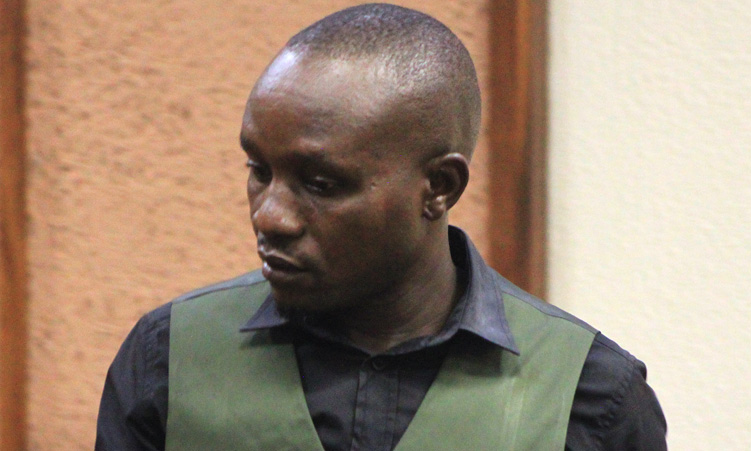




Former South West Africa Territorial Force (SWATF) members have threatened to take the government to the International Court of Justice (ICJ) for ignoring their request to get official veteran status.
SWATF soldiers have since independence been seeking war veteran status, with no success.
Furthermore, the former apartheid soldiers also demand that the government pay them their share of the N$36 million severance package the South African government paid at independence.
One of the SWATF’s executive members, Benjamin Strauss, last week said the government has neglected them for the past 35 years.
He said they did not join the SWATF willingly, but were forced to do so by the apartheid regime.
“The country had adopted the reconciliation policy at independence, however, it seems that does not apply to us.
Instead, we are being labelled as murderers by young children in the parliament.
Why can the People’s Liberation Army of Namibia (Plan) fighters enjoy the veteran status, or do we not have the same rights as them as provided for in the Constitution?
“The government has not even paid out our money that was given by the South African government. However, Plan fighters have been paid out,” he said.
Strauss said they have sent their concerns to the new administration, and hope that president Netumbo Nandi-Ndaitwah will give them a favourable response.
He said their next letter will be addressed to the Office of the Ombudsman.
“If neither respond positively to our plight, we will have done everything possible domestically.
It would leave us with no choice but to take it up with the ICJ. It’s been too long for the Namibian government to ignore our plight,” he said.
Political analyst Ndumba Kamwanyah says the SWATF veterans have a valid point when it comes to being included in Namibia’s reconciliation efforts.
Just like former fighters from both sides were integrated into the current Namibian Defence Force, the same principle should apply to former SWATF members when considering who qualifies as a veteran.
“Their situation deserves attention, and the government should listen and consider addressing their concerns through the national framework, rather than letting it escalate further,” he says.
On involving the ICJ, Kamwanyah says he strongly believes the court would not accept the case because it mainly deals with disputes between states, not individuals or groups.
Questions sent to the executive director of information and communication technology, Audrin Mathe, went unanswered yesterday.
In an age of information overload, Sunrise is The Namibian’s morning briefing, delivered at 6h00 from Monday to Friday. It offers a curated rundown of the most important stories from the past 24 hours – occasionally with a light, witty touch. It’s an essential way to stay informed. Subscribe and join our newsletter community.

The Namibian uses AI tools to assist with improved quality, accuracy and efficiency, while maintaining editorial oversight and journalistic integrity.
Stay informed with The Namibian – your source for credible journalism. Get in-depth reporting and opinions for
only N$85 a month. Invest in journalism, invest in democracy –
Subscribe Now!