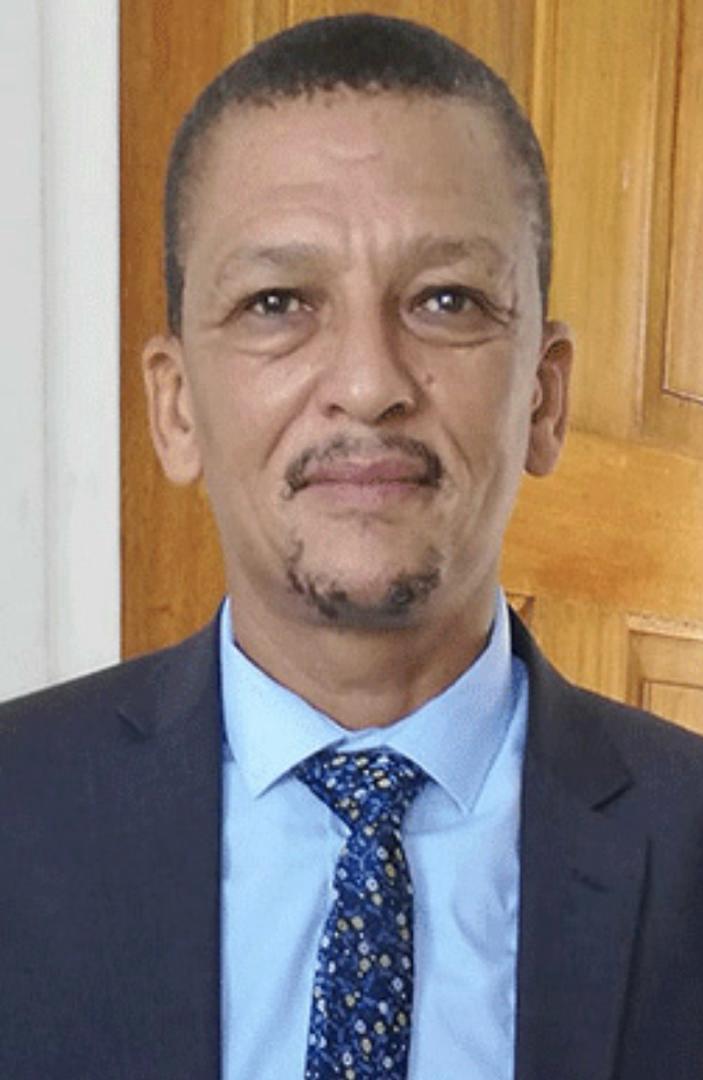





By Esperance Luvindao, member of parliament and minister of health and social services. Windhoek Central Hospital. Tuesday, 3 February, 2026.
___________________________________________________________
Good morning.
What a significant and joyous moment it is that I stand before you to accept the generous donation from the Ohlthaver & List Group of Companies. This profoundly generous donation is dedicated to the fight against cancer, one of the leading causes of death in our country.
As I am meeting many of you for the first time this year, allow me to wish you a productive and successful 2026. I trust that this year will be marked not only by hard, innovative work and achievements, but also by moments of joy, encouragement and shared purpose, like the event we are witnessing today.
Our gathering today takes place on the eve of 4 February 2026, International Cancer Day. This global commemoration provides us with a window of opportunity to reaffirm our strategic priorities on cancer, both at the global level and, more importantly, nationally. It also offers a platform to communicate our broader vision for strengthening our national healthcare system.
I wish to express my sincere appreciation to all healthcare professionals in both the public and private sectors for your dedication over the past 12 months. During this period, Namibia continued to face significant public health challenges, including outbreaks of cholera, Crimean-Congo haemorrhagic fever, Mpox, measles and malaria. I am pleased that, as a ministry and as a nation, we implemented the necessary response measures to bring these outbreaks under control. These experiences reaffirm the importance of strong primary healthcare systems, surveillance and rapid response mechanisms.
Today, however, my focus is on the fight against cancer. Cancer is characterised by uncontrolled cell growth and spread. It is a growing global public health challenge and is the second leading cause of premature death worldwide, defined as death before the age of 70. In 2022 and 2023, approximately 20 million new cancer cases were diagnosed globally, and an estimated 10 million people died from the disease. A disproportionate number of these deaths occur in Africa, largely due to limited access to early diagnosis and timely, effective treatment.
The scale and types of cancer vary significantly across countries. These differences are driven by variations in risk factors, healthcare infrastructure, availability of preventive services and access to treatment. Key risk factors include tobacco and alcohol use, unhealthy diets, physical inactivity and unhealthy body weight, all of which contribute to increasing cancer incidence.
At the centre of the ministry’s strategy is the development of a comprehensive National Cancer Control Programme, which is now focused on developing the strategy by June 2026.
In addition, this week we expect to receive the International Atomic Energy Agency and World Health Organisation ImPACT Mission, the Integrated Mission of the Programme of Action for Cancer Therapy, to support Namibia in strengthening comprehensive cancer control capacities. This mission, which will also include the International Agency for Research on Cancer, is in response to Namibia’s request to the International Atomic Energy Agency for a targeted mission to provide an evidence-based assessment to guide our response to the growing cancer burden in the country.
The most effective approach to reducing cancer incidence and mortality in Namibia, and globally, is through strengthened awareness, prevention and early detection. We must double our efforts in cancer prevention through dietary education, promotion of physical activity and healthy lifestyle choices. Equally important is the expansion of screening programmes for breast cancer, prostate cancer, cervical cancer, colorectal cancer and other cancers.
Our strategic objective is to build a system that enables detection of cancer at stage one or earlier, rather than at stages three and four, where treatment options are limited and care is often largely palliative. Early detection is not only lifesaving, but also more cost-effective for the health system.
Currently, Namibia has seven specialist oncologists, of whom six are in the private sector and only one in the public sector. This is clearly inadequate to meet national demand and to support early detection and timely initiation of treatment. I am, however, encouraged that four specialist oncologists are currently in training abroad, three of whom are earmarked for Oshakati Intermediate Hospital to strengthen capacity in the densely populated northern regions.
In the interim, we continue to benefit from retired specialists on flexible contracts to support service delivery, as well as procuring services from the private sector where appropriate. This is the approach we take to alleviate pressure on our Cobalt-60 machine. While this support is valuable, it is not sufficient to help us fully address the shortage of specialists or to achieve our strategic targets for reduced waiting times.
This year, the ministry will prioritise progress towards establishing oncology services in Oshakati as part of our broader strategy to decentralise and expand access to cancer care and reduce long waiting times for cancer treatment to a maximum of six weeks. Priority attention will also be devoted to developing radiotherapy capacity and procuring a new brachytherapy machine for the treatment of cervical cancer. We will also ensure the availability of essential chemotherapy medicines, as well as nuclear medicine and molecular imaging technologies.
Fighting cancer is a national priority. Our response must be decisive, coordinated and sustained. Private sector support, such as what we are witnessing today, is a welcome injection in our ability to respond adequately and timeously to the cancer burden.
The people of Namibia expect us to act with urgency, accountability and with results. The ministry is fully committed to ensuring that cancer prevention, early detection and treatment remain at the forefront of our health sector reforms and investments.
It is in this context that I stand to accept the donation by the Ohlthaver & List Group of Companies to support our efforts to fight cancer in Namibia. In the same vein, I wish to call upon other corporate citizens to join us in this effort. Rest assured that this generous donation will be utilised for its intended purpose. On behalf of the Ministry of Health and Social Services, it is now my pleasure and profound honour to accept this well-intended donation.
Thank you.
In an age of information overload, Sunrise is The Namibian’s morning briefing, delivered at 6h00 from Monday to Friday. It offers a curated rundown of the most important stories from the past 24 hours – occasionally with a light, witty touch. It’s an essential way to stay informed. Subscribe and join our newsletter community.

The Namibian uses AI tools to assist with improved quality, accuracy and efficiency, while maintaining editorial oversight and journalistic integrity.
Stay informed with The Namibian – your source for credible journalism. Get in-depth reporting and opinions for
only N$85 a month. Invest in journalism, invest in democracy –
Subscribe Now!