


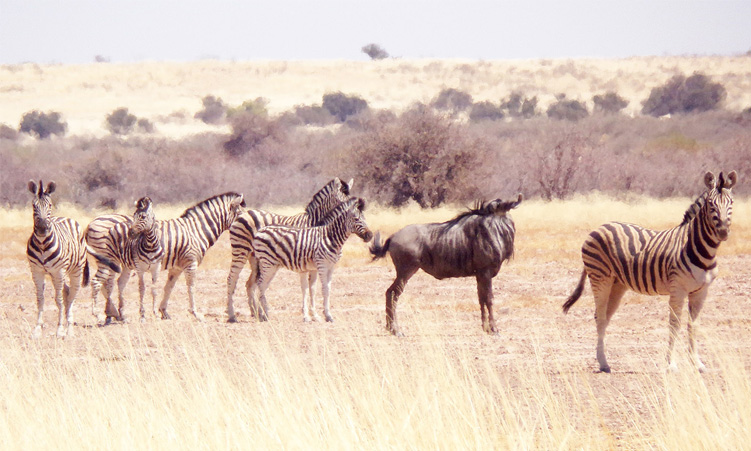
Over the past few years, Namibia has experienced a gradual increase in wildlife crime related to high-value species, as well as other species, including protected succulent plants.
Among all species in Namibia, pangolins remain the most highly trafficked, statistics have shown.
Despite many strategic interventions implemented by law enforcement, wildlife crime trends remain worryingly high. Every bit of intervention has, therefore, become necessary to support the fight against wildlife crime in Namibia.
Around the world, artificial intelligence (AI) is revolutionising a variety of industries, including wildlife law enforcement.
Traditional enforcement techniques alone are no longer adequate as habitat destruction, illegal wildlife trade, and poaching increase. As a result, governments and conservation organisations are beginning to incorporate AI into their operations.
This shift is a vital step in conserving biodiversity and safeguarding endangered species.
AI is a vital tool in crime prevention because it can process large data sets more quickly and accurately than humans. Predictive analytics, for instance, can be used to identify poaching hotspots by examining trends in historical data, environmental factors, and patrol routes.
Law enforcement can then manage resources more effectively, anticipate threats, and take action before crimes are committed.
Such forecasting models have the potential to transform patrol planning and intervention strategies in Namibia, where monitoring is often hindered by vast and inaccessible terrain.
Additionally, drone footage and camera trap images are scanned using AI-powered image recognition software to detect criminal activities or suspicious objects.
Over time, these systems become more accurate in distinguishing between human incursions and the natural movement of wildlife.
Big thanks to machine learning! In the digital era of wildlife crime, Namibia is also seeing a rise in the sale of illegal wildlife products – something AI systems can detect by analysing social media and online marketplaces.
Integrating AI with mobile technology and existing geospatial mapping systems is crucial in the Namibian context to further enhance enforcement.
Rangers and police officers equipped with AI-assisted tools can upload field data directly to centralised systems, consult digital species databases, and receive real-time alerts.
This speeds up response times and facilitates the collection of evidence for court cases.
AI holds great potential, but its adoption in Namibia must be guided by ethical principles and local capacity building. AI should complement and not replace human capabilities and local expertise.
Success depends on ensuring that rangers, police officers, and other law-enforcement partners are trained and actively involved in the development of AI systems.
In conclusion, using AI in wildlife law enforcement in Namibia could open new opportunities to tackle sophisticated poaching networks and protect our precious natural ecosystems.
Adopting it may lead to a more secure future for wildlife.
But the fundamental question remains: are we ready to invest in AI?
– Ruben Angala
In an age of information overload, Sunrise is The Namibian’s morning briefing, delivered at 6h00 from Monday to Friday. It offers a curated rundown of the most important stories from the past 24 hours – occasionally with a light, witty touch. It’s an essential way to stay informed. Subscribe and join our newsletter community.

The Namibian uses AI tools to assist with improved quality, accuracy and efficiency, while maintaining editorial oversight and journalistic integrity.
Stay informed with The Namibian – your source for credible journalism. Get in-depth reporting and opinions for
only N$85 a month. Invest in journalism, invest in democracy –
Subscribe Now!