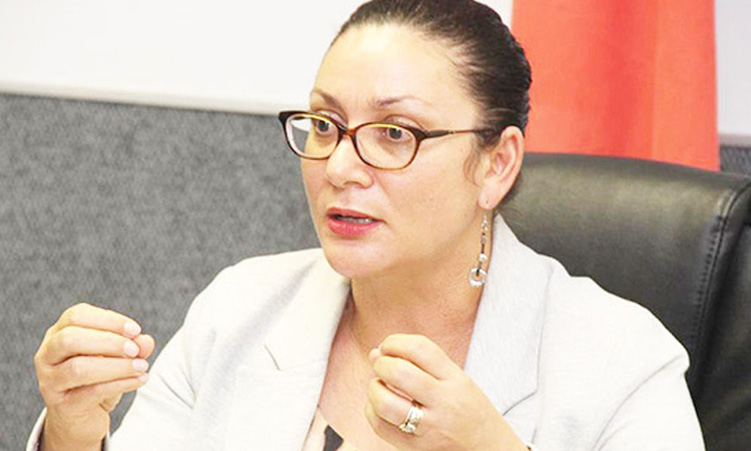
DAISRY MATHIAS DEMOGRAPHICALLY, the median age in Namibia is 21. This youth bulge and demographic transition present an opportunity to adapt the political profile of the country to become more representative.
Namibia has scored important successes in terms of youth political participation, ranked among the top 10 countries in the world (ninth out of 183 countries) with a score of 0.881 by the Commonwealth Youth Development Index.
During his term, president Hage Geingob has maintained the pipeline of political appointments from the Swapo Party structures. In 2016, Swapo Party Youth League’s (SPYL) Paula Kooper and Veikko Nekundi were appointed to parliament on the president’s list of eight nominees. In 2019, three youthful cadres were appointed as governors for the Kunene, Erongo and Otjozondjupa regions in the persons of Marius Sheya, Neville Andre Itope and James Uerikua. In January 2020, SPYL secretary Ephraim Nekongo was sworn in as a member of parliament, albeit only until the lapse of the 6th Parliament on 20 March 2020.
Moreover, in December 2020, to strategically position young Namibians at the helm of Namibia’s international relations and cooperation, President Geingob appointed the youthful Julia Chanduru-Imene, Elvis Shiweda and Mekondjo Kaapanda-Girnus as ambassadors to Switzerland, Senegal and Belguim respectively. Not to omit my own appointment, on 29 June 2015, I joined the president’s team of advisers. This innovation was benchmarked as a governance best practice, later emulated by the African Union through the appointment of a special youth envoy.
The appointment of 22-year-old law graduate Patience Masua to parliament on 22 April 2021 by the president, comes a little over a year after the historic appointment of Emma Theofelus to parliament and as deputy minister of information and communication technology. These cases affirm the president’s commitment to creating pathways for more young Namibians to enter national structures of governance and decision-making processes.
These appointments ensure representation of a vast demographic segment and underscore the president’s commitment to inclusivity as a cardinal principle. By appointing a dynamic cohort into the legislature and executive organs of state, three tiers of government and multilateral fora, the president is delivering not only on the wishes of the Namibian people, but also granting exposure while infusing national institutions with the innovation, energy and inspiration of young participants.
The SPYL provides a formidable platform for the progression of young party cadres into the body politic and decision-making structures of the mother body. SPYL leaders are elected through congress and further contest to make it onto the party list for parliament.
As head of Swapo, the president is authorised to nominate 10 people from the rank and file to the party list, including women, youth and elders. This practice has always been the intentional capacity building of young cadres for the purposes of succession planning and instilling Swapo values into their consciousness. Youth leaders who show potential are filtered through the system. The incumbent prime minister is testament to this, while ministers Peya Mushelenga, Pohamba Shifeta, Albert Kawana have risen through the ranks to full ministerial portfolios; while among others Natangwe Ithete, Kornelia Shilunga, Veno Kauaria and Heather Sibungo progressed to become MPs and deputy ministers.
As head of state, the president is the champion of the national reconciliation and nation-building project. To this end, his list of eight parliamentary nominees is reserved for the inclusion of critical skills and demographics, not limited to political affiliation.
The appointment of Masua, a student leader and Swapo member of Tswana and Coloured descent, sparked debate on the perceived exclusion of youth leaders serving in party structures. Such a narrative is not only a weak attempt to delegitimise the contributions and allegiance of others, it also fails to capture the essence of the president’s intent – which is to build an inclusive, united and prosperous Namibian House.
We must guard against perpetuating a culture of “politicism” where politics is the hegemonic driver of development, at the expense of multidisciplinary leadership. Drawing distinction between political patronage and merit is a false option as both are essential. Let us not harbour resentment but rather embrace the values of resilience, hard work, discipline and remain focused on public service delivery.
The premium placed by president Geingob on the equitable political and economic participation of women and youth, is proven beyond rhetoric. My advice to young leaders is to “care less about who you want to be and more about the change you want to effect”. Begin where you are, with what you have and influence through results, providing indispensable service at all levels of our society.
Our country is undergoing transition. Young Namibians will inherit the social, economic, political and governance infrastructure. The recognition of one among us should be celebrated as a collective triumph. Let us rally behind peers and support their work to effect real change on the issues we care most about. We stand a greater chance of success when we fight our battles collectively.
In an age of information overload, Sunrise is The Namibian’s morning briefing, delivered at 6h00 from Monday to Friday. It offers a curated rundown of the most important stories from the past 24 hours – occasionally with a light, witty touch. It’s an essential way to stay informed. Subscribe and join our newsletter community.

The Namibian uses AI tools to assist with improved quality, accuracy and efficiency, while maintaining editorial oversight and journalistic integrity.
Stay informed with The Namibian – your source for credible journalism. Get in-depth reporting and opinions for
only N$85 a month. Invest in journalism, invest in democracy –
Subscribe Now!