




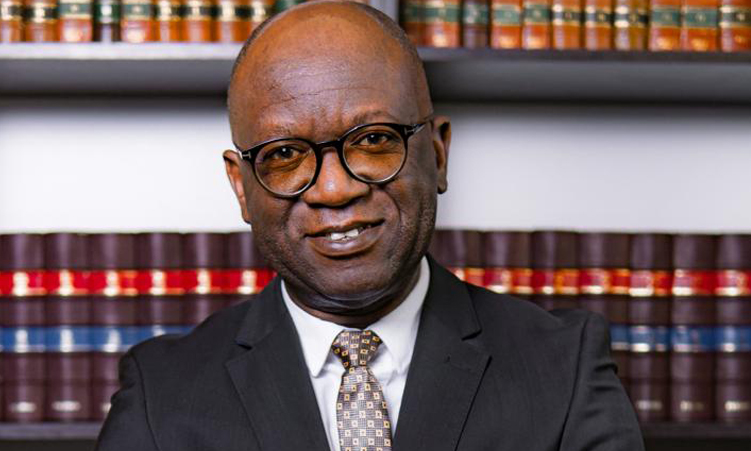
The Namibian Employers Federation (NEF) has warned that a draft bill to establish a commission on alternative dispute resolution could open the door to political intervention in labour disputes.
The draft alternative dispute resolution bill creates a new independent commission, introducing new procedures for labour disputes.
The bill also allows the minister of justice and labour relations to direct the commission to conciliate any dispute deemed to be in the national interest.
NEF president Elias Shikongo says the provision could be useful in exceptional circumstances, but could also invite unnecessary political involvement in workplace conflicts.
“If interpreted too broadly, it could open the door to arbitrary or even political intervention in labour disputes, which is a fine line that should not be crossed,” he says.
“We have already seen situations where the current minister becomes actively involved in workplace disputes.
While ministerial engagement may sometimes help facilitate dialogue, such involvement should ideally occur only where both the employer and the employees consent to it.”
Minister of justice and labour relations Wise Immanuel recently acted as a mediator in the dispute between food manufacturer Namib Mills and its workers, as well as in a labour dispute at mining contractor Beifang Mining Technology.
Shikongo also raises concerns over a new commission being able to issue rules and regulations at a later stage, causing uncertainty for employers.
He says although the NEF was invited to stakeholder consultations, the invitation came late and undermined the legal requirement of meaningful engagement.
Trade unionist Petersen Kambinda, who represents Namib Mills workers in their current industrial action, says he welcomes the new bill.
“Extending the powers to the minister is long overdue.
When something is of national interest, the minister needs power to intervene and provide leadership,” he says.
Kambinda says his union had been part of stakeholder consultations from the very beginning and that Naretu will continue to take part in consultations.
He says there were still many issues to work out and that the Namibia Revolutionary Transport and Manufacturing Union would be presenting its submission this week.
“We have reservations. What happens if we have a minister who is a sell-out? In its current format, there are still many loopholes,” Kambinda says.
Labour analyst Herbert Jauch says the term ‘national interest’ would need to be clearly defined in the bill.
“However, the section refers only to mediation, which means both parties still need to agree to a solution.
Unlike in the case of arbitration, a mediator cannot determine the outcome of a conflict.
The mediator has to reach agreement between the parties to the dispute,” he says.
The labour ministry did not respond to requests for comment.
In addition to the establishment of the new commission, the bill specifies rules for the funding and administration of the commission, as well as its powers.
It also proposes new registration rules and regulations for trade unions and employer’s organisations.
In an age of information overload, Sunrise is The Namibian’s morning briefing, delivered at 6h00 from Monday to Friday. It offers a curated rundown of the most important stories from the past 24 hours – occasionally with a light, witty touch. It’s an essential way to stay informed. Subscribe and join our newsletter community.

The Namibian uses AI tools to assist with improved quality, accuracy and efficiency, while maintaining editorial oversight and journalistic integrity.
Stay informed with The Namibian – your source for credible journalism. Get in-depth reporting and opinions for
only N$85 a month. Invest in journalism, invest in democracy –
Subscribe Now!