


ELEVEN rubbish dumps in Namibia were approved and officially declared waste disposal sites in terms of the Environmental Management Act by environment minister Pohamba Shifeta at the 5th national solid waste management advisory panel meeting at Walvis Bay last Wednesday.
The 11 sites are the Walvis Bay dumpsite in Erongo, Kupferberg Windhoek Landfill (Khomas), Epukiro dumpsite (Omaheke), Oshakati, Eheke and Ondangwa dumpsites (Oshana), Okahao, Ruacana and Tsandi dumpsites (Omusati), Rundu dumpsite (Kavango East), and Oranjemund dumpsite (//Kharas).
Having made the declaration in Erongo, Shifeta used the opportunity to commend the region for being a leader in raising the standards of waste disposal, and that five additional waste disposal sites will be gazetted, of which four are in Erongo.
Since the regulations of the Environmental Management Act were gazetted in 2012, the Ministry of Environment and Tourism has urged local authorities, regional councils and local industries to improve the standard of waste management, to ensure that all waste disposal sites apply for environmental clearance certificates, and that standards on the management of waste disposal sites are improved.
The declared sites have received environmental clearances, and after inspections were done on these sites, they were declared to meet approved environmental management plans (EMP) standards and the conditions of their environmental clearance certificates.
“They may not be perfect, but we are satisfied that significant efforts are being made to improve the standards of waste management at these sites. We will continue to monitor levels of compliance with their respective EMPs, and are in the process of bringing more detailed regulations on waste management.
“This will include standards and guidelines to assist local authorities with environmentally sound management and disposal of waste,” noted Shifeta.
These standards and guidelines were designed to be practical, and their implementation in many cases does not require huge levels of investment.
The minister, however, urged local authorities to ensure that the revenue from charges to citizens and businesses for waste disposal is reinvested to ensure waste disposal sites are brought up to sufficient standards. Shifeta said the majority of local authorities also “really need to address” the lack of human resources and capacity at waste disposal sites, and need to invest in basic technologies so that waste is handled effectively, and in an environmentally sound manner.
He added that in many settlements outside the jurisdiction of local authorities, there is often an absence of formal facilities for waste disposal. He thus tasked the national solid waste management advisory panel to look into solutions, in line with the national solid waste management strategy.
The ministry also continues to be concerned with the impacts of poor waste management practices on the environment and public health.
“There is a lack of waste collection in many areas, such as at informal settlements within urban areas, and in rural areas or settlements under regional councils. There are so many problems with litter along our roads, even in our national parks and in many other areas. This has a negative impact on tourism and the image of the country, and is a health hazard for our people,” the minister stressed.
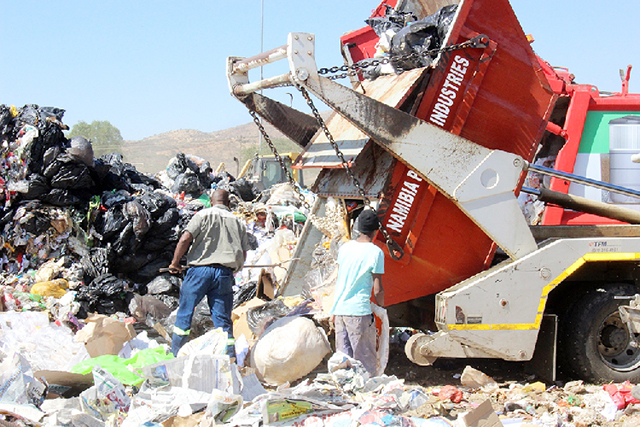
“However, the main problem we have identified is at our waste disposal sites. At these sites, there is open burning of waste, often no operational management, no fencing, no segregation of waste, and potential serious impacts through the contamination of soil, air and groundwater resources, and even the loss of life to waste pickers and scavengers,” he continued.
Shifeta said if Namibia is to be the leading country in Africa in terms of solid waste management by 2028 as per the national solid waste management strategy, the country needs to ensure that all dumpsites are approved and declared as waste disposal sites, and operating to the highest possible environmental standards.
In an age of information overload, Sunrise is The Namibian’s morning briefing, delivered at 6h00 from Monday to Friday. It offers a curated rundown of the most important stories from the past 24 hours – occasionally with a light, witty touch. It’s an essential way to stay informed. Subscribe and join our newsletter community.

The Namibian uses AI tools to assist with improved quality, accuracy and efficiency, while maintaining editorial oversight and journalistic integrity.
Stay informed with The Namibian – your source for credible journalism. Get in-depth reporting and opinions for
only N$85 a month. Invest in journalism, invest in democracy –
Subscribe Now!