




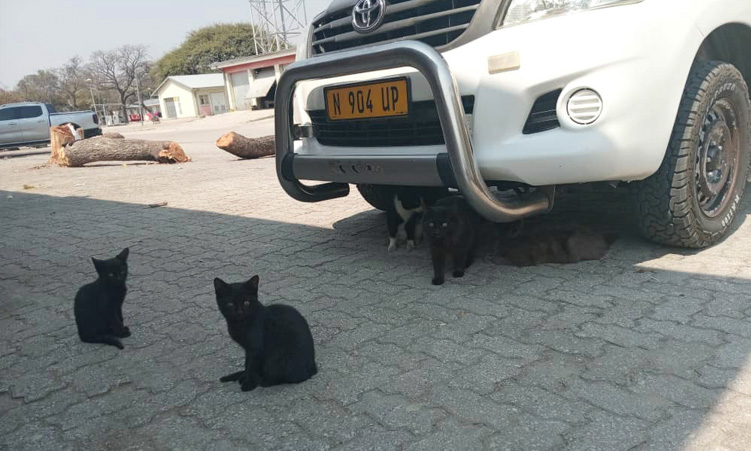
The Society for the Prevention of Cruelty to Animals (SPCA) in Namibia has advised hospitals to sterilise feral cats infesting the country’s hospitals.
This comes after Eenhana District Hospital said it is unable to contain its feral cat problem. The felines continue to be a menace for patients, with some patients claiming the cats steal their food and do not leave them alone.
Similar situations were reported at other hospitals across the country, including the Oshakati intermediate and Windhoek Katutura hospital, Rundu, Engela and Onandjokwe hospitals.
“Feral colonies can only be kept in check when they are sterilised. People love having cats around to control rats and snakes, but if they don’t sterilise them, they breed.” Cats contain feline AIDS, an immunodeficiency virus, as well as feline leukemia, and they need to be tested for this and be put away when positive, SPCA Namibia director of operations Sylvia Breitenstein told The Namibian.
She says feral cats have become endemic at hospitals, which acts as a food source to them.
Breitenstein explains that feral cats are the offspring of abandoned cats, and because a single cat can reproduce up to more than five kittens three times a year, the cats end up living in colonies where reproduction continues if they are not sterilised.
Feral cats typically live in a colony, which is a group of related cats, where they occupy and defend specific territories where food and shelter are available.
She says irresponsible people tend to leave animals behind when they move, which results in abandoned animals breeding uncontrollably.
She urges everyone to play their parts and get their animals sterilised.
“Every hospital in Namibia, of course, has feral cats because at the end of the day, cats are domestic animals. They are hungry. We have always urged hospitals to not leave food lying around, refrain from leaving garbage open, but they don’t adhere,” Breitenstein says.
She says trapping and removing the cats from a certain colony is ineffective unless they are all removed completely.
Ohangwena acting health director Festus Kuushomwa says each year a company is contracted to remove the felines from the facilities, but they keep returning.
“We really have no idea where the cats are coming from, but no matter how many times we remove them, they keep coming back. There is just nothing we can do to permanently get rid of them,” says Kuushomwa.
Hospital worker Selma Tuhafeni describes the cats as stubborn.
“They would jump on your plate if you are eating at the tuckshop and run off with your food. They also steal patients’ food at the wards. Sometimes, the patients don’t have the strength to protect their food. They would just go hungry because the cats have taken their food,” she says.
Nurse Oliva Samuel says the situation is unbearable.
“My biggest fear is getting sick and being admitted to the Eenhana hospital. No, please, that’s the last place I would want to sleep in. Those cats are scary, and they don’t fear the patients,” says Samuel.
Hospital visitor Theopoline Erastus says the cats rule the hospital. She accused the hospital management of doing nothing to resolve the situation.
In an age of information overload, Sunrise is The Namibian’s morning briefing, delivered at 6h00 from Monday to Friday. It offers a curated rundown of the most important stories from the past 24 hours – occasionally with a light, witty touch. It’s an essential way to stay informed. Subscribe and join our newsletter community.

The Namibian uses AI tools to assist with improved quality, accuracy and efficiency, while maintaining editorial oversight and journalistic integrity.
Stay informed with The Namibian – your source for credible journalism. Get in-depth reporting and opinions for
only N$85 a month. Invest in journalism, invest in democracy –
Subscribe Now!