




In Namibia and other countries, there’s a widely held belief that education is the key to progress, development and societal well-being.
The assumption is that individuals, equipped with knowledge and skills, will steer their communities and nations towards prosperity, good governance and social cohesion.
Nelson Mandela once said: “Education is the most powerful weapon which can be used to change the world.”
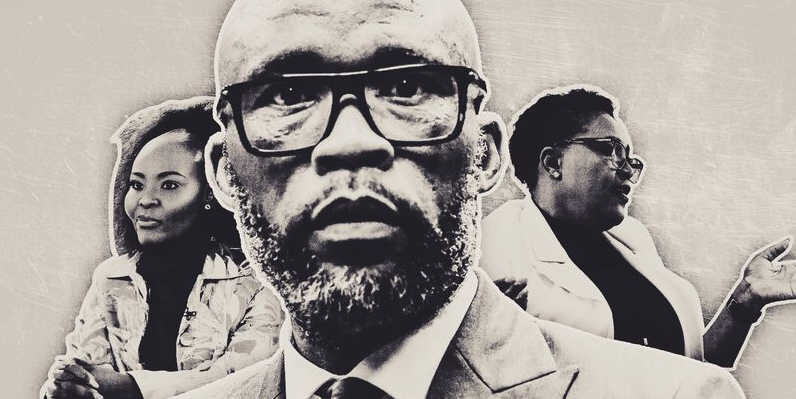
Yet, beneath this idealism lies a disturbing contradiction in the actions of educated elites who choose to perpetuate suffering rather than uplift society. They are the architects of corruption, the enablers of nepotism and the engineers of exclusion.
They manipulate tender processes, embezzle public funds and embed tribalism in institutions.
They are not ignorant; they are highly skilled professionals who weaponise knowledge for personal gain, leaving behind crumbling hospitals, dilapidated schools and a nation’s trust in tatters.
MISUSE OF KNOWLEDGE
Education is meant to empower leaders to make informed, ethical decisions. But as Namibia’s recurring scandals show – from the Fishrot saga to dubious procurement deals – knowledge is often used for private benefit.
The expectation that education naturally leads to better governance and societal benefit is rooted in the idea that knowledge empowers individuals to make informed decisions, uphold ethical standards and serve the public interest.
Countries invest heavily in higher education because they believe that educated people will drive growth and positive change.
However, experiences in Namibia and elsewhere show this isn’t always true.
Instead, a disturbing trend can emerge: Some of the most influential and educated figures in society use their knowledge and positions to enrich themselves, creating secret networks that exclude honest and talented people.
These figures are not uneducated people, but rather skilled professionals who use their expertise to betray the nation, contributing to the ongoing struggles of ordinary citizens.
MERITOCRACY ERODES
Namibia’s public service and corporate sectors are rife with stories of qualified candidates sidelined by nepotism.
A 2023 report by the Institute for Public Policy Research (IPPR) noted that “appointments often prioritise connections over competence”, entrenching inequality.
Rural youth, despite outperforming urban peers in interviews, face systemic barriers when elite networks control access to jobs.
This erosion of meritocracy fuels public anger.
When a geology graduate loses a mining job to a minister’s underqualified nephew, or a teacher’s promotion hinges on tribal affiliation, it reinforces the perception that education alone cannot break cycles of exclusion.
INTEGRITY MATTERS
The vital lesson is that knowledge alone is not enough to ensure societal progress.
Part of the problem lies in how Namibian institutions teach or fail to teach ethics.
Degrees focus on technical skills but rarely instil civic duty.
Unlike some countries which have compulsory governance courses or anti-corruption training, Namibia’s curricula treat ethics as an afterthought.
Societal pressures also play a role.
In a culture where status is measured by wealth, professionals face immense pressure to ‘succeed’ quickly – even if it means bending the rules.
A Windhoek-based business leader, speaking anonymously, admitted: “When your peers drive luxury cars from dubious deals, resisting temptation is hard.”
As Namibia grapples with these realities, it is crucial to recognise that true development hinges not only on education but also on integrity, accountability and the collective will to build a just and inclusive society.
THE CHALLENGE
The journey towards a better Namibia must include a re-evaluation of how education is perceived and utilised.
Educated elites have the potential to be powerful drivers of transformation but only if they commit to serving the public good with honesty and integrity.
Otherwise, the very tools designed to uplift society will instead continue to deepen its woes.
The challenge lies in harnessing education’s promise while safeguarding the moral fabric that holds communities together.
As our late president Hage Geingob once warned: “A nation’s wealth means nothing if its leaders lack conscience.”
Education without integrity is a dead-end. Namibia’s future depends not just on diplomas, but on leaders who wield knowledge for justice and not greed.
- Faustinus Shikukutu is a teacher by experience in Kavango East. The views expressed in this piece are his own.
In an age of information overload, Sunrise is The Namibian’s morning briefing, delivered at 6h00 from Monday to Friday. It offers a curated rundown of the most important stories from the past 24 hours – occasionally with a light, witty touch. It’s an essential way to stay informed. Subscribe and join our newsletter community.

The Namibian uses AI tools to assist with improved quality, accuracy and efficiency, while maintaining editorial oversight and journalistic integrity.
Stay informed with The Namibian – your source for credible journalism. Get in-depth reporting and opinions for
only N$85 a month. Invest in journalism, invest in democracy –
Subscribe Now!