


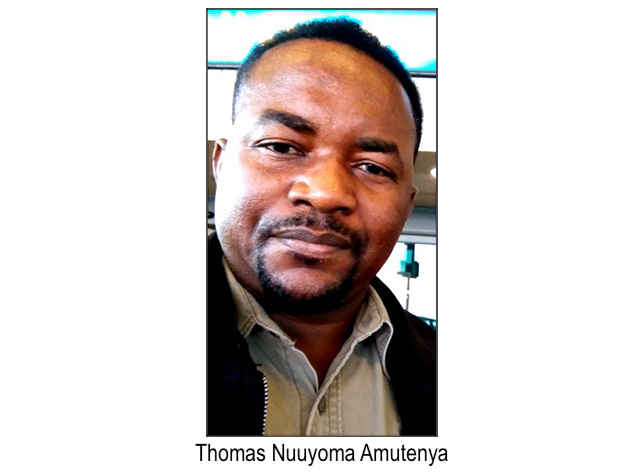
COMMUNICATION between teachers and pupils in the Outjo circuit on schoolwork is difficult because many parents do not have mobile phones, according to Outjo education circuit inspector, Thomas Nuuyoma Amutenya.
In an interview with last week Amutenya said only a few parents are reachable on WhatsApp social media.
“The majority of them do not have cellphones and at times children are away on holiday and are unreachable,” Amutenya said.
He said he had instructed principals and teachers in the circuit to start Whats App groups to be used to share information with pupils and their parents.
Amutenya said principals will give weekly feedback to the circuit office.
Assessments and tests, school projects or any form of educational activities will be shared with pupils through the WhatsApp groups, he said.
Amutenya said since most pupils are not reachable through WhatsApp groups, all online activities will be redone when schools reopen to accommodate every pupil.
“We will bring every pupil on board once schools reopen. For now we want to keep the pupils mentally active,” Amutenya emphasised.
Outjo circuit has 25 schools, 17 of them primary schools and five combined schools. The circuit is home to more than 10 000 pupils and more than 414 teachers, according to Amutenya.
Eddie Bowe Primary School principal Samora Murorua told that his school is preparing lessons and sending the work via the WhatsApp group. However, Murorua said the biggest challenge is that about 80% of the pupils are from poor backgrounds and have no phones.
Murorua welcomed the e-learning initiative and said it is the way forward and should not be seen as a failed effort but the beginning of a new way of learning.
He urged companies and businesses to donate laptops to schools and provide training.
Mathew Mini Geingob, acting principal of Abraham Gariseb Primary School, situated about 75 kilometres from Khorixas, said some teachers are struggling using laptops and about 99% of parents do not have mobile phones.
“We only got network last year and only now are rural communities assessing mobile phones,” Geingob said. Geingob called for the training of teachers, school boards and parents on technology but preferred that pupils return to school.
Namibian National Students Organisation (Nanso) acting secretary general, Patience Masua, who recently embarked on a familiarisation visit to rural schools at Outjo and Sesfontein circuit said:
“Inasmuch as we support the decision that education must inevitably continue, we maintain consistently that education must be inclusive and equitable,” she said. Masua said Nanso discovered that some schools such as Jacob Basson Combined School at Bergsig have only one computer for the entire school.
“This is telling us that we may not be infrastructurally prepared to adjust to the material needs and demands for e-learning to function,” Masua said.
She added that Nanso understands that many parents do not have access to cellphones, let alone cellphones with internet and are as unable to adjust to e-learning this quickly as needed.
“As Nanso, we commend and recognise the efforts of all educators and stakeholders during this time, however, we maintain that every Namibian child must have equal access,” Masua emphasised.
In an age of information overload, Sunrise is The Namibian’s morning briefing, delivered at 6h00 from Monday to Friday. It offers a curated rundown of the most important stories from the past 24 hours – occasionally with a light, witty touch. It’s an essential way to stay informed. Subscribe and join our newsletter community.

The Namibian uses AI tools to assist with improved quality, accuracy and efficiency, while maintaining editorial oversight and journalistic integrity.
Stay informed with The Namibian – your source for credible journalism. Get in-depth reporting and opinions for
only N$85 a month. Invest in journalism, invest in democracy –
Subscribe Now!