


EVERY morning Sarti Ndakola wakes up in Amarika knowing she will have to fetch water from the same well in which two of her brothers died after the sand walls collapsed and suffocated them.
Amarika lies 30 kilometres away from the internationally renowned Etosha National Park.
The village, consisting of 85 homesteads, has experienced the shattering pain of loved ones dying while trying to access water.
Between 2000 and 2018, 11 villagers died after falling into the wells or when the walls collapsed while they were collecting water.
In addition, salty, green water from the wells also led to a hepatitis E outbreak earlier this year.
For Ndakola (69) the memory of her brothers’ deaths in 2008 and 2010 are an ever-present grim reminder of how hard life at the village is.
She told The Namibian last week her two brothers, Pius Kandawu and Johannes Ipinge, used to help her with chores at the village.
“When my first brother died, we did not receive prompt assistance to pull his body out. His body almost stayed in there.” Assistance to remove her brother’s body finally arrived late at night, she said.
“What is even more saddening is that our sons died in the same well,” Ndakolo said.
Magano Titus (53) told The Namibian she lost her 10-year-old daughter, Anna Tobias, when she fell into a deep well when she was collecting water in 2000.
“I was blessed with six daughters, but I lost one in those wells,” Titus said.
While villagers flirt with death on a daily basis to collect water, a multimillion-dollar solar-powered desalination plant built to serve the village lies idle. It broke down in 2017 and has never been fixed because the Omusati Regional Council does not have the technical capacity to fix it, council spokesperson Simeon Kandjala said in an interview in 2019.
Amarika resident Lea Titus told The Namibian a water tanker, which used to deliver water to the village, no longer does so, because it broke down and has never been repaired.
These tragic stories are a stark reminder that the most basic of necessities are not available in Amarika.
Also known as Omadhiya, Amarika is home mostly to the San, whose living conditions in Namibia have drawn international attention and condemnation, with persistent claims that they live under conditions that violate their human rights.
Infrastructure like paved roads and electricity are also non-existent in Amarika.
Local authority councillor Johannes Iyambo told The Namibian the problem of safe access to clean water was only reported to him last week.
“The key to the desalination plant was stolen, and we now need to submit an invoice to the rural water supply at Outapi so that we can open it for them.We brought some water to the primary school, but when we returned, the engine of the truck broke, and it will take some time to fix it.
“The matter, however, will be resolved soon,” Iyambo said.
In 2006 CuveWaters began a N$200-million project to install two solar-powered desalination plants in collaboration with the country’s then Ministry of Agriculture at Amarika and Akutsima, 30 kilometres away.
The plant at Akutsima is still operational.
What makes Amarika’s harsh circumstances even more unacceptable is that a desalination plant donated by Germany has not been operational for three years. And from 2010 until 2017 it only worked intermittently.
Since then the plant has only been used to store water delivered by a rural water-supply truck.
But that supply ended when the truck broke down.
Ottilie Andreas, Amarika’s head woman since November 2008, said: “At the time of my appointment as head woman, we had a borehole to access clean water.
“When the borehole is not working, we have no choice other than to dig for underground water.
That is where my people access water for daily use.”
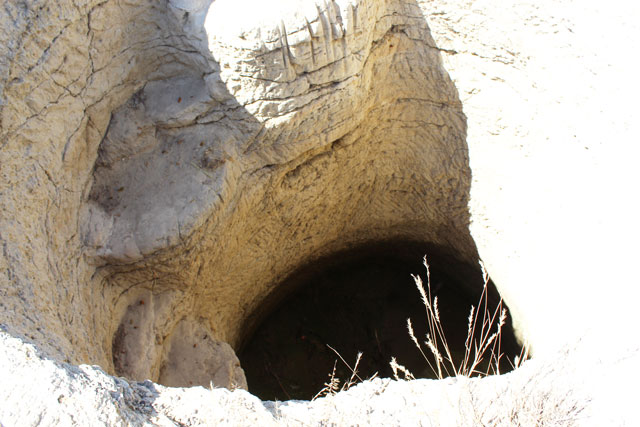
The wells, which are dug by hand, are about five metres deep, and the water is reached by climbing down stairs cut into the sandy, unsupported walls.
In an age of information overload, Sunrise is The Namibian’s morning briefing, delivered at 6h00 from Monday to Friday. It offers a curated rundown of the most important stories from the past 24 hours – occasionally with a light, witty touch. It’s an essential way to stay informed. Subscribe and join our newsletter community.

The Namibian uses AI tools to assist with improved quality, accuracy and efficiency, while maintaining editorial oversight and journalistic integrity.
Stay informed with The Namibian – your source for credible journalism. Get in-depth reporting and opinions for
only N$85 a month. Invest in journalism, invest in democracy –
Subscribe Now!