



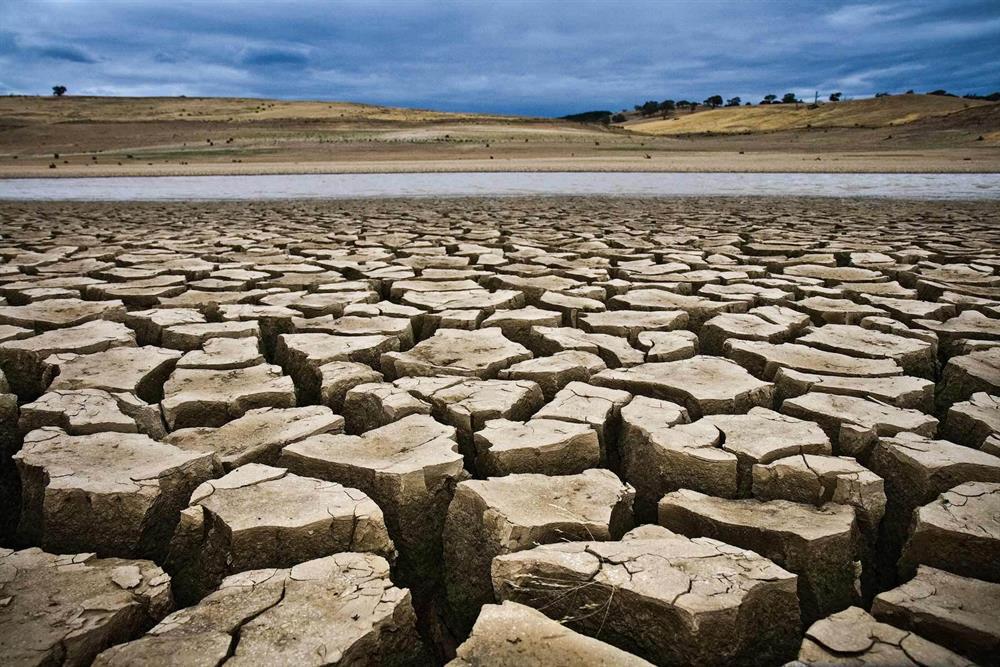
Namibia is losing billions of dollars each year to drought, a crisis that the Ministry of Environment and Tourism says is increasingly threatening the country’s economic growth, social stability and development gains.
Environment and tourism minister Indileni Daniel has highlighted the scale of the losses, warning that climate change is turning extreme weather events into a recurring reality for millions of Namibians.
“Namibia is one of the driest countries in sub-Saharan Africa, with more than 80% of the land classified as arid or semi-arid and rainfall variability among the highest in the region. Average temperatures have risen by 1.2 degrees Celsius, more than twice the global average, intensifying drought, flooding and wildfire risks,” she says.
Speaking at a stakeholder engagement on environmental stewardship and gender mainstreaming for state resilience to shocks and disasters, Daniel says the 2023-2024 drought, described as the worst in more than a century, caused sharp declines in crop production and reduced dam levels by more than 70%.
The ministry says the drought left more than one million Namibians food insecure and exposed the vulnerability of an economy that remains heavily dependent on agriculture.
Daniel notes that agriculture supports nearly 70% of the population and remains highly exposed to climate shocks.
“Flooding has displaced families, damaged infrastructure and eroded livelihoods, while wildfires are escalating and threatening biodiversity, communal lands, tourism assets and rural livelihoods,” she says.
The minister says Namibia’s commitments under major international climate agreements should be viewed not as abstract obligations but as practical tools for strengthening resilience, mobilising climate finance and protecting communities.
She adds that climate resilience is both a development imperative and an economic strategy of national importance.
This comes as Namibia’s updated climate commitments set ambitious targets for emissions reductions and removals by 2030, while placing adaptation at the centre of the national strategy. The ministry says Namibia remains a net carbon sink and has recorded significant increases in land-based carbon removals since 1990.
Daniel says ecosystem mapping has identified more than 200 distinct ecosystem types across Namibia, reflecting the country’s ecological diversity.
She adds that protected areas and communal conservancies now cover nearly half of the country’s land, with community-based conservation empowering rural communities to protect biodiversity while generating income.
The ministry says government investment in early warning systems, drought relief and water security continues, but cautions that reactive responses alone are insufficient.
“Focus must shift towards proactive investment in infrastructure, ecosystems and institutions before disasters strike, and climate finance and private sector participation are critical to meeting the scale of the challenge,” she says.
Prime minister Elijah Ngurare at the event said Namibia faces significant challenges but stresses that governance, coordination and national leadership remain central to building resilience.
“The Office of the Prime Minister, in partnership with all stakeholders, will continue to lead with integrity, vision and unwavering commitment to our people’s well-being,” he says.
“Our strategy will be threefold: build resilience for the unexpected, reassess governance for geostrategy, and adapt our supply chains and partnerships to reduce geopolitical exposure.”
Ngurare adds that agility, innovation and collective engagement are critical in navigating the country’s evolving risk environment.
“Let us provide our communities with water for drinking, sanitation, food production and livestock. Let us deploy knowledge from our academic institutions for food security and desert greening. Let us work with traditional authorities and embrace the innovation of our young professionals. This is what we committed to in the sixth National Development Plan – prioritising agriculture,” he says.
In an age of information overload, Sunrise is The Namibian’s morning briefing, delivered at 6h00 from Monday to Friday. It offers a curated rundown of the most important stories from the past 24 hours – occasionally with a light, witty touch. It’s an essential way to stay informed. Subscribe and join our newsletter community.

The Namibian uses AI tools to assist with improved quality, accuracy and efficiency, while maintaining editorial oversight and journalistic integrity.
Stay informed with The Namibian – your source for credible journalism. Get in-depth reporting and opinions for
only N$85 a month. Invest in journalism, invest in democracy –
Subscribe Now!