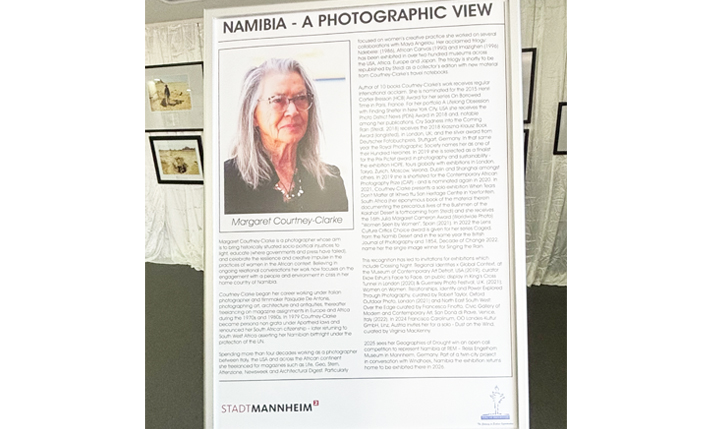
The challenges of drought, the disruption of forced relocation and the realities of living in Windhoek’s informal settlements come into focus in ‘Namibia – A Photographic View’.
Featuring acclaimed photographer Margaret Courtney-Clarke and rising photographer Rachel Sakeus, the exhibition is the result of an open call inviting photographers to submit photographic projects concerned with historical or contemporary Namibian issues within the social or political sphere.
‘Geographies of Drought’, Courtney-Clarke’s winning submission, was showcased at Reiss Engelhorn Museum in Mannheim, Germany, at the end of last year.
‘Namibia – A Photographic View’ forms part of ongoing cultural and twin city relations between the City of Mannheim and the City of Windhoek.
The exhibition is currently on display at the City of Windhoek’s functional hall, featuring Sakeus’ ‘Tura Story’, which earned an honourable mention.
Photographers were encouraged to explore photography as a tool to observe, document and interpret political and social issues while reflecting on how they once shaped and continue to affect Namibian society.
Travelling through the rural landscapes of the Erongo, Omaheke, Oshikoto and Kavango East regions, Courtney-Clarke zooms into the challenges and ingenuity of the San and other indigenous peoples eking out a living amid displacement and drought.
Putting names, faces and individual stories to seemingly abstract climate issues, Courtney-Clarke employs portraiture and images of vast, almost alien landscapes to highlight the abandonment, isolation and lack of service provision that are part of their daily lives.
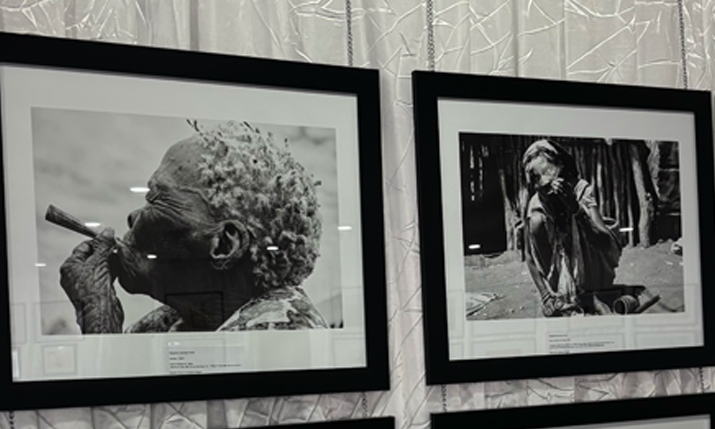
In a series of black-and-white portraits captured in the Omaheke region, San women smoke and lament the denial of landownership and the lack of mandated food support from the government during a six-year drought.
Moving from frame to frame, one learns of the San people’s forced relocation from lands declared national parks, how they are cut off from water sources and of a shepherdess’ loss of her son who succumbed to a snakebite.
Amid these harsh realities, Courtney-Clarke also highlights joy, resourcefulness and resistance.
“I was born in the veld, not on a farm,” says Katrina Xase, photographed and smoking in the frame. Here, Xase emphasises that her people lived free and not within land that was later owned and carved up by individuals, the government or parastatals.
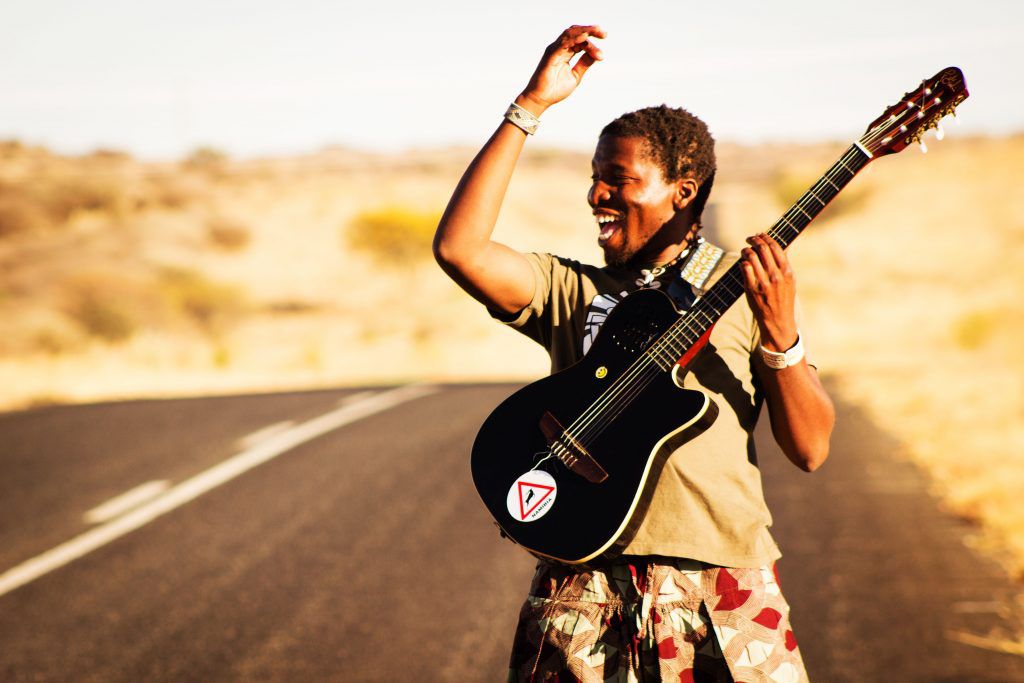
Photographing the hope of a rain-fed bathtub on a scaffold amid a drought, a self-taught violinist who earns a living playing at weddings and funerals at Tsiseb Conservancy and a pigeon breeder supporting his family at Black Ranch, Courtney-Clarke presents a series where drought looms large but human survival and perseverance looms larger still.
Closer to the city centre, where ‘Geographies of Drought’ is currently on display, an image of a boy struggling to carry two buckets of water towards the corrugated iron shacks of Goreangab speaks to the series by Sakeus.
In ‘Tura Story’, Sakeus photographs the shacks and roadside vendors that are ubiquitous in Katutura. There are no green spaces. A child walks between informal structures and taxis pause to pick up passengers, often shuttling residents to their places of employment in the more affluent heart of the city.
“In Katutura, residents faced high rents, distance from jobs, a ban on gardening, a denial of self-sufficiency and identity. The city’s design reinforced inequality, limiting access to opportunity and growth,” Sakeus says of the apartheid-era relocation of the city’s black residents from Old Location to Katutura.
“I grew up moving around Windhoek and later studied at the College of the Arts in Katutura, where I witnessed first-hand the struggles – poor housing, unsafe conditions and restricted opportunities,” Sakeus says.
“Three years ago, I began documenting Windhoek’s outskirts, from Havana to Okahandja Park. At first, I feared framing a negative image, but I realised it isn’t negativity, it’s reality, and it must be seen.”
Humanising, educational and beautifully captured by Courtney-Clarke and notable in the exploration by Sakeus, ‘Namibia – A Photographic View’ is currently on display at the City of Windhoek Function Hall.
– martha@namibian.com.na; Martha Mukaiwa on Twitter and Instagram; marthamukaiwa.com