



Every teenager dreams about getting their own car. For the girls, it’s all about having the top down, hair swinging from left to right and pop music blasting from the speakers.
The guys prefer ‘pimped out’ rides more. Personalised number plates, subwoofers that emit music from kilometres away and a speedometer that surpasses the legal limit are almost every young boy’s must-have items for their dream car.
Perhaps your parents might even have a neglected car locked up in the garage and you’re dying to take it out for a spin. The only thing stopping you from getting your hands on the wheel and cruising through the streets is a piece of paper called the learner’s license (not to forget your parents’ permission).
A learner’s licence is a document that allows those who have successfully passed the learner’s test to legally drive for a period of time before their document expires. Usually this takes about 18 months, so as soon as you get one, it’s advisable to start studying for your driver’s license before time runs out, otherwise you’ll have to start all over again.
It may seem like the easiest process in the world, since in school, you learnt all about multiple choice questions and they aren’t that difficult, right? Wrong! Many people, both young and old, have failed the learner’s test and there could be a number of reasons why.
The Youthpaper will explore the learner’s license in detail and help you reach your dream of being an experienced driver.
What You Need To Know About Natis
Natis, short for National Traffic Information Systems, is a subsection of the Roads Authority and they have offices countrywide. If you are in Windhoek, their main office is located in the Northern Industrial area.
Natis deals with: vehicle registration and licensing, roadworthy testing, drivers testing and licensing, application for personalised and specific numbers and applications for temporary and special permits.
According to Hileni Filemon, the managing PRO at the main Natis office, there are three categories available for those who want to obtain their learner’s license. If you are 16 or older, you may apply for Code 1. In other words, you’ll get a chance to legally and temporarily drive a motorcycle. Code 2 permits those who are 17 or older to drive light motor vehicles such as sedans and small cars weighing less than 3 500kg. Lastly, the age limit for Code 3 is 18 or older. This category is for those who want to drive heavier vehicles such as trucks. Remember to choose your code wisely!
Natis makes provision for 42 people in each session so all you have to do is book your place in advance and if there’s enough space, you’ll get a chance to write your test immediately. If you feel that you are not up to writing the test, you may do it orally. Either way, in order to register for the test, you have to pay N$45 and you’ll have to pay another N$45 to get your learner’s permit.
Train Your Brain For The Test
It has taken you a while to think about obtaining a learner’s license and you’re finally ready to take the first step. Good for you! Get yourself a copy of the Namibian Learner’s and Driving License Manual available at Natis or bookstores nationwide and study absolutely everything. That’s right, you have to know every sign, every symbol and every little detail that you may think is not important.
“Learn everything in the book,” Hileni advises. “Know all of the rules because the test is based on everything.”
One of the keys to passing is to study, study and study some more. Prepare yourself extensively and don’t rush to write the test because you’re desperate to start driving already. Make up your own multiple choice questions and test your knowledge. Ask family members or even friends to help you out if you feel you don’t understand the content.
Mourice Naruseb, a Polytechnic student who recently obtained his learner’s license, describes how he felt before the test. “Honestly, I was terrified due to the fact that I wasn’t sure I would pass. I couldn’t sleep because of anxiety and I had sleepless night leading up to the day of the outcome.”
It’s absolutely normal to feel scared before you write, because it will determine whether you’re going to drive or not. Don’t worry too much if you don’t make it the first time. Just keep trying until you finally score 80% or more.
The good news is that it’s completely up to you to decide how long you want to take before you write the test. Not everybody is able to catch all the content in one day, so decide for yourself whether you would opt to study within a week, a month or even a year’s time.
Why You Should Get Your Learner’s License
Have you ever read an advertisement for your dream job? Was having a driver’s license one of the requirements? If so, then it’s time to think about getting a learner’s license as it is one of the first documents you have to have before you proceed to get a driver’s license.
Iyaloo Shipatuleni, a Human Resource Officer at TransNamib, offers a few disadvantages to hiring an employee who does not have a license. “If you appoint a person without a driver’s license and they are involved in an accident, the company will be held liable. Also, anybody without a license cannot drive the company car.” Imagine how hard it would be to get to places, especially if you don’t have enough taxi money and nobody is willing to drive you around. It would really benefit you if you had access to the company car.
“In the working world, having a license would be required,” says Iyaloo.
“You won’t lose anything by having one. Go the extra mile because it is imperative. If an opportunity comes your way, you’ll be able to grab it.”
Another reason why you might think about getting your learner’s license is because you’ll be able to transport not only yourself, but your family members as well. What if someone gets sick and you are unable to take them to the hospital? Your parents might even ask you to fetch some groceries or pick your siblings up from school. Wouldn’t that be exciting? Or maybe you’d like to go out for a while and your parents aren’t in the mood to take you. You wouldn’t have to depend on a taxi, so you could take yourself.
Don’t feel too pressured to learn how to drive, though. There isn’t really an age limit as to when you should start practicing, but it’s good to know a couple of tips and tricks beforehand.
Take The Necessary Precautions
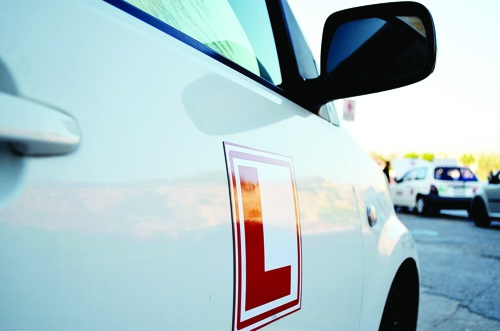
Once you have passed the test, make a point of indicating that you are a learner with a red ‘L’ symbol which should be indicated on the rear window of your vehicle so that other motorists know a professional driver is not at the wheel. You’ll make a couple of mistakes, but don’t worry, the public will excuse them.
Obey all the road rules! Having a speeding ticket or so at such a young age won’t benefit you in any way so avoid having a record with the traffic officers. Driving in real life is not the same as driving a car in ‘Need For Speed’! Be aware and drive safely because accidents are frequent and there are many reckless drivers on the road.
Good luck!
In an age of information overload, Sunrise is The Namibian’s morning briefing, delivered at 6h00 from Monday to Friday. It offers a curated rundown of the most important stories from the past 24 hours – occasionally with a light, witty touch. It’s an essential way to stay informed. Subscribe and join our newsletter community.

The Namibian uses AI tools to assist with improved quality, accuracy and efficiency, while maintaining editorial oversight and journalistic integrity.
Stay informed with The Namibian – your source for credible journalism. Get in-depth reporting and opinions for
only N$85 a month. Invest in journalism, invest in democracy –
Subscribe Now!