



On Saturday, the United States (US) and Israel launched a joint military operation against Iran, codenamed Operation Epic Fury.
Its stated objectives include eliminating Iranian nuclear and missile programmes, destroying Iran’s naval capabilities, and targeting the nation’s leadership.
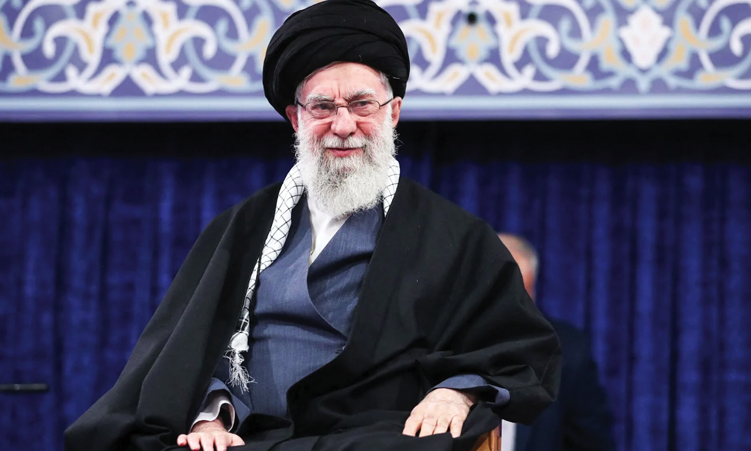
Among the casualties of the 28 February attack was Iran’s supreme leader, Ayatollah Ali Khamenei.
Both countries are now trading counter-accusations of “negotiating in bad faith” after the US launched an attack while negotiations were ongoing.
It is worth noting that the geopolitical relationship between the US and Iran is one of the most complex and volatile in modern history.
THE ‘INS AND OUTS’
The reasons for the US intervention are rooted in geopolitical factors:
• The US holds that Iran’s stockpile of highly enriched uranium has increased significantly, putting them close to producing weapons-grade material for multiple warheads;
• After the failure of “last chance” talks in Geneva (February 2026), the US shifted from “maximum pressure” to pre-emptive military strikes;
• The US views Iran’s hegemony in the Middle East as the central destabilising force in the region. Attacking Iran is seen as a move to dismantle its network of regional proxies (the socalled Axis of Resistance);
• Iran’s threats to block the Strait of Hormuz – through which roughly 20% of the world’s oil passes – are seen as a major geopolitical lever. The US strikes are said to be aimed at ensuring “freedom of navigation”;
• US foreign policy in the Middle East is deeply intertwined with the security of Israel and partners like Saudi Arabia and the United Arab Emirites;
• Israel, backed by the US, views a nuclear-armed Iran as an existential threat;
• The shifting alliance between Israel and several Arab nations has further isolated Iran, giving the US a regional “buy-in” for the attack; and
• The Trump administration has framed its military action as “help” for the Iranian people to achieve regime change, hoping to ferment public uprisings.
A NEW BALLGAME
Killing Iran’s spiritual leader and other key figures associated with the regime is one thing. However, pulling a “trump card” to secure stability in Iran and the entire region is a different ballgame altogether.
In retaliation, Iran has launched missile attacks against US allies in the region and this will obviously draw them into the conflict.
The record of US military interventions in that part of the world leaves a lot to be desired. Whether we talk about Iraq, Syria, Libya or Afghanistan, the aftermath has always been chaos and disability.
Iran is a theocracy or a “religious-based” country.
Most Iranians (61%) are Shia Muslims and this religious identity is a defining character of the country’s culture, legal system and government.
Therefore, it could be a gross miscalculation for Trump to think that most Iranians would regard him as a “messianic” figure.
Iran is an exceptionally diverse mosaic of cultures, languages and histories. It is home to approximately 93 million people comprised of several major groups.
Apart from the Persians, who constitute about 61% of the population, other minority groups are the Kurds, Arabs, Azerbaijanis, Baloch, Turkmen, etc.
Some of these groups may harbour breakaway ambitions or perhaps more autonomy; and this could easily lead to the disintegration of the country.
THE ENDGAME?
The Persian Empire, of which present-day Iran was the epicentre, was not just a single era. It was a series of dynasties that, at their peak, created some of the largest empires in human history.
At its height under rulers like Cyrus the Great and Darius I, the empire spanned three continents – the Middle East, Africa, Caucasus, Central Asia, South Asia, and even some parts of Europe.
It is a rich history deeply ingrained in Iranians’ collective DNA; they are a very proud nation.
Because of Iran’s dual-military system, members of the Revolutionary Guard are different from the regular army. They are “children of the revolution” and are steeped in Islamic fundamentalism
For them to surrender to the Americans may be out of the question.
Given these dynamics, the burning question is, does Trump have an endgame ‘trump card’ for Iran?
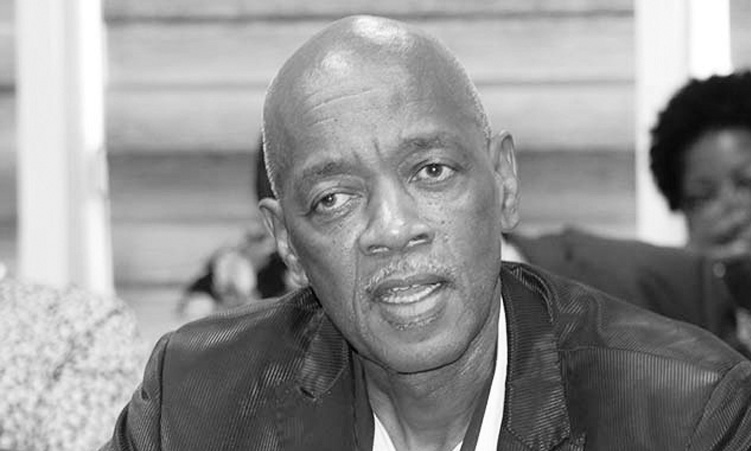
– Gerson Tjihenuna is a commissioner of elections. The views expressed here are entirely his, not those of the Electoral Commission of Namibia.
In an age of information overload, Sunrise is The Namibian’s morning briefing, delivered at 6h00 from Monday to Friday. It offers a curated rundown of the most important stories from the past 24 hours – occasionally with a light, witty touch. It’s an essential way to stay informed. Subscribe and join our newsletter community.

The Namibian uses AI tools to assist with improved quality, accuracy and efficiency, while maintaining editorial oversight and journalistic integrity.
Stay informed with The Namibian – your source for credible journalism. Get in-depth reporting and opinions for
only N$85 a month. Invest in journalism, invest in democracy –
Subscribe Now!