





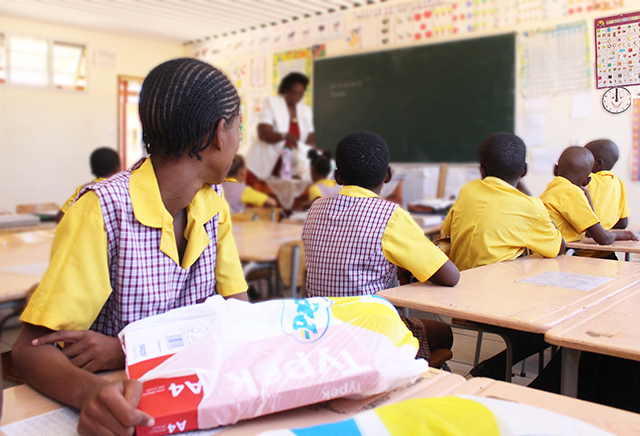
Namibia’s classrooms are at a legal and moral crossroads. In the past year alone, disturbing headlines have shaken the education sector – from pupils forced to carry tree branches as punishment, to a teacher dismissed for making a pupil lift a chair in front of the class.
These events have sparked growing concern over fairness, human rights, and professional discipline in schools.
The education minister has been actively promoting positive discipline as the standard for managing pupil behaviour, not just as a method of discipline, but as a legal obligation rooted in Namibia’s Constitution and education laws.
Positive discipline goes beyond classroom management. It is a rights-based approach that helps pupils understand the consequences of their actions, encourages self-control, and builds mutual respect all without resorting to fear, humiliation, or violence.
This is not optional. It is the law. Namibia has established a strong legal foundation to guide schools in promoting safe, respectful learning environments. Together, these instruments prohibit abusive discipline and promote dignity, equality, and fairness.
Article 8 of the Namibian Constitution is clear: No pupil or teacher may be subjected to torture or cruel, degrading treatment. This includes physical punishment in any form. Discipline must be dignified, fair, and humane.
Articles 10 and 18 further enforce equality and administrative justice – meaning all disciplinary action in schools must be applied fairly, without bias or discrimination.
Under Section 8, the Basic Education Act 3 of 2020 explicitly prohibits physical, emotional, and psychological abuse in schools and mandates the use of positive discipline strategies. Section 17 gives the education minister the power to guide schools on acceptable codes of conduct, while Section 22 calls for a participatory approach encouraging schools to involve teachers, parents, and pupils in shaping disciplinary policies. Sadly, this inclusive approach is still lacking in many Namibian schools, and it’s time to change that.
The Child Care and Protection Act (2015) reinforces Namibia’s commitment to international child rights standards. It demands that children be protected from neglect, maltreatment, and harmful punishment, and promotes safe, nurturing school environments. The act also affirms that all children must be treated equally, and that every disciplinary measure must uphold the best interests of the child.
The 2018 Safe School Framework outlines how schools can put positive discipline into practice. It recommends rewarding positive behaviour, teaching accountability and self-discipline, using non-violent consequences, and encouraging communication and respect.
The framework aims to create violence-free schools where every child learns in safety. However, education experts believe it still needs updates to align with Namibia’s latest education laws.
Namibia has made real progress. But enforcement, training, and awareness remain major challenges. Teachers and principals must be equipped legally and professionally to apply the law fairly and effectively. The education minister is encouraged to review and strengthen existing policies, particularly the Safe School Framework, to reflect both legal expectations and child protection standards.
At the heart of this shift is a simple but powerful idea: discipline should build character, not break spirits.
– Martin Mulisa