



In 2001, viewers around the world met the uncomfortable and sharply comedic world of ‘The Office’ for the first time. Created by Ricky Gervais and Stephen Merchant, the British series redefined TV comedy with its mockumentary format.
With Gervais as David Brent, the lead, it was dry, uncomfortable and unfiltered.
The American adaptation followed in 2005, starring Steve Carell, winning five Emmys and becoming the most-streamed show in the world during the Covid-19 lockdown in 2020.
Now, South Africa has its own version.
‘Die Kantoor’, the 14th international adaptation within the franchise, premiered on DSTV’s kykNET on 18 January and on streaming service Showmax on 20 January.
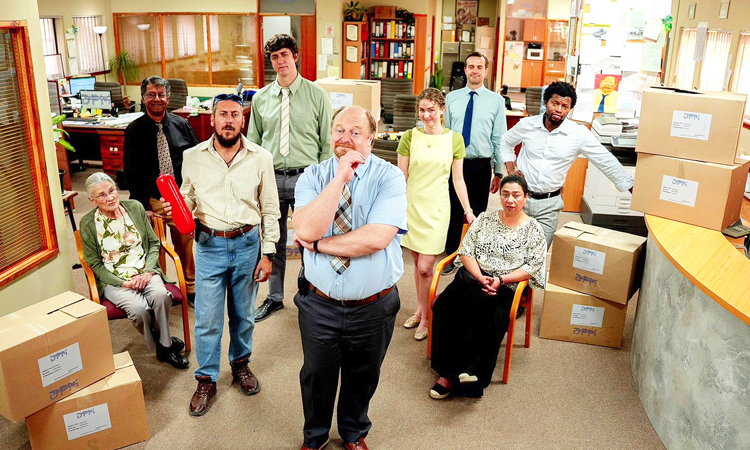
The Afrikaans series, set in Klerksdorp, near Johannesburg, follows the employees of Deluxe Processed Meats.
Thirteen episodes are scheduled for release, with five currently available.
Taking on the role inspired by David Brent and Michael Scott is Albert Pretorius. He plays Flip, the office manager who sells polony instead of paper. Like his British and American counterparts, Flip is brash, socially unaware and often commits various social faux pas without realising it.
He welcomes a documentary crew to film what he believes will be his rise to greatness, while his staff are simply trying to survive eight hours without throttling each other.
The humour in ‘Die Kantoor’ catches you off guard. It is not afraid to push boundaries on race, sexuality and other taboo topics. Much like Michael Scott, Flip says things that are inappropriate, awkward or just plain misguided. Yet it works because he carries a level of well-meaning innocence, and is charismatic and a little ridiculous, but not cruel.
In an interview, writer and director Bennie Fourie explains that Pretorius’ character can get away with bold statements because he comes across as harmless and lovable.
“You can say anything. It just depends on how you say it,” he says, adding that if the same words were delivered by someone unpleasant, the reaction from other characters would shift completely.
That tone is crucial in a show like this. The mockumentary style relies on discomfort. Because it’s written to come off like reality TV, characters notice and speak directly to the camera, silences stretch and glances become punchlines.
In ‘Die Kantoor’, that awkwardness is present and enjoyable.
Pretorius delivers a funny and likeable leading performance. Whether he can ultimately match the cultural weight of his predecessors remains to be seen. For now, Flip holds his own. He feels distinctly South African, while still operating within the familiar ‘Office’ formula.
The ensemble cast strengthens the series. It includes comedian and South African Film and Television Award winner Schalk Bezuidenhout, screen legend Lida Botha, Carl Beukes, Silwerskerm winner Ilse Oppelt, Daniah de Villiers, Mehboob Bawa, former KFM presenter Sipumziwe Lucwaba and newcomer Gert du Plessis.
Some characters closely mirror their Western counterparts, which gives longtime fans something recognisable to latch onto, while others feel new and fresh, offering a southern African twist.
Importantly, the show does not just copy classic storylines. While some situations echo memorable moments from the United Kingdom and United States versions, there are some fresh takes.
The central engine remains the same: a bumbling boss whose personality drives conflict, and a group of employees who attempt to understand, tolerate or quietly tame him.
The mockumentary format has remained popular globally because it feels intimate. Viewers become complicit observers and the camera catches what would normally stay private in an office environment. That offers something interesting.
– Anne Hambuda is a writer and social commentator. Follow her online or email her at annehambuda@gmail.com for more.In 2001, viewers around the world met the uncomfortable and sharply comedic world of ‘The Office’ for the first time. Created by Ricky Gervais and Stephen Merchant, the British series redefined TV comedy with its mockumentary format.
With Gervais as David Brent, the lead, it was dry, uncomfortable and unfiltered.
The American adaptation followed in 2005, starring Steve Carell, winning five Emmys and becoming the most-streamed show in the world during the Covid-19 lockdown in 2020.
Now, South Africa has its own version.
‘Die Kantoor’, the 14th international adaptation within the franchise, premiered on DSTV’s kykNET on 18 January and on streaming service Showmax on 20 January.
The Afrikaans series, set in Klerksdorp, near Johannesburg, follows the employees of Deluxe Processed Meats.
Thirteen episodes are scheduled for release, with five currently available.
Taking on the role inspired by David Brent and Michael Scott is Albert Pretorius. He plays Flip, the office manager who sells polony instead of paper. Like his British and American counterparts, Flip is brash, socially unaware and often commits various social faux pas without realising it.
He welcomes a documentary crew to film what he believes will be his rise to greatness, while his staff are simply trying to survive eight hours without throttling each other.
The humour in ‘Die Kantoor’ catches you off guard. It is not afraid to push boundaries on race, sexuality and other taboo topics. Much like Michael Scott, Flip says things that are inappropriate, awkward or just plain misguided. Yet it works because he carries a level of well-meaning innocence, and is charismatic and a little ridiculous, but not cruel.
In an interview, writer and director Bennie Fourie explains that Pretorius’ character can get away with bold statements because he comes across as harmless and lovable.
“You can say anything. It just depends on how you say it,” he says, adding that if the same words were delivered by someone unpleasant, the reaction from other characters would shift completely.
That tone is crucial in a show like this. The mockumentary style relies on discomfort. Because it’s written to come off like reality TV, characters notice and speak directly to the camera, silences stretch and glances become punchlines.
In ‘Die Kantoor’, that awkwardness is present and enjoyable.
Pretorius delivers a funny and likeable leading performance. Whether he can ultimately match the cultural weight of his predecessors remains to be seen. For now, Flip holds his own. He feels distinctly South African, while still operating within the familiar ‘Office’ formula.
The ensemble cast strengthens the series. It includes comedian and South African Film and Television Award winner Schalk Bezuidenhout, screen legend Lida Botha, Carl Beukes, Silwerskerm winner Ilse Oppelt, Daniah de Villiers, Mehboob Bawa, former KFM presenter Sipumziwe Lucwaba and newcomer Gert du Plessis.
Some characters closely mirror their Western counterparts, which gives longtime fans something recognisable to latch onto, while others feel new and fresh, offering a southern African twist.
Importantly, the show does not just copy classic storylines. While some situations echo memorable moments from the United Kingdom and United States versions, there are some fresh takes.
The central engine remains the same: a bumbling boss whose personality drives conflict, and a group of employees who attempt to understand, tolerate or quietly tame him.
The mockumentary format has remained popular globally because it feels intimate. Viewers become complicit observers and the camera catches what would normally stay private in an office environment. That offers something interesting.
– Anne Hambuda is a writer and social commentator. Follow her online or email her at annehambuda@gmail.com for more.
In an age of information overload, Sunrise is The Namibian’s morning briefing, delivered at 6h00 from Monday to Friday. It offers a curated rundown of the most important stories from the past 24 hours – occasionally with a light, witty touch. It’s an essential way to stay informed. Subscribe and join our newsletter community.

The Namibian uses AI tools to assist with improved quality, accuracy and efficiency, while maintaining editorial oversight and journalistic integrity.
Stay informed with The Namibian – your source for credible journalism. Get in-depth reporting and opinions for
only N$85 a month. Invest in journalism, invest in democracy –
Subscribe Now!