


Do elections matter?
Or, as a point of departure, do those who come to power through the ballot box and those who gain power by the barrel of the gun run or govern their countries differently?
Our president, Netumbo Nandi-Ndaitwah, was voted into power; Burkina Faso’s junta leader, Ibrahim Traoré, achieved power through the barrel of the gun.
Yet both generally talk the same language on how to manage their countries national resources in order to benefit their citizens.
Then we have Tanzania’s president, Samia Hassan, who won recent elections with 98% but has started backtracking on many previous governance reforms.
These are heady times.
Tomorrow, Namibians will once again take part in that democratic event called elections. I call it an ‘event’ as it is a one-day exercise, save for uninspiring and unprofessional election campaigns.
Millions of dollars are spent on elections, accompanied by noisy, incoherent and unfulfilled promises by political parties.
Some even vow to build bridges where there are no rivers (as per Nikita Khrushchev’s memorable phrase).
And in a country that lacks a civil political culture, mudslinging and even fighting among contenders are par for the course.
LIBERTY, EQUALITY AND FRATERNITY
From a formalistic and functionalist viewpoint, elections are seen as the life-blood of democracy. But are they?
Or are elections just an occasion when ordinary people are called on every five years to say “we want you and not the other person to lead us”.
This despite political leaders usually being drawn from the same coterie of the ruling and middle classes and being stuck in the same neo-liberal mindset.
Elections are part of good governance in news-speak language. But the question of democratic governance cannot be fully analysed in only institutional and formalistic terms.
One has to problematise and radicalise it.
In my view, elections are less important than the other ingredients of substantive democracy, which include a guarantee and respect for individual and civil rights and liberties and strict observance of the rule of law.
These not only guarantee a high standard of accountability by those in office, but allow the full democratic participation of ordinary people in the democratic processes of their society.
In sum: social democracy built on liberty, equality and fraternity.
This is lacking in Namibia. All the so-called indices on ‘good governance’ in Namibia fall flat because the proverbial ‘man on the street’ knows better than the ‘tourist researcher’.
ENDS AND MEANS
I argue, as analyst David Beetham does, that to define democracy simply in institutional terms, such as holding elections, is to elevate ends to means.
It is to concentrate on the form without content, and to abandon critical standpoints from which those institutional arrangements can be judged more or less democratic in their given context or manner of working.
To define democracy in terms of its basic principles enables us to recognise democracy at work beyond the formal level of government, in particular in civil society.
Yet from a functionalist point of view, elections are important for the leadership because they lend legitimacy.
You will always hear leaders say “the people elected us, they have given us the mandate to govern” (read: to rule) even if the leaders renege on their campaign promises.
Or, worse still, if these leaders get involved in activities that don’t promote the commonwealth of the republic (corruption and theft) and the interests and aspirations of those who put them in positions of leadership.
But to where do they lead the people? Into poverty and despair?
Scholars continue to study elections because they believe, perhaps out of blind faith, that elections seek or ought to formalise and equalise popular influence in the policy process.
But do political parties or candidates really respond to the collective wishes and choices of voters especially in the context of African politics – all too often built on the abuse of power and in an environment where civil society institutions are limited and fragile?
PROMISES AND PARADOXES
How this is actualised in a country’s daily life is a moot question; it is an empirical issue best examined on a case-by-case basis.
In Namibia’s case, the answer should be obvious. No Namibian wants to be poor.
When voting, people hope that the promises made will be translated into public policies for implementation.
This hardly happens.
I have previously written about ‘Swapo and the paradox of plenty’. Simply put: why should a resource-rich country like Namibia with such a small population be in the same league as the most unequal societies with thousands literally going hungry?
This is a clear sign that the government doesn’t respond to the wishes of voters or implement its own election promises.
I’m not downplaying the importance of elections but only sounding a cautionary note against seeing them as a panacea to our earthly problems or as democracy itself.
They are just an element of democracy.
Our media and others should therefore not see elections as “all things bright and beautiful”.
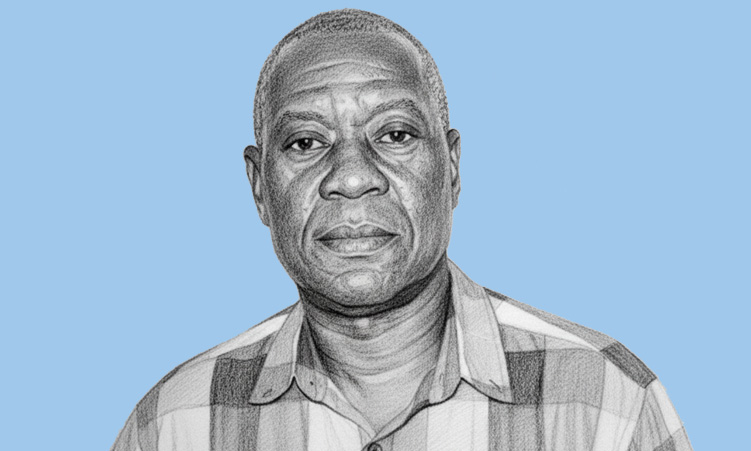
- Alexactus Kaure is a freelance writer and deconstructionist scholar.
In an age of information overload, Sunrise is The Namibian’s morning briefing, delivered at 6h00 from Monday to Friday. It offers a curated rundown of the most important stories from the past 24 hours – occasionally with a light, witty touch. It’s an essential way to stay informed. Subscribe and join our newsletter community.

The Namibian uses AI tools to assist with improved quality, accuracy and efficiency, while maintaining editorial oversight and journalistic integrity.
Stay informed with The Namibian – your source for credible journalism. Get in-depth reporting and opinions for
only N$85 a month. Invest in journalism, invest in democracy –
Subscribe Now!