



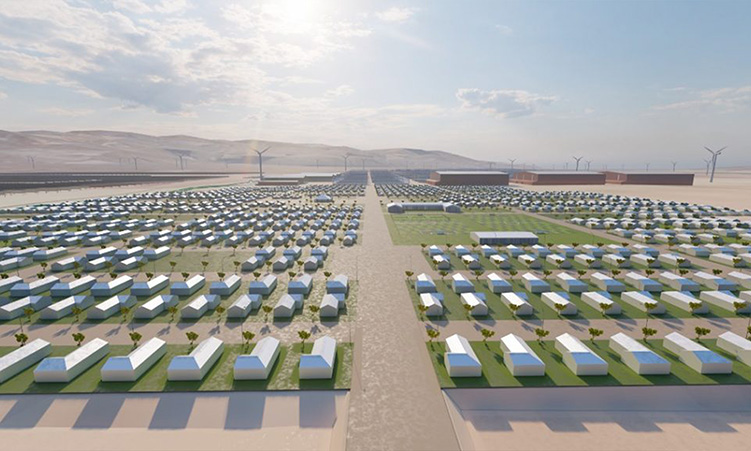
The Dâures Green Hydrogen Village is set to commence with production of ammonia sulphate fertiliser in the fourth quarter of 2026 and first quarter of 2027.
This was announced by chief executive Jerome Namaseb at a media briefing during a site visit this week.
Namaseb indicated that once in full operation, the village aims to supply fertilisers to local farmers around the Dâures constituency and then branch out to the international market.
It is being implemented in phases, with the first phase focusing on research and development, to be completed in the first half of 2025. Phases two, three and four will realise production for international markets.
The project is powered by about 0.88 megawatts (MW) of solar and 0.1MW of wind energy produced annually on a 300-hectare site.
Green hydrogen is produced through the process of electrolysis, which involves splitting water molecules, releasing the oxygen molecule and converting the remaining hydrogen molecules into energy – a cheaper and more environmentally-friendly source of energy.
Phase two of the project will run from 2029 to 2032, with the goal of exporting green ammonia both regionally and internationally.
During phase three, 700 000 tonnes of ammonia are expected to be exported internationally.
The Dâures Green Hydrogen Village project was initiated with a grant of N$220 million from the German government.
Namaseb noted that Namibia is not currently in a position to dictate which investment to accept due to the pressing need to address unemployment and food security.
The project has so far created 375 jobs, with 115 people sourced from the local Dâures community and 77% of employees being youth. In addition, Namaseb said community participation is a priority, and the community have a 10% in the project.
The project has contracted 23 stake small and medium enterprises to provide goods and services, with seven being from Dâures.
“Our story is, with the amount of unemployment we have in the country and food security issues due to drought, and agriculture being the largest employer, we need to figure out a way to support the industry,” he said.
Namaseb said while production costs and transport logistics present a challenge, the project is determined to ensure that farmers are supplied with the necessary fertilisers for their crop production.
Ammonia sulphate fertiliser is a stable white to yellowish-grey crystalline salt that is highly soluble in water, comprising approximately 21% nitrogen and 24% sulfur.
This fertiliser is primarily used to treat alkaline soil, as it releases a small amount of acidity when ammonium is released, which helps to lower the pH balance of the soil while providing essential nitrogen for plant growth and development. In today’s market, 85% of ammonia is used in fertilisers.
In an age of information overload, Sunrise is The Namibian’s morning briefing, delivered at 6h00 from Monday to Friday. It offers a curated rundown of the most important stories from the past 24 hours – occasionally with a light, witty touch. It’s an essential way to stay informed. Subscribe and join our newsletter community.

The Namibian uses AI tools to assist with improved quality, accuracy and efficiency, while maintaining editorial oversight and journalistic integrity.
Stay informed with The Namibian – your source for credible journalism. Get in-depth reporting and opinions for
only N$85 a month. Invest in journalism, invest in democracy –
Subscribe Now!