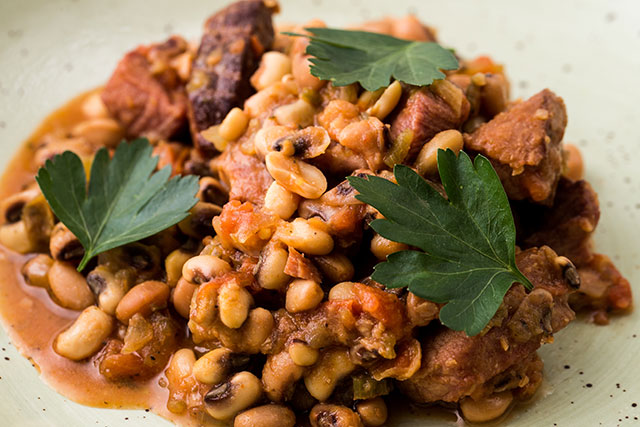
Originally from West Africa, cowpea, or black-eyed pea (Vigna unguiculata) is now a global crop. It is widely used for intercropping of the major African cereals: maize, sorghum and millet. It is an important dual-purpose legume feeding both humans and livestock.
Most farmers in northern Namibia grow cowpea. It is considered the second or third most important crop after millet (and perhaps sorghum). Both the seeds and the leaves are edible, and the crop forms an important part of the traditional diet. The season runs from October to April. Almost two-thirds of cowpea producers are women, meaning that improved commercialisation of the crop will benefit women directly.
For a variety of reasons, cowpeas could be part of the answer to many Namibians’ food insecurity. New varieties of this legume have been introduced that are drought resistant, heat tolerant and have a shorter growing season, making it the ideal crop for all of Namibia as it is suitable to grow in all 14 regions of the country.
It is a crop that is not only a protein-rich delicacy, but with many other benefits too. It is a nitrogen fixer that improves soil fertility and its flowers produce sufficient nectar to attract pollinators such as honeybees. As a result, cowpeas may also be an ideal crop for urban and permaculture farmers and gardeners.
The African slave trade was responsible for exporting cowpea to many other parts of the world, including the United States of America, where it is considered an integral part of Southern soul food. Hoppin’ John is a typical cowpea dish from that part of the world.
Cowpeas can be cooked to be eaten as both a savoury and sweet, dessert dish. As a savoury dish it is commonly cooked with onions, garlic, tomatoes, peppers and chili or hot sauce as aromatic accompaniments. Meat, especially pork, and fish are popular proteins cooked or served with cowpeas and it is also popularly served with rice. Moin-moin is a popular Nigerian pudding made from ground cowpeas.
It is perplexing that we do not plant, cook and consume more of these wholesome, easy to grow, nutrient-dense foods such as cowpeas outside the traditional farming areas. Seeing that food prices are on the rise and that so many of our fellow Namibians will experience food insecurity as they will not be able to purchase food in the coming months, the value of these types of crops cannot be underestimated.
Under current conditions, the need for urban agriculture is clear to see, and so is the need for all Namibians to assume the responsibility to grow at least some of their own food, especially in urban areas. If you consider doing this, cowpeas may be a good place to start.
The recipe is a local take on the famous Hoppin’ John, a soul food dish from the southern USA. It is traditionally eaten at New Year for good luck, and even though New Year is long gone, I figured we can all do with a whole lot more good luck.
Happy eating!
4 tablespoons butter
1 large onion, diced
4 cloves garlic, minced
1 green bell pepper, diced
2 stalks celery, diced
4 cups cowpeas (black-eyed peas), soaked overnight
5 cups chicken stock
1 Eisbein
Salt and pepper to taste
Cayenne pepper to taste
2 tablespoons white wine vinegar
1. If you are using dried cowpeas, soak them in cold water overnight. If you are using pre-cooked beans, use thick slices of bacon or ham and adjust the cooking time for the beans.
2. Heat the butter in a large, heavy pot over medium-high heat. Add the vegetables and cook while stirring for about five minutes until the onions are translucent. Add the beans and the chicken stock, Eisbein, salt, pepper and cayenne to taste. Bring the pot to a boil then reduce the heat. Cover the pot with a lid and cook the beans and meat until they are tender.