


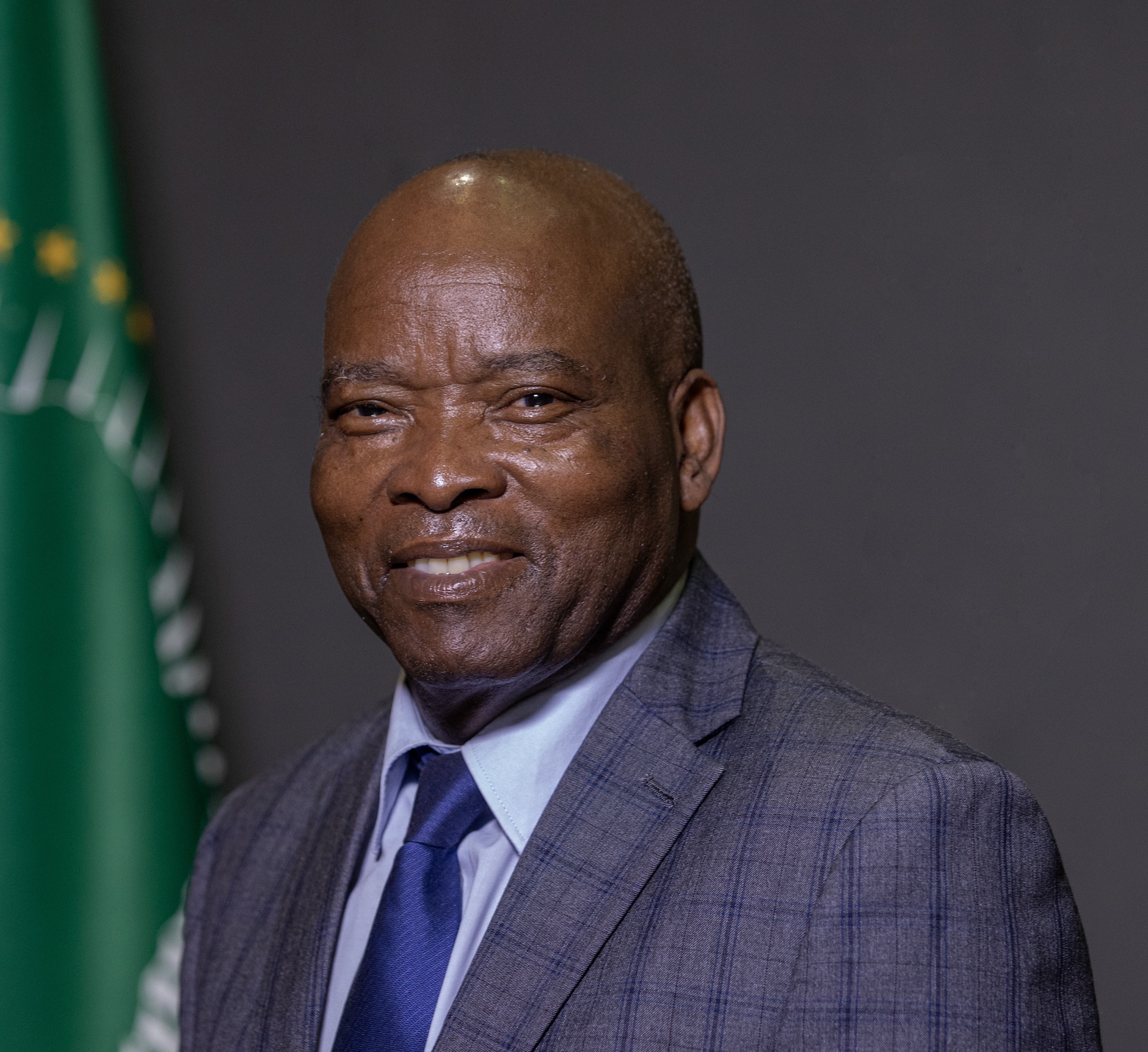
Opening remarks by Moses Vilakati, commissioner for agriculture, rural development, blue economy and sustainable environment, African Union Commission. Windhoek, 24 March 2026.
___________________________________________________________
“Change is hard at first, messy in the middle and gorgeous at the end.”
Robin Sharma.
Good morning and thank you for gathering here in Windhoek. It is a privilege to stand before you at a moment that demands clarity, courage, and collective resolve.
Let me begin with a truth that is both simple and profound: Africa’s future depends on what we choose to deliver today. Not what we plan. Not what we discuss. Not what we write. But what we deliver.
Every policy we craft, every investment we make, every structure we establish must answer one question: are we doing enough to ensure that every African has access to safe, sufficient, and nutritious food?
If we are honest, the answer is no.
Not because we lack frameworks. Not because we lack strategies. Not because we lack policies.
It is because we have spent too much time perfecting documents and too little time changing realities.
For more than two decades since the Comprehensive African Agriculture Development Programme (CAADP) was adopted in Maputo, we have made commitments and built processes. Yet today, more than 300 million Africans remain food insecure, and the continent spends nearly 100 billion dollars every year importing food.
These numbers are not just statistics. They are a call to conscience.
A call reminding us that something is not working as it should. A call reminding us that our people are waiting for results, not rhetoric. A call reminding us that Africa, with 60% of the world’s arable land, must rise to its potential.
So we must ask ourselves: why do these challenges persist?
Why, after so many years of CAADP implementation, do we still struggle to transform our agrifood systems?
The answer is clear:
We have not focused enough on delivery. We have not consistently turned policies into action. And we have not used data and evidence as the compass for accountability.
Kampala CAADP is the flagship programme of the African Union for the second 10-year implementation plan of Agenda 2063, endorsed by our heads of state and government. Once it became a flagship, it ceased to be a framework on division of labour.
It is now the continental engine for tangible delivery, and that is why I would like to see how practical and results-oriented we can be in implementing Kampala CAADP. That is why I commissioned the 100 days rolling plan that focuses on improving production and food security through soil health and mapping, job creation through youth empowerment and the blue economy, withstanding shocks through climate change strategies, and resource mobilisation, all resulting in the reduction of the food import bill.
This is what the commissioner’s 100 days is all about. It is not a parallel programme as some people have been suggesting. Let me be unequivocal: this is not true. The 100 days action plan augments the Kampala CAADP action plan.
And let me say this with conviction: as commissioner, I am committed to doing things differently. Not the usual. Not the predictable. Not the “business as usual” that has slowed us down for years.
I believe Africa deserves more than routine. Africa deserves results.
That is why I took a deliberate step: I commissioned consultants to develop the draft results framework, indicators, and reporting architecture for Kampala CAADP. But let me be clear, these drafts are not final. They are not for endorsement. They are not for adoption.
My expectation, and the only acceptable process, is that these drafts must undergo broad, inclusive consultation with member states, regional economic communities, African Union agencies, and our partners. Only after this wide consultation should they be brought forward for validation by member states.
This is how we ensure ownership. This is how we ensure legitimacy. This is how we ensure that Kampala CAADP reflects the priorities of member states.
I must be candid: when I look at some of the proposed indicators, I worry that we risk repeating the same patterns that held us back under Malabo. Long lists. Heavy reporting. Minimal delivery.
We cannot afford that. Not now. Not with the urgency before us.
Kampala CAADP must be different. It must be practical. It must be focused. It must be implementable.
This brings me to the purpose of our gathering.
Yes, we are here to refine the results framework, indicators, and reporting mechanisms. But let us be clear: a review only matters when implementation has happened.
A framework on a shelf will not transform agriculture. An indicator will not feed a child. A report will not create jobs.
Only implementation will.
I therefore urge that we use this meeting as a consultative platform for effective implementation of the Kampala CAADP action plan (2026–2035). Let us focus on simple, practical tools that support member states to deliver their national agricultural investment plans.
Indicators must be aligned with the six strategic objectives of Kampala CAADP and must not overwhelm member states. A maximum of three indicators per objective, 18 instead of 89, will allow us to track progress meaningfully.
Earlier this year, our heads of state and government reaffirmed CAADP as a flagship programme of Agenda 2063. This is a recognition that agriculture and agrifood systems are the foundation of our survival, resilience, peace, and prosperity.
We must therefore deliver. We cannot repeat the path taken under Malabo. Kampala CAADP must be about implementation, implementation, implementation.
The assembly also adopted the African Union theme of the year 2026: ‘Assuring sustainable water availability and safe sanitation systems to achieve the goals of Agenda 2063’.
This theme comes at a critical moment. Africa must invest in water and irrigation infrastructure. We can no longer rely on rain-fed systems. Strategic objective 6 of Kampala CAADP places the water–agriculture nexus at the centre of building resilient agrifood systems.
Let me highlight some of the strategies we are prioritising as a commission:
Supporting member states and regional economic communities in domestication and implementation of national agricultural investment plans, guided by the 100-day rolling action plan focusing on soil mapping, soil testing, seed banks, fertiliser access, the blue economy, job creation, climate change, as well as resourcing CAADP with a clear roadmap.
Building strategic partnerships to mobilise resources for programmes that transform agrifood systems.
Strengthening data systems so they support decision-making, not as a compliance exercise, but as a tool for accountability and delivery.
The responsibility before us is great, but so is our potential.
Africa has the land. Africa has the youth. Africa has the knowledge. Africa has the will.
What remains is the courage to do things differently and the discipline to deliver.
Let us use this moment to correct what is not working, reinforce what is delivering impact, and commit to a new culture of implementation. With the leadership and expertise gathered here, I am confident that we can achieve this.
Let me emphasise once more: this workshop is a consultative one.
To conclude, I reaffirm the African Union’s commitment to providing leadership and support in the implementation of the Kampala CAADP process.
I thank you all, and with these remarks, I declare the workshop open.
In an age of information overload, Sunrise is The Namibian’s morning briefing, delivered at 6h00 from Monday to Friday. It offers a curated rundown of the most important stories from the past 24 hours – occasionally with a light, witty touch. It’s an essential way to stay informed. Subscribe and join our newsletter community.

The Namibian uses AI tools to assist with improved quality, accuracy and efficiency, while maintaining editorial oversight and journalistic integrity.
Stay informed with The Namibian – your source for credible journalism. Get in-depth reporting and opinions for
only N$85 a month. Invest in journalism, invest in democracy –
Subscribe Now!