







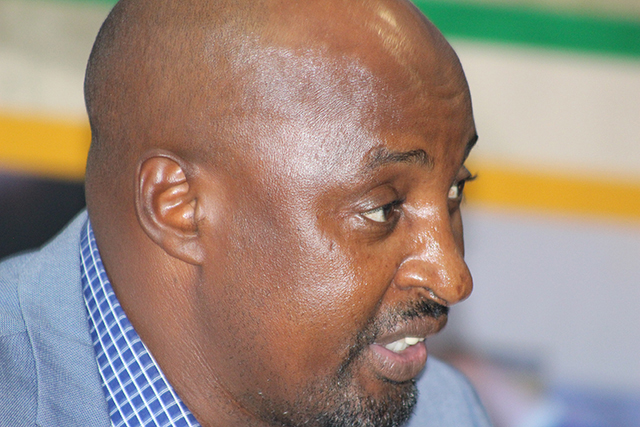
DISCRIMINATION along racial lines and economic well-being is so rife in sports that the Namibia Sports Commission is considering introducing quotas or withholding national colours to force codes to be all-inclusive, chief administrator Freddy Mwiya said yesterday.
Additionally, withholding funding and not sanctioning competitions are other possible measures to compel transformation-shy sports codes to extend their activities beyond traditional racial or ethnic groups.
The latest incident to spark the racial debate is the ‘smokescreen inclusion’ of Tangeni Lungameni and Pikky ya France in Namibia’s World Cricket League Division 2 tournament-winning team.
The black pair were reduced to “water boys” during the week-long tournament, which Namibia won on Saturday to gain One Day International status.
“Some sports codes shortlist members, especially people of colour, onto the team list, just as mere window-dressing, while such players are never given game time to play,” Mwiya told reporters at a press conference in Windhoek.
“Should the status quo remain, we will not hesitate to lobby the policymakers to introduce punitive measures, such as the introduction of a quota system in the sports.
“This may not be the best option, but we can no longer watch from the canvas and accept discrimination in sports to be the order of the day while dreams of many young Namibians are being shattered on account of institutionalised discrimination,” he warned.
Referencing a “shocking” 2017 ombudsman report titled ‘Why racism and other forms of discrimination persist after 27 years of Namibia’s independence’, coupled with public and media pressure over the questionable composition of national teams, especially at junior level, Mwiya said the situation necessitates that the sports commission takes drastic measures.
“According to the oral and written submissions at several of these hearings conducted by the ombudsman, it [the report] revealed shocking expressions, opinions and allegations of the persistent discrimination and lack of inclusivity in sport,” he added.
In Namibia, prominent codes like rugby, cricket, swimming, gymnastics and hockey are white-dominated sports.
Blacks are primarily predisposed to netball, football, boxing and athletics – codes for which participation is relatively low-cost.
During apartheid, blacks were initially barred from national teams.
Coloureds and Basters are somewhat the missing links, given that they affiliate to both sides of the spectrum in moderation.
That does not render them immune to prejudice for or against, however.
Addressing racial imbalances could only be fixed by developing sports from the grassroots level, which is not only the prerogative of the government, Mwiya suggested.
“We must all take hands to develop our sports collectively to include all Namibians,” he said.
Compounding historical prejudice is the prevailing dire economic situation which has left the sports codes at the mercy of an elite few whose financial clout means they run the show.
This translates into their offspring, relatives or close associates not necessarily being selected to represent the country on merit but on the basis that they can afford to do so.
“This is not all about race. There are those who are discriminated against by their own race,” Mwiya said.
“We note with serious concern that some teams use financial means and social status or position of players when it comes to team selection as an instrument to discriminate against them.
“I wish to send a caution that if there will be continued resistance, sports federations who permit themselves to be guilty will not be allowed to host or bid for mega sports events,” Mwiya cautioned.
Last August, a storm erupted over the omission of a young black hockey player from the Namibian under-16 girls’ team scheduled for a tour to Zimbabwe.
Ruth Herunga claimed her daughter Liya, the only black on the team, “was pushed out of her spot to make way for a white hockey player”.
This led to the temporary suspension of head coach Maryke Short, who was later cleared of racism. Nonetheless, the NSC will take a firmer stance on such matters in future.
“We may be forced to refuse or withdraw national colours to federations holding back, withdraw funding to bodies that fail to comply or bar anybody that fails to transform from participating in sports under the name of Namibia, or even go as far as lobbying parliament to bar corporate sponsorship to anyone hostile to transformation,” Mwiya said.
The sports ministry’s budget was slashed by N$99 milion over the last three years, from an allocation of N$385 million in the 2017/18 financial year to N$286 million in the current financial year. During the 2018/19 financial period, the ministry got N$288 million.