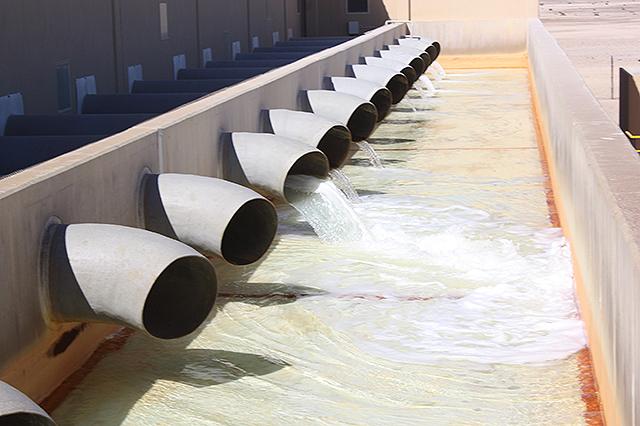




The City of Windhoek has warned residents that it is currently experiencing a ‘category C’ water scarcity.
As such, residents are urged to consume 10% less water than usual. It has emerged that residents have exceeded the city’s water consumption target by 23%.
Speaking to Desert Radio on the severity of the situation, city spokesperson Lydia Awmutenya last week said category C is the second-worst of five water situation categories.
“The next level would be that of severe scarcity, and residents would then be required to save at least 15%. “Here we are also required to increase mandatory water-saving measures and would declare a water crisis, which is not an ideal situation, as this could lead to more restrictions, like water rationing,” Amutenya said.
She said Windhoek is lucky to not have reached severe stages of water scarcity yet, and expressed the hope that residents would collaborate to ensure this is prevented.
“If you look at your water bill, it indicates how many kilolitres of water you use every month. If you can reduce that number by 10%, it would help a lot.
“If we do not adhere to the set regulations, we will end up moving to category D, and if we fail to save 10%, how would we manage to save 15%?” Amutenya asked.
The council declared the water scarcity categories in May, and the city is yet to reach the set 10% target, Amutenya said. As such, the current water status could soon be reviewed, she said.
BIGGER PICTURE
Amutenya said until last year, the city was consuming about 25,5 million kilolitres of water per year, but in 2023 this number increased to 26 million kilolitres.
It has further emerged that the city only has two sources of water, which are the Windhoek water reclamation plant and boreholes, while the biggest contribution at 75% comes from NamWater.
“This contribution has since been reduced to close to 50%, because the inflow into the dams that supply the central highgrounds was insufficient,” she said.
Amutenya said the city has put measures in place through which it can detect the water-usage pattern of each household and how much water the city uses in total.
“It is easy for us to monitor and see that we are not reaching the target of 10% we set for ourselves in this specific category,” she said.
Amutenya said the required measures that are in place for this category includes the discouragement of residents from outdoor watering, if not with semi-purified water at least twice a week. She also revealed that gardens should not be watered anytime between 9:00 and 17:00. The use of a hose pipe is also discouraged, and swimming pools ought to be covered.
SOLUTIONS
The city has revealed that as a short-term measure it is engaged in campaigns to ensure water preservation and to raise awareness of saving water.
In the medium term, Windhoek is considering the establishment of a second reclamation plant to ensure it meets the current water demand, while looking at increasing the capacity of the current reclamation plant.
Long-term solutions, according to Amutenya, are being discussed. “Here we are looking at alternative sources of water. These discussions are taking place at a national level, where we have a technical committee of experts looking at strategic water sources and how to avert the water supply situation in the central area of Namibia,” she said. “In 2019, we were almost in a similar situation, which was averted when we received a bit of rain. As such, we did not proceed to categories with stricter measures for the residents.
“Currently, we are waiting for the rain, but in the meantime, let’s work as a collective to save the bit of water we have.”
In an age of information overload, Sunrise is The Namibian’s morning briefing, delivered at 6h00 from Monday to Friday. It offers a curated rundown of the most important stories from the past 24 hours – occasionally with a light, witty touch. It’s an essential way to stay informed. Subscribe and join our newsletter community.

The Namibian uses AI tools to assist with improved quality, accuracy and efficiency, while maintaining editorial oversight and journalistic integrity.
Stay informed with The Namibian – your source for credible journalism. Get in-depth reporting and opinions for
only N$85 a month. Invest in journalism, invest in democracy –
Subscribe Now!