


CITY politicians blocked, at least for now, a proposal by the Windhoek municipality’s management to lift the nine-year ban on selling land to churches.
This information is contained in documents made public last week during a monthly council meeting.
The city banned the sale of land to churches in 2009 after concern about the “mushrooming” of churches in the city had been raised.
The ban was put in place until detailed information was made available to the council, such as statistics on recognised charismatic and governing church associations in Namibia. Councillors also demanded that city managers revisit the rate charged by the municipality when selling land to institutions such as schools and churches.
Another directive was that the management should submit a map indicating a layout of land allocated to churches in Windhoek.
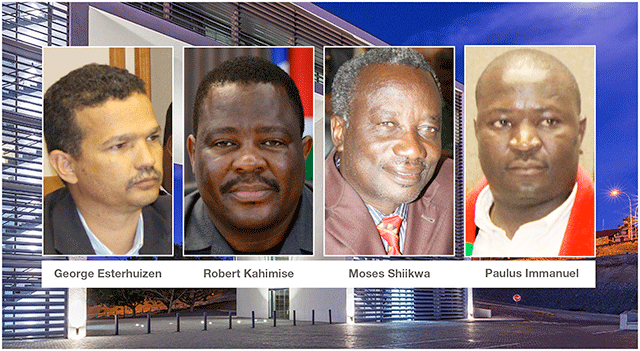
The municipality’s property and housing executive, George Esterhuizen, and the management committee submitted recommendations last week to the council.
They wanted the council to approve the new institutional land policy, which will guide how the municipality sells land.
Institutional land refers to plots used by churches, schools, welfare organisations and entities known as section 21 companies. A section 21 company is a not-for-profit organisation.
Although the new policy was sent back by the councillors, the recommendations in the council documents provide a hint about how the city wants to tackle the sale of land to churches and other institutions.
“That the moratorium placed on the sale of institutional land to places of worship be lifted,” one of the recommendations by the city’s management committee said.
The municipality would require churches to submit proof of belonging to a religious governing council, a synodical commission, or a similar governing body in Namibia.
“All “institutional” zoned land, to be sold to welfare organisations, places of worship, creches, colleges and private schools should only be through the cash payment method, or through a bank guarantee,” the proposed new regulation stated.
Another recommendation is that institutional land should be sold at a discount only for institutional, sports or recreational usage.
These prices are to be revised on a yearly basis.
“Places of worship and religious organisations be encouraged to apply for land, creches and after-school day care centres to help the government with early childhood development,” the recommendation continued.
Another recommendation was that institutions such as churches should pay the full price of “business”-zoned plots through the tender process and that no preference should be given to applicants.
According to the recommendation, all applicants should finalise the purchase of land within 90 days; whereafter no further extensions would be granted.
“That only a maximum extension of two years on the development period be granted to applicants who failed to develop such properties in the stipulated period,” the recommendations said.
Another suggestion was that institutions or organisations which want city land should have been operational for at least one year before applying for institutional land.
The city said plots would not be bought on discount anymore unless the institution is a non-profit organisation.
“State-owned enterprises do not qualify to purchase institutional land at subsidised prices, and they will not be allowed to use “institutional” zoned land unless the land is utilised for institutional purposes,” the proposed policy said.
Constituencies and government ministries or agencies who apply in their capacity for land must submit their applications through the Khomas Regional Council, the proposed new rule said.
The proposed recommendations furthermore state that institutional land will only be leased to entities which meet the requirements of the institutional land policy but who cannot afford to pay cash.
Institutional-zoned land should only be leased at a full market-related price for five years, the recommendation said.
“Should the lease be cancelled for whatever reason, all the permanent structures on the property revert to the council,” the recommendation added.
The proposed policy will not affect applications received before its enforcement.
Council documents show that the municipality was concerned that churches were becoming businesses.
“The city received an influx of applications from places of worship for land or consent to use residential land as places of worship,” a presentation by the city’s property managers made at a workshop in 2012 said.
In an age of information overload, Sunrise is The Namibian’s morning briefing, delivered at 6h00 from Monday to Friday. It offers a curated rundown of the most important stories from the past 24 hours – occasionally with a light, witty touch. It’s an essential way to stay informed. Subscribe and join our newsletter community.

The Namibian uses AI tools to assist with improved quality, accuracy and efficiency, while maintaining editorial oversight and journalistic integrity.
Stay informed with The Namibian – your source for credible journalism. Get in-depth reporting and opinions for
only N$85 a month. Invest in journalism, invest in democracy –
Subscribe Now!