


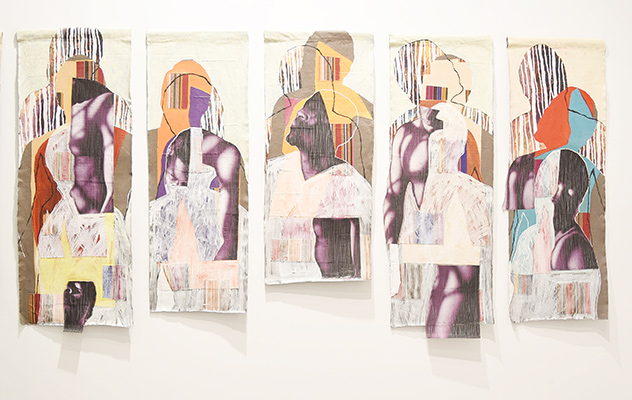
It was a Wednesday afternoon, and in 24 hours, the bare hall that was a maze of white wall panels, the smell of wet paint and powder dust would turn into the Investec Cape Town Art Fair – one of Africa’s leading and largest contemporary art fairs.
Galleries, curators and artists from across the continent and beyond were armed with power tools and measuring tapes to transform booths and mini galleries into inviting spaces to admire, consume and purchase art.
Held from 15 February to 18 February, the four-day fair was an experience of art talks, walkabouts, film screenings and art; where art enthusiasts, collectors and members of the public were able to view some of the best contemporary art our continent has to offer.
Comprised of eight different themes and sections, the art fair featured the main section which housed some of the leading South African and international galleries like the Stevenson Gallery and Goodman Gallery to the Tiwani Contemporary from London.
The ‘Tomorrows/Today’ section highlighted the work of emerging artists like Zimbabwean artist Wycliffe Mundopa, and Namibia’s own Nicola Brandt.
The ‘solo’ section – which was curated by Nontobeko Ntombela – showcased the work of emerging and established female artists whose work spoke on the socio-political issues that women face, whereas ‘Past/Modern’ looked at the work of historical modern art masters.
The ‘Unframed’ section featured the work of performance, sculpture and installation artists.
‘Editions’ put the spotlight on galleries that focused on prints, and various editions of artworks, while ‘Magazine and Publications’ brought together various magazines, bookstores and publishers that focus on the arts, and finally, ‘Cultural Platforms’ brought together various cultural institutions and non-profit organisations that support artists and artistic industries across the continent.
This year was the sixth edition of the fair and it was curated by the charismatic Tumelo Mosaka who expressed how important it is to have a platform like the Cape Town Art Fair for African artists and African art. “Africa has always been the generator of raw materials for the world and as such, we have always looked outwards for validation and consumption of our own culture. The one way to change this perspective is by making Africa the centre of creative engagement by creating various platforms. The Investec Cape Town Art Fair is an international platform aimed at bringing visibility to contemporary expressions from both here and elsewhere.”
Furthering the conversation about the importance of art platforms was the talks programme which created much-needed dialogue and discussion around the accessibility and sustainability of the arts.
The ‘Curating as Politic’ talk, which was moderated by Mosaka, spoke on how curating can be used to open up art spaces like museums and galleries that have historically been exclusive and not inviting to people of colour. The panel of curators, from Valerie Cassel Oliver of the Virginia Museum of Fine Art, Gabriel Ritter from the Minneapolis Institute of Art and Tosha Grantham, an independent curator from the US, shared how in their own capacities they have worked to make art more inclusive and reflective of communities as well as making spaces more inclusive.
Representing Namibian artist collective NJE, I was fortunate enough to be on a panel with Molemo Moiloa of the Visual Arts Network of South Africa, Ruzy Rusike of the South African Foundation of Contemporary Art, Meskerem Assegued of the Zoma Museum in Ethiopia and Mischeck Masamvu of the Village Unhu from Zimbabwe. The panel discussed building sustainable arts industries. Sharing some background on the art industries in our respective countries, we discussed how NGOs and artist collectives can help bridge the gaps in art industries and how sharing resources and skills can help make art more sustainable.
While there were numerous highlights, like getting to see beautiful and thought-provoking work from artists all over Africa and the world, the most exciting thing for me was getting to see the work of fellow Namibian artists.
NJE Collective showcased the work of Tuli-Mekondjo, Silke Berens, Jo Rogge and myself in ‘Cultural Platforms’.
‘Guns and Rain’ showcased the work of Brandt and SMAC Gallery showcased the work of Margaret Courtney-Clarke, who was also releasing her new photo book.
And to add to the list of Namibian artists whose work was at the fair, I also stumbled across prints of the late John Muafangejo’s work being sold in the ‘Editions’ section.
Sharing on her experience at the art fair, Tuli-Mekondjo said: “Showcasing at the Cape Town Art Fair was momentous in the sense that I had this amazing opportunity to experience what it felt like being physically present with your work and exhibiting at the leading art fair in Africa. I was continuously blown away by the genius and talent that is born and bred on this continent of Africa”.
“One of the fair’s goals is to encourage artists and audiences to grapple with complex histories and foster discussions about those histories, which is very much in line with what my own work sets out to do. I was also very delighted to see a number of other Namibian artists in attendance at the fair. Together we will certainly raise Namibia’s profile on the international art scene,” Brandt added.
All in all, the Cape Town Art Fair is a must-have experience to be inspired and in awe of the great talent and vision of art that is created on our continent. And in following the sentiments of these two talented Namibian artists, next year’s Cape Town Art Fair can only grow from triumph to triumph – with many more local artists exhibiting.
In an age of information overload, Sunrise is The Namibian’s morning briefing, delivered at 6h00 from Monday to Friday. It offers a curated rundown of the most important stories from the past 24 hours – occasionally with a light, witty touch. It’s an essential way to stay informed. Subscribe and join our newsletter community.

The Namibian uses AI tools to assist with improved quality, accuracy and efficiency, while maintaining editorial oversight and journalistic integrity.
Stay informed with The Namibian – your source for credible journalism. Get in-depth reporting and opinions for
only N$85 a month. Invest in journalism, invest in democracy –
Subscribe Now!