




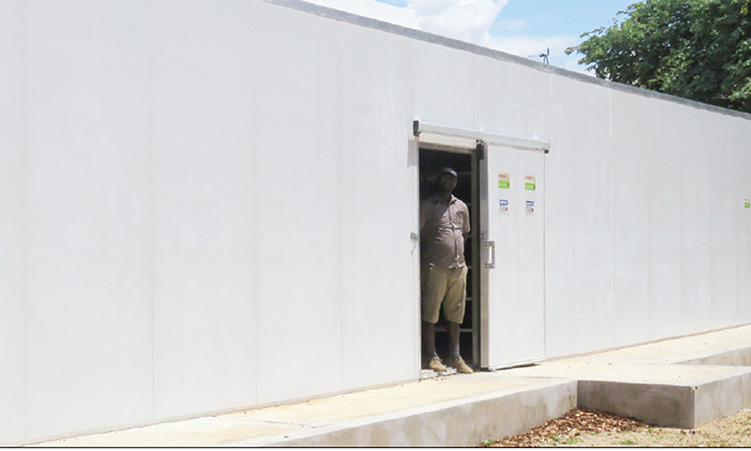
Work to set up a cattle feedlot is currently underway at the Etunda irrigation green scheme in the Omusati region, manager Sacky Shilyomunhu reveals.
The initiative is part of the government’s efforts to diversify and supplement production at green schemes countrywide.
Shilyomunhu told The Namibian on Tuesday that while there is currently little demand for animal fodder produced at the green scheme’s hydroponic plant, it will be used to feed the cattle in the feedlot.
He said the feedlot will accommodate about 1 000 head of cattle at a time, sourced directly from local communities.
Once fattened, the green scheme will sell the cattle to local abattoirs in northern towns like Oshakati, Eenhana and Outapi.
“Contractors are already busy with construction work and the feedlot is expected to be completed in the middle of next year,” said Shilyomunhu.
The Sikondo green scheme in the Kavango East region is contemplating coming up with a similar feedlot.
According to Shilyomunhu, the Musese green scheme in the Kavango West region is run privately by Winnie Metzger, who has been using it for a feedlot operation.
Metzger buys cattle from local communities, feeds them the scheme’s animal produce and then sells the fattened stock to local abattoirs.
An animal feedlot is a confined area where livestock are gathered and fed a specific diet to fatten them quickly for the market before they are slaughtered.
Meanwhile, Shilyomunhu said in June they started planting sweet potatoes on 22 hectares of commercial land and the harvested potatoes are now being sold to the public.
He said they also harvested wheat on 120 hectares of land and they are currently commercially planting maize on 250 hectares of land.
“We expect that 400 to 600 tonnes of maize will be harvested and harvesting will start from April next year,” he said.
Shilyomunhu added that some challenges were experienced during the harvesting of potatoes due to lack of equipment and they were forced to sort out different sizes of potatoes by hand.
He said some commercial activities on the green scheme have paused because they are lending tractors to small-scale farmers who have begun planting on 180 hectares of their land.
Green scheme projects in Namibia are large commercial production farms, operated and managed according to models outlined in the Green Scheme Policy.
In an age of information overload, Sunrise is The Namibian’s morning briefing, delivered at 6h00 from Monday to Friday. It offers a curated rundown of the most important stories from the past 24 hours – occasionally with a light, witty touch. It’s an essential way to stay informed. Subscribe and join our newsletter community.

The Namibian uses AI tools to assist with improved quality, accuracy and efficiency, while maintaining editorial oversight and journalistic integrity.
Stay informed with The Namibian – your source for credible journalism. Get in-depth reporting and opinions for
only N$85 a month. Invest in journalism, invest in democracy –
Subscribe Now!