


Some African presidents are known to live large when they are in power.
Their presidencies are characterised by travelling in motorcades of up to 10 cars, having mansions in the countryside and private presidential jets, while the biggest part of their country’s population is suffocated by poverty.
If you thought this kind of luxury stops when these leaders die, think again. These presidents are afforded some of the most lavish state funerals and their burial sites are usually a thing of beauty. Here are the luxury burial sites of some African presidents whose souls, by the look of these sites, are surely resting in peace.
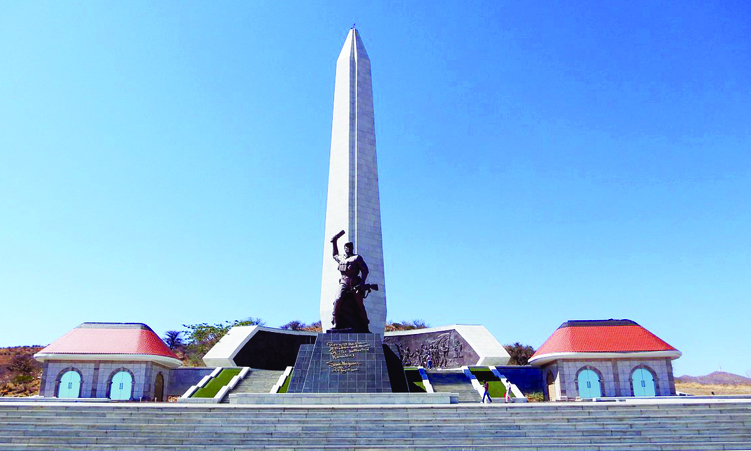
SAM NUJOMA – NAMIBIA
Namibia’s founding president, Sam Nujoma, was buried in a mausoleum at the Heroes’ Acre in Windhoek on Saturday. He died at the age of 95 on 8 February. It is reported that about N$30 million was used to fly Nujoma’s body around Namibia, allowing thousands of people to view the body. It is also reported that the government allocated N$7 million for regional memorial services.
ROBERT MUGABE – ZIMBABWE
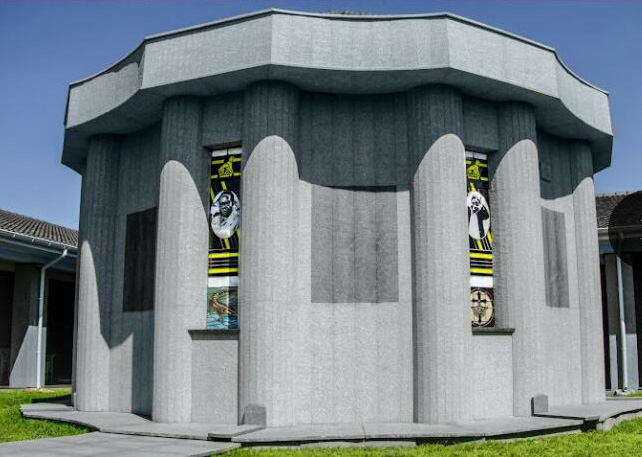
Zimbabwe’s former president, Robert Mugabe, was laid to rest in the rural village where he was born, three weeks after his death at the age of 95.
He was buried in the courtyard of his home at Kutama, about 90km west of the capital, Harare.
Mugabe died in a Singapore hospital on 6 September 2019, nearly two years after a coup ended his 37 years in power.
The Mugabe family decided on a private burial at Kutama after weeks of arguments with the government.
Ministers had wanted the body to rest at the National Heroes Acre in Harare. A mausoleum for the former president was being constructed at the site which is reserved for heroes of Zimbabwe’s liberation struggle.
KENNETH KAUNDA – ZAMBIA
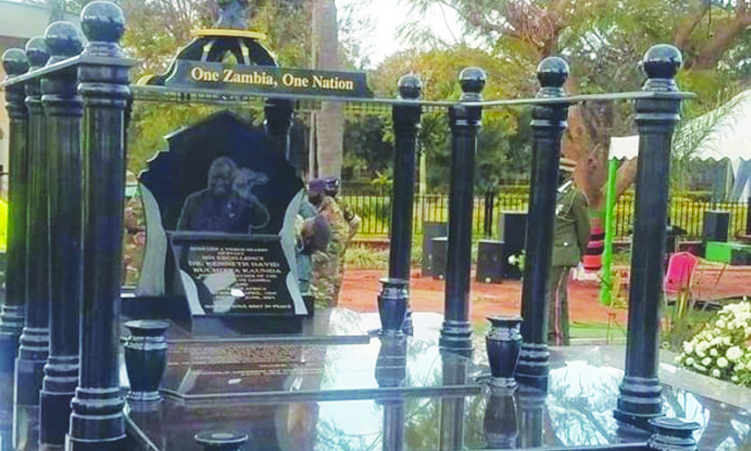
Zambia’s founding president, Kenneth Kaunda, was buried at the country’s presidential burial site. Kaunda died on 17 June 2021 at Mina Soko Medical Centre in Lusaka.
The government announced a 21-day mourning period. During the mourning period, Kaunda’s body was taken around all 10 provincial towns and in each provincial capital, and a short church ceremony was conducted by the military and the United Church of Zambia to which Kaunda belonged.
LAURENT-DÉSIRÉ KABILA – DRC
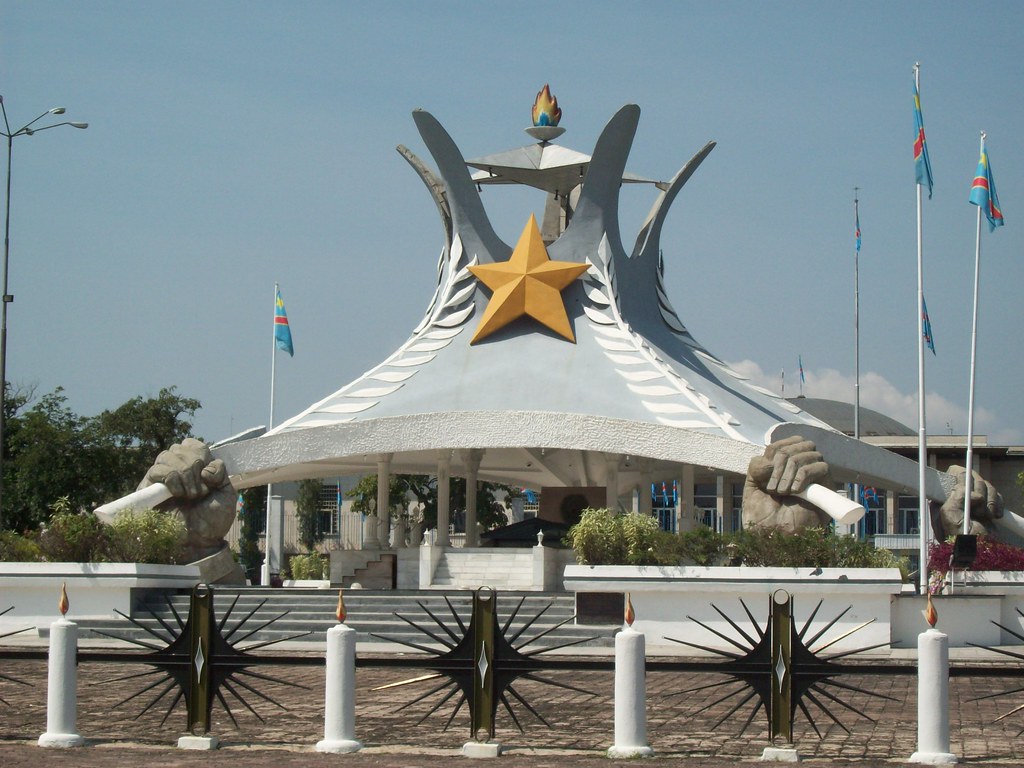
Laurent-Désiré Kabila was the Democratic Republic of Congo’s (DRC) president from 1997 until his assassination by his bodyguard in 2001. His tomb is located in Kinshasa, DRC.
It is a great structure held by four wrists in chains. This symbolism is ironic, given the history of the Congo, and its story of King Leopold’s hunt of rubber. Nearby, the statue of Kabila stands, in which he is shown to be raising a finger to the sky, and holding a book in the other hand.
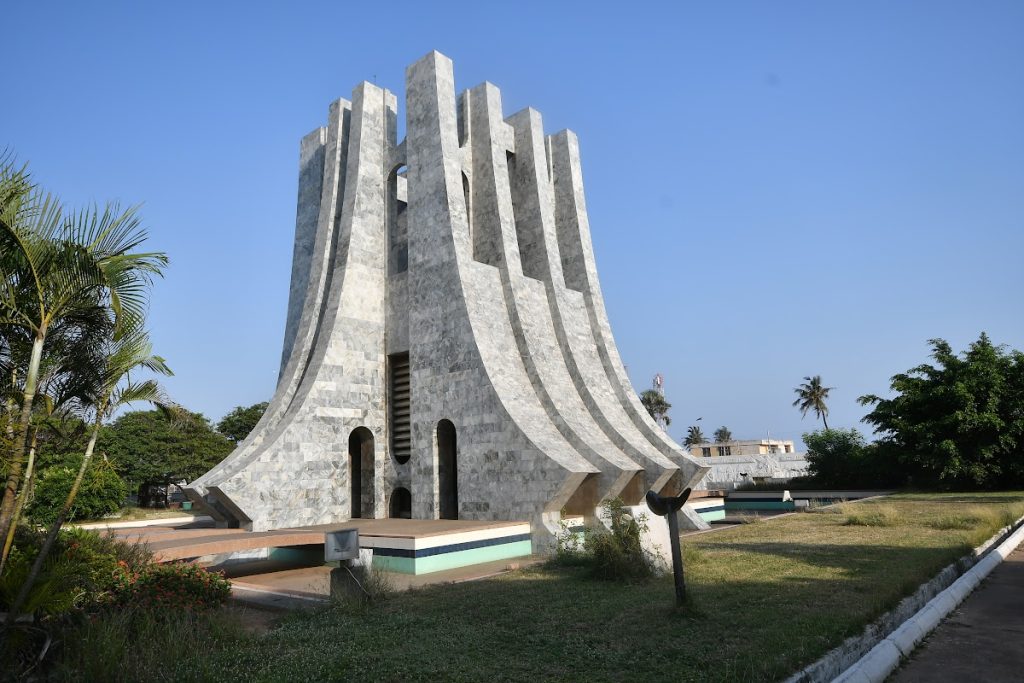
KWAME NKRUMAH – GHANA
The Kwame Nkrumah mausoleum is located in downtown Accra, the capital of Ghana. The mausoleum, designed by Don Arthur, houses the bodies of Kwame Nkrumah and his wife Fathia Nkrumah.
The building is meant to represent an upside down sword, which in Akan culture is a symbol of peace. The mausoleum is clad from top to bottom with Italian marble, with a black star at its apex to symbolise unity.
The interior boasts marble flooring and a mini mastaba-looking marble grave marker, surrounded by river-washed rocks. A skylight at the top in the mausoleum illuminates the grave. The mausoleum is surrounded by water, a symbol of life.
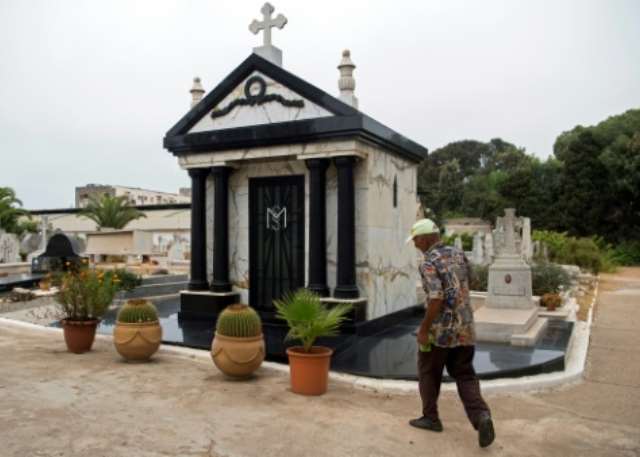
MOBUTU SESE SEKO – ZAIRE
Sese Seko was one of the great African dictators that ruled Zaire (present day DRC) from 1965 until he was toppled by Kabila in 1997.
During his rule, Sese Seko was one of the most extravagant presidents ever, but he died of cancer while in exile in Morocco. His body has never been repartriated and he lies in a cemetary in Morocco.
Palm trees stand guard before his black-and-white marble grave with its iron grill door and cross on top. No name, photo or epitaph can be seen.
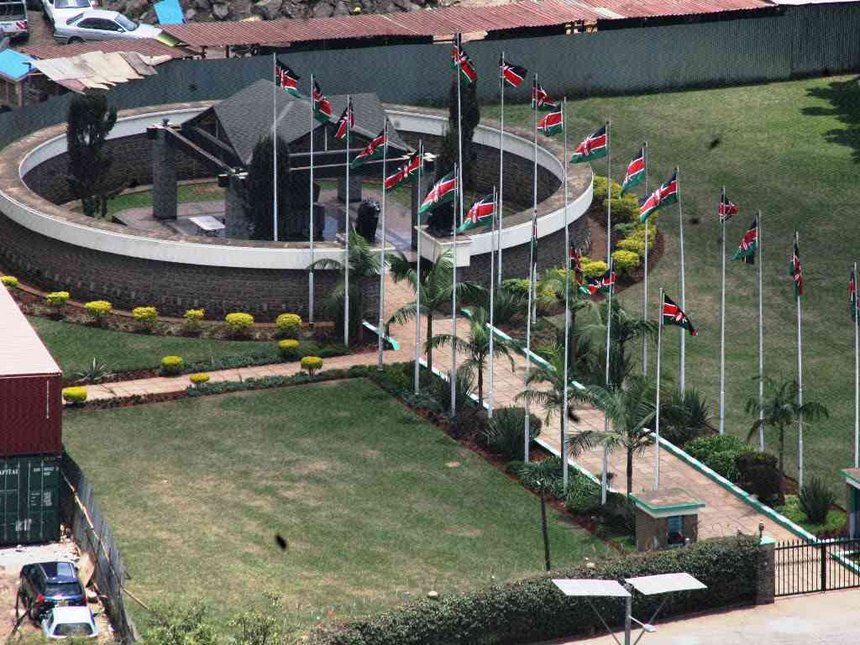
JOMO KENYATTA – KENYA
Jomo Kenyatta was Kenya’s first president and the country holds him in the highest regard possible, even more than 40 years after his death. He was burried just beside the parliament in Nairobi.
His tomb is guarded by the Kenya Defence Forces and is rarely opened on any other day, making it one of the few in the world which are not accessible to civilians.
However, any Kenyan can visit it provided they write a letter to the secretary of the Parliamentary Service Commission stating their intentions.
The 34-square feet Kenyatta mausoleum was designed by George Vamos, a famous Israeli architect.
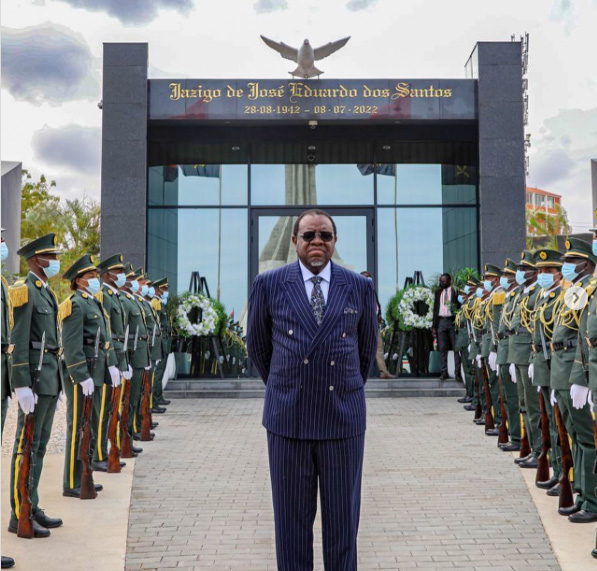
JOSE EDUARDO DOS SANTOS – ANGOLA
Jose Eduardo dos Santos, the late leader of Angola who was in charge from 1979 until 2017, was laid to rest at the historical palm-lined Praca da Republica in Luanda, the Angolan capital, after he died in 2022.
The funeral of the late strongman comes just days after his party, the People’s Movement for the Liberation of Angola (MPLA), saw its worst results at the ballot box in the country’s most open elections since independence.
The MPLA has ruled Angola for almost half a century, and despite its performance in the last election, it still looks set to remain in power.
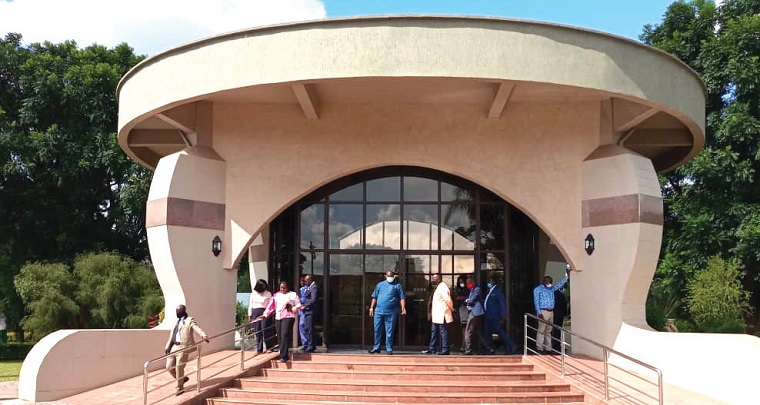
LEVY MWANAWASA – ZAMBIA
Levy Mwanawasa was the third president of Zambia, and he died in office in 2008. Mwanawasa was buried at the Presidential Mausoleum in the capital, Lusaka.
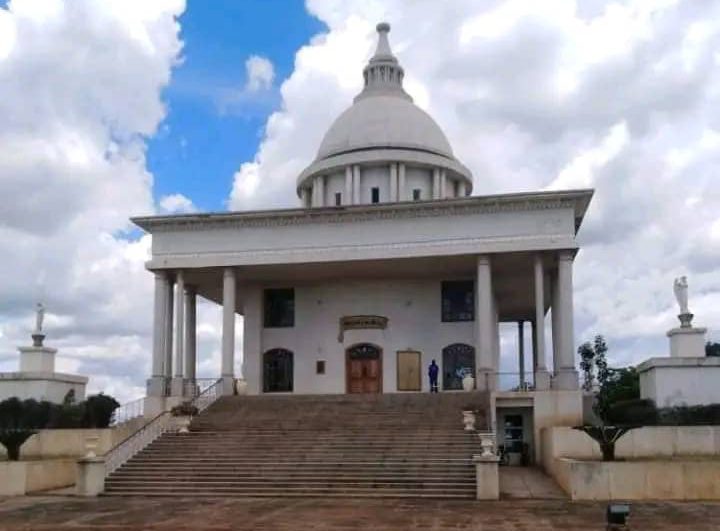
BINGU MUTHARIKA – MALAWI
Former president of Malawi Bingu Mutharika died in April 2012 and was buried on his farm next to his wife who had died earlier in 2007. By the time of his death, it is reported that he had $83 million in offshore accounts.
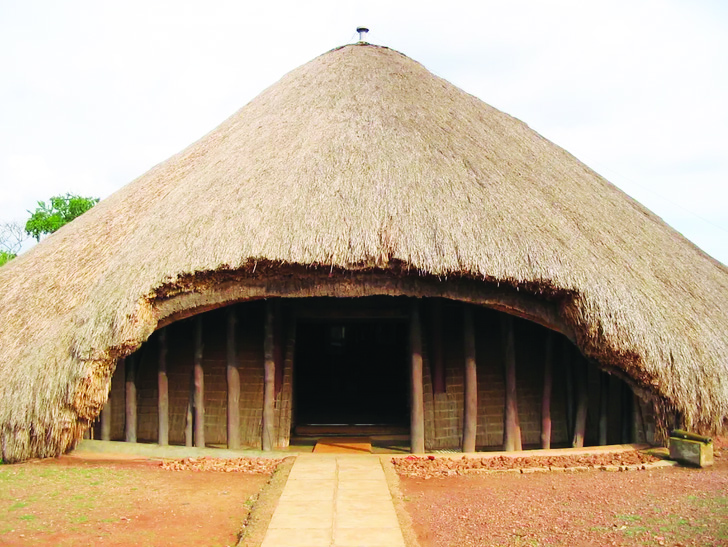
SIR EDWARD MUTESA II – UGANDA
Sir Edward Mutesa II was the first president of Uganda who took power after independence in 1962. Mutesa was also a reigning King of Buganda and after his death in 1969, he was buried at the royal tombs at Kasubi, Kampala.
– Matooke Republic
– Additional reporting by BBC and Tracy Tafirenyika
In an age of information overload, Sunrise is The Namibian’s morning briefing, delivered at 6h00 from Monday to Friday. It offers a curated rundown of the most important stories from the past 24 hours – occasionally with a light, witty touch. It’s an essential way to stay informed. Subscribe and join our newsletter community.

The Namibian uses AI tools to assist with improved quality, accuracy and efficiency, while maintaining editorial oversight and journalistic integrity.
Stay informed with The Namibian – your source for credible journalism. Get in-depth reporting and opinions for
only N$85 a month. Invest in journalism, invest in democracy –
Subscribe Now!