


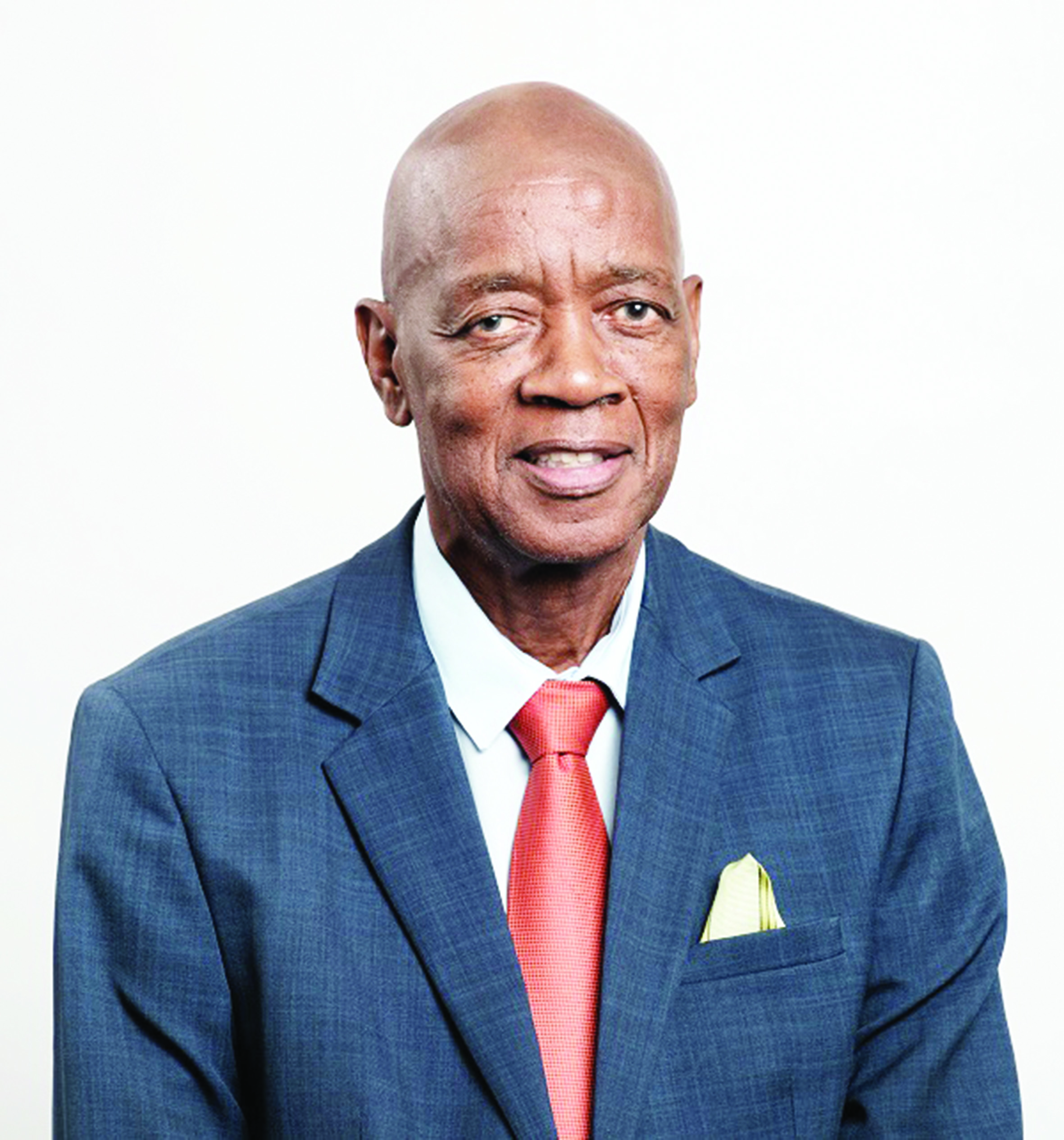
I am Passionate about national unity and celebrate cultural unity in diversity.
Last month, my paternal family was “dealt a heavy hand” when we lost two close cousins through death.
Both funerals took place at Gobabis.
What was interesting was that some family members came from Rundu, some from Botswana, while the rest came from the Khomas and Omaheke regions.
Of our two deceased cousins, one female and the other male, one grew up as Omuherero but could speak Khoekhoegowab.
The other one was born to an Omuherero father and a Damara mother, and was able to communicate in both languages.
My cousins from Rundu use Nyemba as their first language and some of them travelled from as far as southern Angola to attend the funeral.
At the funeral, we had to translate in English for them to be able to follow the proceedings.
Some of the young men from there are married to Aawambo women.
The cousins from Botswana use Otjiherero as their first language but they are also fluent in Setswana. Needless to say, some intermarried with Tswanas.
Equally, our cousins from Gobabis are of Ovaherero and Damara descent.
One of my female cousins from Gobabis was born to an Omuherero mother and a German father.
She told me she was more at home in Khoekhoegowab and Afrikaans than in Otjiherero.
CULTURAL ROOTS
The interesting thing about this part of my family is that our cultural roots are so widely spread that we could well be considered a ‘Namibian House’ at the micro level – a diversity that I embrace.
I have always contended that the ideal of ‘One Namibia, One Nation’ has largely been an elusive project, much to the regret of those of us who hold this ideal highly.
The preamble to the Namibian Constitution says: “(W)e will strive to achieve national reconciliation and to foster peace, unity and a common loyalty to a single state…”
This constitutional imperative is, at best, a theoretical declaration whose bearing on society has yet to be empirically verified.
Gaining independence in 1990 culminated in our statehood and nationhood, hence the reference to Namibia as a nation state.
We have created a sovereign state with the characteristics of a modern state. However, the burning question is, have we also created a nation with a truly national identity?
Many Namibians proceed on an assumption that national unity was achieved when we attained political independence in 1990.
In reality, different ethnic and racial groups inhabit the geographical area called Namibia.
However, there are not “Namibians”, with distinctively ‘Namibian’ cultural traits, in the same sense as there are “Italians” or “Irish”.
RAYS OF HOPE
For the most part, Namibia seems to be a geographical expression rather than a nation with a distinct national identity.
Indisputably, Namibia has the requisite characteristics of a state name, a defined territory, national anthem, national flag, recognition as a sovereign subject/person in international law, etc.
Regrettably, though, there has been a clear absence of a strong feeling of affinity among the country’s diverse ethnic and racial groups.
However, all is not lost and there are rays of hope.
For example, last year’s national elections were interesting in the sense that perhaps for the first time, ethnic identity politics seemed to be fading into the background.
The focus seemed to fall more on a generational divide and policy options in general.
I will leave it to social researchers to confirm or disprove this assertion. I think this seeming shift away from ethnic identity politics is a good sign that a Namibian national identity is in the making.
– Gerson Tjihenuna is a commissioner of elections. However, the views expressed here are entirely his own.
In an age of information overload, Sunrise is The Namibian’s morning briefing, delivered at 6h00 from Monday to Friday. It offers a curated rundown of the most important stories from the past 24 hours – occasionally with a light, witty touch. It’s an essential way to stay informed. Subscribe and join our newsletter community.

The Namibian uses AI tools to assist with improved quality, accuracy and efficiency, while maintaining editorial oversight and journalistic integrity.
Stay informed with The Namibian – your source for credible journalism. Get in-depth reporting and opinions for
only N$85 a month. Invest in journalism, invest in democracy –
Subscribe Now!