


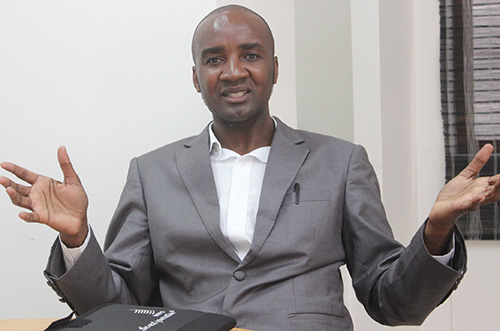
HEINRICH Hafeni (HH), at 32, is the youngest known entrepreneur to lead the Swakopmund branch of the Namibia Chamber of Commerce and Industry (NCCI), and besides his own vision in growing into a successful businessman from humble roots, he also sees the important role youth and culture can play in Swakopmund’s economy.
Here he shares his thoughts with The Namibian (TN).
TN: Who is Heinrich Hafeni in a nutshell?
HH: I’m a young Namibian born in Mondesa, Swakopmund. I am somehow a dreamer; somebody who looks at life. I don’t see myself as just another number in society. I was always ambitious and said that one day I would become somebody progressive. I was raised by a single mother who was a domestic worker. I have five siblings. She inspired me and I promised her that one day I would take care of her and my brothers and sisters.
TN: Would you call yourself previously disadvantaged?
HH: Good question. I went to school. I was educated. My mother made sure I went to school and that I finish it. That gave me the tools to think differently. I am sitting here because of where I come from. I had the opportunity to do whatever I want. As a kid, I saw what the colonial system was doing. There was a black community and a white community. I believe our generation was given an opportunity. There was a paraffin lamp in the house. I could read. There was always water. We lived in a brick house my grandmother bought. I think from that, there is no reason to say I was disadvantaged. I was fortunate. Our generation can’t say that we come from previously disadvantaged backgrounds compared to our elders who stem from more difficult times. I want to be exemplary to my generation and say we too can deliver. I look at my late mom as a domestic worker, who worked in the day and did adult literacy classes at night. I looked at that and remember saying that one day, I will work for her, so that she will not have to struggle. She only got N$600 but at the end of the day, we had food on the table. This inspired me to work hard and finish school and take care of her. Her struggles also are what made me.
TN: How did you get into business?
HH: I watched a documentary on Aristotle Socrates Onassis, Greek shipping magnate. I wanted to become like this great businessman. I knew I would have to work and be the bread winner. I worked in a casino to finish school, and then at a catering company. I served and managed restaurants in Swakopmund. Tourism became important in my life. I got into contact with overlander tour guides. I became an overland driver. This was an opportunity to work, travel and get paid. I travelled to 14 African countries. When we came from Cape Town to Swakop, I would take my group of 24 international visitors to my house in Mondesa. That’s when Hafeni Township Tours started. Tourists wanted to see our ‘village’. That’s why they came to Africa. My mom cooked for them, and the tour business started. Many of the clients want to experience Africa, but when they come to Swakop they want to know where the village and the locals are … not a town they see in Europe. I would take them to Mondesa, and eventually this became part of the itinerary when we came to Swakopmund. I started organising cultural tours to compliment my plans. As a result, I set goals for myself while I was on the safari.
TN: Where are you now?
HH: Tourism is what I know. It’s my passion. It’s what I have been doing. I received so many compliments as a result of my services. Now I represent tourism. It’s about the consumer. That’s what Hafeni is all about. Hafeni means ‘happiness’ and ‘joy’. I started a tourism organisation because I was already doing cultural tours in Africa and Mondesa tours. That was a foundation for me to start to grow Hafeni; to build a progressive tourism organisation. I have a vision for hotels in the township; that’s where I am going. There’s a cultural part I want – when one opens a curtain and sees a lady selling ‘kapana’ and a man pushing his wheelbarrow. I went to Soweto as part of a tourism operator exchange rate. The black people there already know tourism and it is big in the townships. They know what tourism can do to their communities economically. We stayed in a Soweto hotel that makes you feel like you’re in Sandton, and then you’re open curtains and see the township life.
Then one goes to someone’s house where they grew up and now is is a famous restaurant. It’s time we develop out townships, where we can bring innovation. This is what I am trying to do in Swakopmund. Now I have two vehicles, an overland truck and a combi and have five people working for me and so I will achieve my dreams. I look back and I can see hat I am doing something.
TN: How did you get involved with the NCCI?
HH: I started going to meetings to meet people to know what is happening in my town. Through NCCI, I have grown, and have met mentors such as Sven Thieme of Olthaver and List. He is one of the greatest business leaders. Many young business people must have mentors of this calibre. These are people who care about our country. NCCI was a tool for me to grow to the next level. I started off as an ordinary paying member and eventually in 2011 was elected as vice-chairman of a new executive committee of the NCCI in Swakopmund. In June, this year the board and the business community felt I must take charge; now I am the chairman.
TN: Why do you think you were elected?
HH: I always had a keen interest in the chamber and felt they can do more. I was asked a lot as vice-chairman to go to NCCI meetings and I never said no. I learned about leadership. I wanted to put this into practice. A leader is someone who creates a conducive platform for others. Somehow, we were not doing enough to compliment that title. Now, I work with the executive team to create expos and gala dinners recognising the business community. I brought more members to the chamber to stimulate networking. People, maybe, saw it was the right time the right man lead the chamber. It was like destiny.
TN: How does it feel to be one of the youngest leaders among mature businessmen?
HH: I feel the time for Namibia to shine is now. We need young faces to take charge of our institutions. It has not been happening. We need new blood. We need the youth. They just need encouragement. They are ready. Being appointed in this position will be an inspiration to many other young people. I know it is a responsibility. I prepared myself mentally because it would not be a walk in the park. Our elders can also see that the younger generation is serious in taking this country forward. We need exemplary young people. We are the ones who can inspire the Namibian child.
TN: What can you teach the older generation?
TN: There was a time NCCI (Swakopmund) was in shambles. Why do you think that was, and how did it change?
HH: We have 80 members now because of being active; because the executive board and administrators are working very hard – and not being paid for it. This is how it is supposed to be: sitting together and doing good things together. People started moving out in the past because there was no vision, we would hear. We, as a new NCCI, have created a vision. We are a visionary NCCI in Swakopmund.
In an age of information overload, Sunrise is The Namibian’s morning briefing, delivered at 6h00 from Monday to Friday. It offers a curated rundown of the most important stories from the past 24 hours – occasionally with a light, witty touch. It’s an essential way to stay informed. Subscribe and join our newsletter community.

The Namibian uses AI tools to assist with improved quality, accuracy and efficiency, while maintaining editorial oversight and journalistic integrity.
Stay informed with The Namibian – your source for credible journalism. Get in-depth reporting and opinions for
only N$85 a month. Invest in journalism, invest in democracy –
Subscribe Now!