We are entering a new era marked by profound geopolitical shifts, shrinking development assistance, rising trade barriers and escalating global conflicts.
Amid these challenges, however, lies a unique opportunity to foster new and innovative global partnerships grounded in mutually beneficial investments and shared values.
Africa should be central to any such effort.
Home to some of the world’s fastest-growing economies, the continent possesses vast renewable energy resources, including wind, solar, geothermal and hydro, as well as over one-fifth of the world’s critical minerals, essential to the green transition.
But a level playing field is vital to realising Africa’s growth potential. That means addressing a rapidly escalating debt crisis, which threatens to unravel decades of hard-won development gains.
’AFRICA PREMIUM’
The scale of the crisis is staggering.
In 2023 alone, low- and middle-income countries spent US$1.4 trillion servicing external debt, with African countries often paying the highest interest rates and penalties.
As a result, these countries have little choice but to divert critical resources from priorities like education, healthcare and climate resilience to service exorbitant loans.
Today, more than half of African countries allocate more funding to debt servicing than healthcare.
In Malawi, debt servicing exceeds education spending by a factor of two, meaning that a growing share of young people are effectively being sentenced to a future of ignorance, unemployability and poverty.
While African governments must commit to sound fiscal management and accountability, the continent’s debt dilemma is not merely the result of budget mismanagement or unwise borrowing.
It is also rooted in structural inequities within the global financial system: African sovereign borrowers face extremely high interest rates on international capital markets – even higher than those paid by countries with similar or worse credit histories.
This ‘Africa premium’ persists despite the continent’s relatively low default rates.
‘PROBLEMS NOT OF OUR MAKING’
Moreover, African countries do not have the option of refraining from borrowing, since many are on the frontlines of a climate crisis they did not cause.
Countries like Kenya, Malawi, and Mozambique have had to take on considerable debt to recover from increasingly frequent and severe natural disasters.
Small island developing states like Mauritius are borrowing just to survive rising sea levels.
The Covid-19 pandemic, global inflation and surging food and energy prices have only deepened these vulnerabilities.
Now, the United States has announced steep tariffs on imports from African countries running trade surpluses with it – countries that rely on exports to finance their debt payments.
Although implementation has been paused for 90 days, the impact is already being felt across the continent’s fragile economies.
Making matters worse, cuts to United States foreign aid programmes are set to strain essential services, slow progress toward economic recovery and exacerbate political and social insecurity, with Africa’s most vulnerable communities suffering the most.
In a deeply interconnected global economy, the consequences of such policy decisions will not remain confined to Africa.
By disrupting supply chains, destabilising economies and hindering the energy transition, these moves will harm consumers and businesses worldwide, erode investment opportunities and stifle potential economic growth.
SYSTEMIC INEQUITIES
Any solution to Africa’s debt crisis must address the systemic inequities built into the global financial architecture, which leave countries with little choice but to borrow at punitive rates to respond to crises they did not create.
That is why I have joined seven other former African heads of state and government to form the African Leaders Debt Relief Initiative, under which we are pushing for a revamp of the global lending system to secure debt relief and improve borrowing conditions for developing economies.
In our newly launched Cape Town Declaration, we call for a large-scale debt relief initiative grounded in fairness and transparency.
This must include comprehensive debt restructuring involving all creditors – private, bilateral, and multilateral – through a predictable and inclusive process.
Lower interest rates and longer repayment timelines are essential to creating fiscal space.
We also call for reforms to the global financial system focused on eliminating the ‘Africa premium’ and strategic investments in health, education, peace-building, and climate resilience in order to advance the United Nations’ 2030 Sustainable Development Goals and the African Union’s Agenda 2063.
The G20 Summit to be held in Johannesburg in November offers an ideal opportunity to make progress toward these goals.
Already, debt sustainability is at the top of its agenda.
A MATTER OF JUSTICE
Debt relief for Africa is not an act of charity, but a matter of justice.
We deserve a fair chance to put our houses in order, invest in our people and contribute to global economic growth, security and resilience – not just to repay loans that perpetuate dependency and penury.
From Nigeria’s economic reforms to continent-wide responses to past debt relief programmes like the Heavily Indebted Poor Countries initiative, we have shown our willingness and ability to make the most of such opportunities.
Half-measures will not suffice.
Only by breaking the cycle of debt – with creditors treating us fairly, multilateral institutions amplifying our voices and high income countries fulfilling their climate-finance commitments – can we reach our full potential.
This is in the world’s self-interest. After all, a strong, fast-growing Africa can play a crucial role in powering global supply chains, driving innovation, and advancing the green-energy transition.
The Cape Town Declaration is our roadmap. The question is: Will the world walk this path with us?
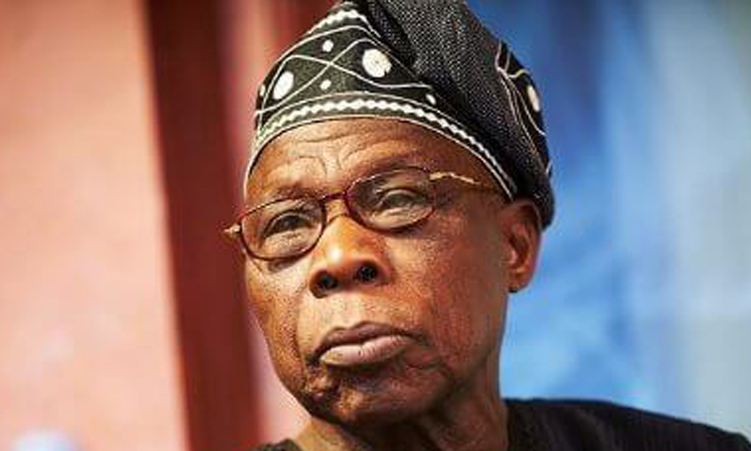
- Olusegun Obasanjo, chair of the African Leaders Debt Relief Initiative, is a former president of Nigeria.
– Copyright: Project Syndicate, 2025.
In an age of information overload, Sunrise is The Namibian’s morning briefing, delivered at 6h00 from Monday to Friday. It offers a curated rundown of the most important stories from the past 24 hours – occasionally with a light, witty touch. It’s an essential way to stay informed. Subscribe and join our newsletter community.

The Namibian uses AI tools to assist with improved quality, accuracy and efficiency, while maintaining editorial oversight and journalistic integrity.
Stay informed with The Namibian – your source for credible journalism. Get in-depth reporting and opinions for
only N$85 a month. Invest in journalism, invest in democracy –
Subscribe Now!