



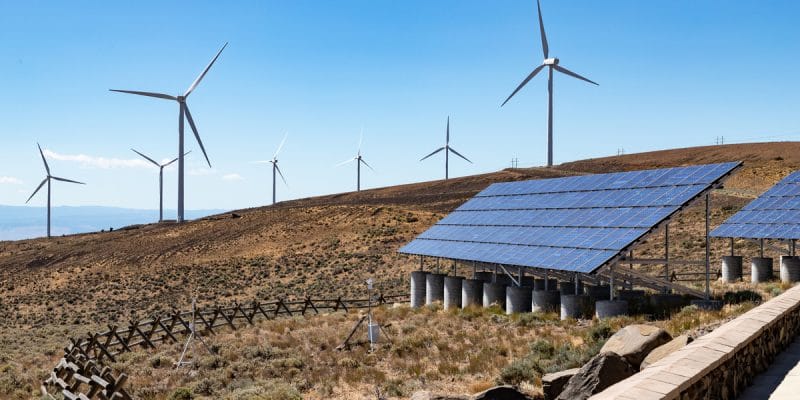
Namibia’s transition to renewable energy, combined with its mineral wealth, presents an opportunity for economic growth.
Localising the manufacturing of key components could drive job creation.
Reducing reliance on imports and fostering a domestic supply chain could strengthen the renewable energy sector, enhance economic resilience, and create employment across multiple industries.
This would require a collective effort between the public and private sectors, as well as significant focus on upskilling and cross-skilling to ensure Namibia’s workforce is able to keep pace with changing demand driven by technological advancements.
The case for localisation in renewable energy
Namibia currently imports most of its renewable energy components, including wind turbines, lithium-ion batteries, and solar panels, primarily from China.
While this ensures access to technology, it results in capital outflow, dependence on foreign supply chains, and limited local economic participation.
Investing in local manufacturing can shift Namibia from a consumer to an active producer in the renewable energy value chain.
Localisation not only reduces import costs, it also minimises supply chain disruptions, and strengthens Namibia’s position in the regional energy market.
In addition, a domestic manufacturing base would allow Namibia to customise energy solutions while fostering innovation and technical expertise.
Industrialisation and job creation
Developing a local renewable energy manufacturing sector would create employment in manufacturing, engineering, logistics, maintenance, and project management.
Short-term job creation would come from constructing manufacturing facilities, while long-term opportunities would emerge in operations, research, and technical services.
Namibia has key natural resources essential for renewable energy production, including lithium, copper, and nickel.
Utilising these within local manufacturing facilities would add value domestically rather than exporting raw materials for processing elsewhere.
This aligns with Namibia’s industrialisation strategy and reduces vulnerability to external market fluctuations.
Namibia’s green steel initiative as a foundation for localisation
A significant step in Namibia’s industrialisation journey is the establishment of a green steel plant at Lüderitz.
Powered by green hydrogen, this facility will produce zero-emissions iron for manufacturing steel, a key material for wind turbine structures, solar panel frames, and battery casings.
It represents progress towards reducing Namibia’s reliance on imported steel and enhancing self-sufficiency in the energy sector.
The green steel process uses solar and wind power to generate renewable energy, desalinated seawater for hydrogen production through electrolysis, and green hydrogen in a rotary kiln to reduce iron ore.
This initiative is expected to cut carbon emissions by up to 95% compared to traditional steelmaking, positioning Namibia as a leader in sustainable industrialisation.
The project, developed with German partners HyIron and Hyphen Hydrogen Energy, highlights how international collaboration can drive local economic growth while maintaining global sustainability standards.
Transitioning from imports to local production
Achieving local manufacturing requires a structured transition to balance current import dependency with local capacity development. This involves attracting foreign direct investment (FDI) for infrastructure, technology transfer, and skills development.
Experienced professionals must be engaged to train and mentor Namibians in renewable energy manufacturing, while government support is crucial in implementing local content requirements in procurement agreements to ensure international projects source materials locally.
Furthermore, collaboration with research institutions and industry leaders will further enhance Namibia’s capabilities through innovation and technology partnerships.
A practical immediate step for Namibia is manufacturing concrete wind turbine towers locally.
Unlike steel towers, which are costly to transport, concrete towers can be produced near project sites, reducing costs and logistical challenges.
Integrating a circular economy approach, such as recycling old turbine blades and repurposing decommissioned turbine nacelles into office spaces, can further enhance sustainability.
Advancing Namibia’s renewable energy sector
Namibia’s green hydrogen industry has the potential to power local manufacturing facilities, ensuring renewable energy component production is both cost-effective and environmentally sustainable.
Ongoing government initiatives, including a green hydrogen-to-ammonia project and the expansion of Lüderitz’s deepwater port for global exports, reinforce the economic benefits of this strategy.
Localising renewable energy manufacturing is key to Namibia’s industrialisation, economic diversification, and job creation.
Leveraging natural resources, fostering skills development, and attracting strategic investments can transform the country into a renewable energy manufacturing hub.
To achieve this, Namibia must implement supportive policies, facilitate FDI, and ensure local industries meet international quality standards.
These steps will reduce reliance on imports, create a resilient energy sector, and position Namibia as a leader in Africa’s green economy.
- Julien Karambua is the country manager at Workforce Staffing Namibia.
In an age of information overload, Sunrise is The Namibian’s morning briefing, delivered at 6h00 from Monday to Friday. It offers a curated rundown of the most important stories from the past 24 hours – occasionally with a light, witty touch. It’s an essential way to stay informed. Subscribe and join our newsletter community.

The Namibian uses AI tools to assist with improved quality, accuracy and efficiency, while maintaining editorial oversight and journalistic integrity.
Stay informed with The Namibian – your source for credible journalism. Get in-depth reporting and opinions for
only N$85 a month. Invest in journalism, invest in democracy –
Subscribe Now!



