



WORK on a billion-dollar housing development project for the Aussenkehr settlement in the south is expected to start early next month.
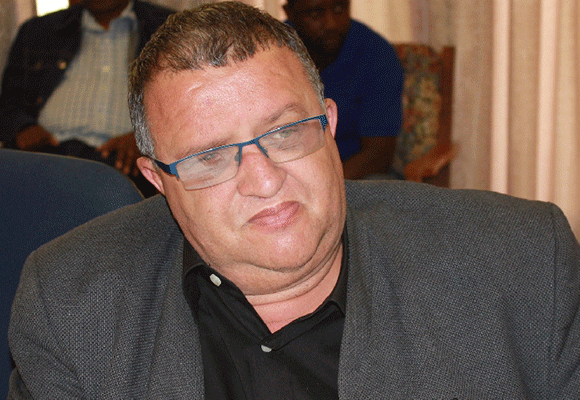
//Karas Regional Council chairperson Jan Scholtz made the revelation in a statement he issued yesterday to reflect on the progress council had made in 2017 in terms of socio-economic development.
He said the council will soon enter into a public-private partnership (PPP) agreement with three companies for the construction of 5 000 houses at the settlement, as well as the setting up of other bulk infrastructure to help uplift the development of the town.
About 10 years ago, the government made an undertaking to provide decent housing at Aussenkehr – which is home to an estimated 16 000 residents – when the farm’s landlord Dusan Vasiljevic donated 600 hectares of land for the development of a town.
But a decade onwards, residents, most of whom are grape farm workers and the backbone of the grape industry which generates millions of dollars from exports, and those flocking to the farm to seek jobs, still live in abysmal conditions.
Almost 90% of the residents either live in huts made of reeds, or in corrugated zinc shacks. Their shelters lack basic amenities such as electricity, running water or sanitation facilities.
Some residents relieve themselves on the river banks when nature calls.
The politician said there are also plans to construct an airport at the settlement, as well as upgrading the Aussenkehr/Rosh Pinah gravel road to bitumen standard.
Meanwhile, he highlighted the construction of toilets at the villages of Berseba, Aus, and Koës; the //Karas Regional Council’s office park construction, which is still underway; the launching of a five-year regional strategic plan; and the recently-completed N$120 million Rosh Pinah solar plant as some of the achievements which the regional council had accomplished in 2017.
In her state of the region address in 2016, //Karas governor, Lucia Basson said the region had set its eyes on eradicating the bucket toilet system by the end of 2017.
She then revealed that a high number of residents were still using the degrading toilet system in places like Aus (179 households), Berseba (33), Tses (107), Koës (284) and Kosis (33).
Figures Scholtz revealed of toilets completed in //Karas when compared to the latest statistics show that the region still fell short of its target to have eradicated the bucket toilet system by the end of 2017.
Scholtz said 2018 would be a year of “stocktaking” and “reckoning,” calling on fellow councillors to act on inadequacy, mediocracy, bureaucracy and laziness.
“So, let us galvanise all our efforts to improve the living standards of all our people,” he added.
In an age of information overload, Sunrise is The Namibian’s morning briefing, delivered at 6h00 from Monday to Friday. It offers a curated rundown of the most important stories from the past 24 hours – occasionally with a light, witty touch. It’s an essential way to stay informed. Subscribe and join our newsletter community.

The Namibian uses AI tools to assist with improved quality, accuracy and efficiency, while maintaining editorial oversight and journalistic integrity.
Stay informed with The Namibian – your source for credible journalism. Get in-depth reporting and opinions for
only N$85 a month. Invest in journalism, invest in democracy –
Subscribe Now!