Over the past year, I have reflected deeply on what I can do differently in my second term as a member of parliament.
I have also considered the shared responsibility of my colleagues across the aisle in our National Assembly.
It is reasonable to assume that everyone who enters public service does so with genuine intentions for our country.
At heart, the conviction to see ordinary Namibians thrive under the laws and policies passed in their interest must be what drives us all.
While personal or economic circumstances may influence the decision to run, the core desire remains unchanged: to build a better Namibia for everyone.
I have also reviewed promises made since the 2019 elections and reports adopted in the National Assembly from 2020 onward.
As I write, I am resisting the temptation to list them all.
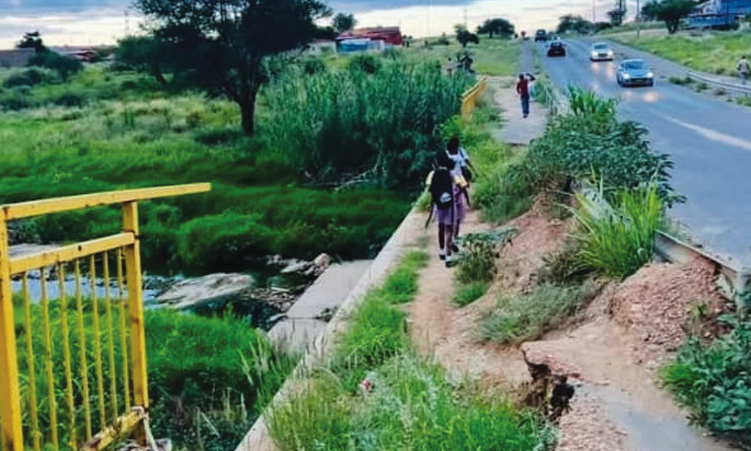
We have adopted reports on youth unemployment, formalising the informal sector, wildlife protection, the state of our economy, conditions in holding cells, dilapidated school infrastructure, and the list continues.
Before adoption, debates were often robust, not to reject findings but to strengthen recommendations and support those responsible with implementation.
THE ‘POLITICS OF DIAGNOSIS’
Yet every January, as parents struggle through a tough economy during ‘back to school’ season, parliament is flooded with the same urgent questions: access to higher education, unaffordable learning material, endless demands for stationery, books, toilet paper, even air freshener.
These are not new problems as legislators and implementers repeatedly fail to prepare adequately or to learn from patterns.
Instead, we fall into what I call the ‘politics of diagnosis’: we have become experts at naming problems but seem to forget that our mandate is to deliver solutions.
This pattern extends beyond education to youth unemployment, a cause I have championed, where spotlighting the crisis too often substitutes for progress.
The politics of diagnosis and the politics of blame are close relatives, seductive distractions that blind us to our role in solving these challenges.
It is painful to admit, but last year I saw colleagues succumb to this trap during debate on my motion about how our economy and financial architecture, by design, sustains inequality, restricts access to finance, and deepens poverty.
I paired the diagnosis with detailed proposals for reform and expected a discussion to build from there.
Instead, it veered into personal venting, vague assertions, and anecdotes, rarely grounded in research or constituent input.
The debate became a ‘therapy session’ rather than a path to action.
I do not write this to disparage individuals or label colleagues. It’s not about us.
Rather, it’s about the thousands who queued on election day, placing their faith in our promises.
ACCOUNTABILITY
Our task is not to dwell on blame once a problem is identified, it is to build stronger mechanisms of accountability.
A respected scholar, professor Johan Coetzee, often reminds us that parliament is not merely a house of debate; it is a house of governance.
I may disagree with aspects of how it currently functions and have ideas for improvement, but my duty is not to fixate on institutional flaws. It is to propose solutions and press for change.
The hardest transition I have faced is from ordinary citizen to public servant. As a citizen, I freely voiced frustrations, often labelled as ‘complaints’, without any duty to act.
That mindset is where the politics of diagnosis begins: on a taxi ride to campus, hearing a minister questioned about education and muttering in anger, “Aiye, these people are all corrupt!” At that moment, responsibility belonged to “them”, not me.
Society reinforces this separation: we treat governance as the politician’s exclusive burden. It is far easier to diagnose than to wrestle with the complexities of solutions.
We must feel these issues and a sense of obligation deeply before accepting nomination for public office.
Our struggles as a Namibian people can never remain a “they” problem. They are our problems, and we must fix them.
THE TRUE TEST
Life as an ordinary citizen carries few expectations: pay taxes, hold a job, care for loved ones. In public office, you carry an obligation to represent others without centring yourself.
You must serve ethically, impartially and relentlessly. Let us therefore move decisively beyond the comfort of diagnosis and the temptation of blame.
Let us embrace the politics of solutions with disciplined purpose, rigorous accountability, and genuine collaboration across party lines.
The true test of our service will not be the sharpness of our critiques or the volume of our speeches. It will be the depth of change we deliver for our people.
It demands more than good intentions. It requires sustained, courageous action.
Namibians will soon queue again at polling stations.
Will we greet them with fresh momentum and measurable progress, or with the same familiar grievances dressed in new words?
The choice is ours.
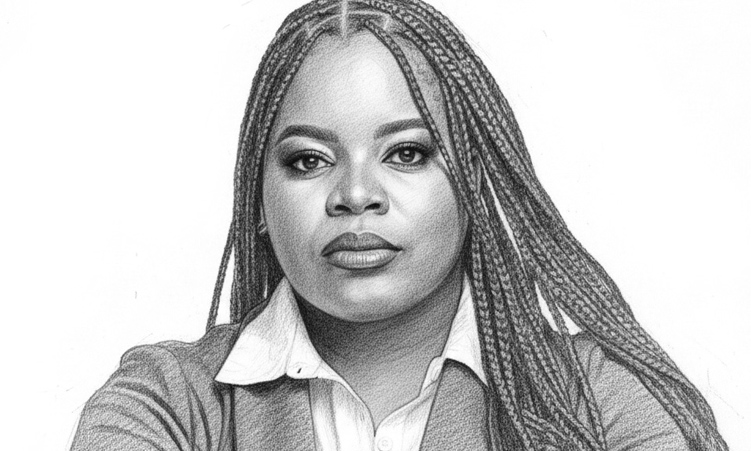
- Inna Hengari is a member of parliament, a political science graduate and a student of public governance. She writes in her free time.
In an age of information overload, Sunrise is The Namibian’s morning briefing, delivered at 6h00 from Monday to Friday. It offers a curated rundown of the most important stories from the past 24 hours – occasionally with a light, witty touch. It’s an essential way to stay informed. Subscribe and join our newsletter community.

The Namibian uses AI tools to assist with improved quality, accuracy and efficiency, while maintaining editorial oversight and journalistic integrity.
Stay informed with The Namibian – your source for credible journalism. Get in-depth reporting and opinions for
only N$85 a month. Invest in journalism, invest in democracy –
Subscribe Now!