Thousands of people want to be famous as singers and make it to the top in the music industry, but being an artist is not easy.
When performing artists die, it often emerges that they were struggling financially, leaving families with a heavy burden and questions. Many artists live from hand to mouth and from one gig to another. For most artists in Namibia, no work means no pay and this often results in many talents seeking other professions that they are not happy in.
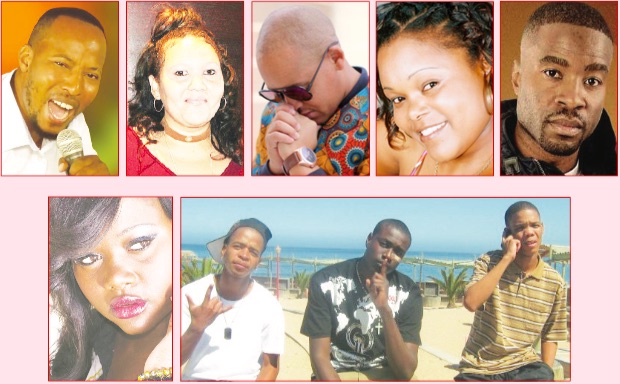
The Weekender this week spoke to a few artists who shared their experiences.
Stella Kapepo (real name Stella !Naruses) said she has experienced many setbacks due a lack of funding for her projects.
“As musicians, we have so many creative initiatives in mind, but the companies who have the capacity to sponsor aren’t always willing to sponsor artists, especially now during the harsh pandemic. One does not become an artist by choice, it’s a force of nature – a true gift from God, instilled in you to share when you discover it. Often the signs are already there from a very tender age. To do everything is money. Not small money, big money. For success, you need to make sure your planning is spot-on,” the ‘Kapepo’ hit-maker said.
Our own leading songbird and astute songwriter Erna Chimu agrees with !Naruses that big bucks are needed for new projects. Chimu said the industry is not sustainable and that most musicians who record albums do it just for the love of it, as they hardly make enough out of album sales to recover the production cost.
“There’re many factors that can be put right in a small country like ours, but where favouritism and tribalism become a weapon for music and radio deejays managing certain artists, there’s zero chance for other new acts to be considered in an event or festival they held, or help organise. With a union, I strongly believe that things will fall into place,” Chimu said.
An artist who is known worldwide for her blissful voice, Tequila Tequila, previously only known as Tequila (real name Tekla Iita), says although she has not released any of her own music in the past few years, she has been featuring and performing.
“Our market is small, so not everyone can make a living from music as a career like in other countries. Here I have experienced that good management is also hard to come by. Our industry is not growing as it used to due to access to foreign music online and lack of investment,” Iita said.
Award-winning Afrikaans rapper Lee-Roy Percy Pieters, popularly known as S-man, could not stop talking about the struggles he has experienced over the years with getting booked for performances and getting sponsors on board for his projects.
“We have a lot of talented but broke artists. Studio time and videos are expensive. Most of the artists can’t afford to pay for them. I have seen so many artists fall into depression and drugs, especially when the coronavirus pandemic started. There were no shows and this meant no income,” he said.
Singer, songwriter, composer and producer Arthur /Nanub, popularly known as Damara Dikding, admits that his biggest challenge was not understanding himself, losing purpose and reinventing to seek counselling as well.
“I think personal battles contributed a lot and sometimes you can get lost in yourself. I was uninspired and when I looked at the country and industry itself then things also didn’t make sense. I made a lot of mistakes too and had to adjust. It even made it worse when Covid came. I had to migrate to the College of the Arts in Katutura to try and host music workshops just to find ways to give back and feed myself at the same time,” he said.
Singer, actress and model Bianca Heyns said her career has been negatively affected due to the lack of support from sponsors and the public. Heyns stressed that more attention is often given to talents from outside the country.
“It is true that here we don’t have a big enough platform as the international artists do. It makes me sad to see that when people or sponsors come to our shows, they would spend more time on international acts rather than our own local talent. We have the potential and the talent that most international artists have. All we need is a bit more support financially,” she said.
Ma/Gaisa artist Mervin Clerance Claasen (known as MarvTown), who made his debut last November when he released an album, said he entered the industry at a very crucial time – a time that lacks opportunities for artists.
“It was very difficult for artists to create their own opportunities because of the Covid-19 restrictions that were in place at that time. As an incoming artist, it was very difficult for me. Most of the few events that took place were for established artists,” he said.
A former member of well-fanned kwaito trio Streetkidz, Benediktus Witbooi, who is now known as DikBones, agreed with Claasen, adding that love will help grow the industry more.
“Our industry will improve if we can work together for the love of what we do. Once the private sector sees the unity in the industry, it’s going to be very easy for them to plough funds into the industry. Our industry is growing and the quality of the content put out there now is very dope. But despite this, our own people are more glued to our colleagues over the borders, while the land of the brave has so many different hits being dropped weekly,” Witbooi said.