


Media is a field of study which always attracts a large number of applicants, however most of those only gun for the large institutions – forgetting about the little guy.
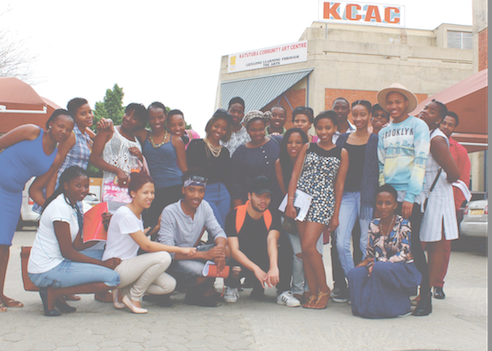
Situated at the Katutura Community Arts Centre (KCAC) in Windhoek, College of the Arts (Cota)’s Media Arts Technology Studies (MATS) programme is one such little guy. While the larger institutions offer bachelor’s degrees in media studies, Cota offers diplomas, and it’s the practicality of the courses that make it worth it – as it prepares the graduates to be job-ready on completion of the course, head of department Joost van de Port mentioned.
Having tried to introduce media education in the different regions, Van De Port discovered there is a need for practical media work. “That is the uniqueness of this school. You still have to research and have knowledge and be able to take different angles. There are artistic angles to what we do here,” Van De Port said.
MATS is financed by the government, and Van De Port mentioned this can be a blessing on one hand, that it is affordable and available to everyone, and not so much on the other, when the budget crunch affects the school as it also needs money for the maintenance of equipment.
“A lot of our graduates find themselves doing big things in the industry,” Van De Port said. “85% of our students find employment in their field of study after graduating,” he added.
The first year at MATS is the foundation year where basic media knowledge and skills are built. The year after is the specialisation year, where the students choose whether to continue in radio production, television production or new media design. The third year will have students undergoing a full term of internships before graduating from their courses.
“By the time you leave, you have the foundation, as well as the specialisation and abilities to find employment,” Van De Port mentioned.
So what does MATS have on offer? MATS offers three-year, full-time course in radio and television production and new media design. In addition to the three courses, there is also a two-year certificate in sound technology.
Diploma in Radio Production
Radio production is a practice-based course that covers technical and practical aspects of radio production – radio drama and factual radio are the core specialisations. The course aims to develop a range of practical, critical and analytical skills relevant to a wide range of careers, focusing on radio.
Diploma in Television Production
Television production is aimed at students who have aspirations to work in the broadcasting, independant production and corporate sectors of the television industry. The emphasis of this course is on practice, however academic learning forms part of the curriculum. Graduates will be competent in three genres of television, namely TV magazine, TV drama and TV documentary.
Diploma in New Media Design
New media design is a combination of specialist knowledge, practical skills, creativity and critical awareness and prepares graduates for the challenges of creative thinking. Graphic designers, photographers and web designers are at the forefront of the digital communications revolution and create packages for most aspects and platforms in media.
Certificate in Sound Technology
This is a two-year certificate provides a solid basis to the craft of sound engineering through theory and practical, hands-on training. Students firstly learn the fundamentals of sound and human hearing, then continue to be introduced to the set up and functioning of audio sound equipment. Music production provides a strong listening-training element and will help to develop critical listening and analytical skills.
Why Should Students
Opt for Cota?
Lecturer Irene Hans said: “We are totally unorthodox. If you want to become a journalist, you don’t want to sit behind a desk all day – we do the practical work.”
“Big corporations would rather want to employ a youngster who knows how to do a job rather than experiencing setbacks by employing someone who has to be trained on the job,” Hans mentioned. “We have ready-made products. We build characters and grow bonds with our students.”
“We look for passion, and there must be talent – someone worth investing in,” she said speaking on the selection process. All applicants must be in possession of a Grade 12 certificate with at least 17 points in IGSCE, and a C symbol for English. Those older than 23 can apply through mature age entry with three years of relevant work experience.
The applicants who meet requirements will be contacted and will attend a four-day induction workshop, after which an entry exam will take place. Per course, the top 15 candidates will gain entry into the course of their choice. Additional tests and interviews might take place depending on the course.
While there are no registration fees, prospective students can find out more about tuition fees by calling 061 374 100. Application forms can be picked up from the Cota offices in town or at KCAC.
New media design student Stewart Ratjama said he decided on MATS because he was struggling with his points in Grade 12, and decided to apply to the college. “I decided to take a chance, and I found my interest building in the course. I’m enjoying every moment.”
“Like in my situation, where points are not enough, you can come to Cota and maybe gain even more knowledge. It’s not about the courses, it’s way beyond that – we learn a variety of skills.”
Ratjama’s classmate Jekonia
“I was first doing visual art for three years then I realised it connected to new media, because they both offer design aspects. I came back to expand my knowledge.”
Ndakola mentioned that the college is beneficial, because graduates have the skills to be self employed or find employment easily, and he enjoys his time at the college.
“I enjoy the photography and I’m always happy. I enjoy it so much.”
In an age of information overload, Sunrise is The Namibian’s morning briefing, delivered at 6h00 from Monday to Friday. It offers a curated rundown of the most important stories from the past 24 hours – occasionally with a light, witty touch. It’s an essential way to stay informed. Subscribe and join our newsletter community.

The Namibian uses AI tools to assist with improved quality, accuracy and efficiency, while maintaining editorial oversight and journalistic integrity.
Stay informed with The Namibian – your source for credible journalism. Get in-depth reporting and opinions for
only N$85 a month. Invest in journalism, invest in democracy –
Subscribe Now!