


Recent discussions held in the Kunene region, and pronouncements by Namibia’s president in favour of a new mega dam blocking the Kunene River, compel me to share my thoughts with fellow Namibians.
In the quiet pulse of the Kunene River, where ancient waters have carved stories into stone, a new tale is being forced, one not authored by those who live by her banks, but by those who measure development in megawatts and not in meaning.
The Baynes Dam project, planned along the Namibian-Angolan border, is presented as a beacon of modernity a hydropower solution to a nation’s electricity dreams.
Yet beneath this promise lies a deeper question, almost Socratic in nature: can a people be developed through the destruction of their essence?
Let us start at the roots where all stories worth telling begin.
THE POWER NEXUS
Since 1994, the state has turned its gaze toward the Kunene, first through the Epupa Dam, now through Baynes.
Yet, three decades on, what tangible seeds of transformation have been sown in the lands of the OvaHimba and OvaZemba?
Not in word, for the promises are many, but in deed.
No training centres in energy engineering. No scholarship pipelines.
No intentional cultivation of indigenous expertise in the energy sector.
What is offered instead?
The repetition of an old script: what is promised is not employment but hard labour, security guard posts, and tokenism in its most polished form.
As Aristotle reminded us, “That which is potential seeks its actuality.”
Yet here, the potential of the youth lies dormant, denied its transition to purpose by a state that speaks of empowerment but acts in inertia.
This is not merely about employment; it is about power, who holds it, who builds it, and who pays the price for it.
The ecological terrain on which this project planned is not empty land.
It is not, as some would frame it, an unutilised wilderness waiting for industrial salvation.
Yes, it is semi-arid land but land with memory.
Land that has, for years, groaned under the weight of drought. And yet it lives, sustained by ancient ecological rhythms.
To dam its heart is to alter its breath.
INTEGRITY AND TRANSPARENCY
Namibia’s own National Biodiversity Strategy and Action Plan (NBSAP), in concert with the UN Convention on Biological Diversity (CBD), speaks clearly: development must not come at the expense of ecological integrity.
As Namibia drafts its third NBSAP, we should heed the 2022 internationally agreed UN Kunming-Montreal Global Biodiversity Framework, which provides the framework for Namibia’s NBSAP.
The UN framework calls for urgent action and has, as one of its targets, the following: to “ensure the full, equitable, inclusive, effective and gender-responsive representation and participation in decision-making, and access to justice and information related to biodiversity by indigenous peoples and local communities, respecting their cultures and their rights over lands, territories, resources, and traditional knowledge”.
A dam in a drought-prone region defies this logic.
It disrupts ecosystems, interrupts aquatic life, and leaves the river fragmented.
The process isn’t transparent.
Where are they mining sand for construction alone? This will scare the land like wounds that will be open without an anaesthetic
CULTURAL DESECRATION
This project does not simply threaten the natural world, it threatens the sacred.
Within the proposed flood zone lie no fewer than15 graves, silent sentinels of ancestry.
These are not nameless stones; they are histories.
They are prayer. They are legacy. And in Ovahimba culture they are a tool to identify land ownership.
Their submersion is not just a hydrological event it will be a cultural desecration. It will be a drowning of memory.
The National Heritage Act (2004), the Environmental Management Act (2007), and the African Charter on Human and Peoples’ Rights do not merely discourage this, they forbid it.
The right to culture, to land, to ‘Free, Prior, and Informed Consent’ (FPIC), as enshrined in the UN Declaration on the Rights of Indigenous Peoples and Convention 169 of the International Labour Organisation, is not an ethical suggestion. It is law.
QUESTIONS THAT NEED ANSWERS
We have to ask: who sits at the table where these decisions are made?
Where are the voices of the Marienfluss business communities, whose eco-lodges will now stare into rising waters instead of sunlit valleys?
Where are the women who herd, the elders who guard the graves, the young who inherit both the land and the decisions made on it?
More than 1 000 opposing signatures to the dam from directly affected residents in the Baynes community speak to a process devoid of authentic dialogue.
It is consultation by announcement, not by consent.
Governments cite adherence to the Ramsar Convention, the SADC Protocol on Shared Watercourses, and the UN’s convention on biodiversity.
But adherence is not declared; it is demonstrated. And demonstration requires not only legal compliance but moral clarity.
AN ALTERNATIVE
If energy is the goal, let us suggest an alternative: why not turn our eyes toward the Kunene River mouth, a less populated area, devoid of cultural sites, and ripe for coastal energy infrastructure and innovation?
A site where a new town could emerge; a site not of displacement, but of design.
A place where schools of energy and biodiversity could bloom, and where the next generation might speak both Otjiherero and hydrology in the same breath.
But alas, this is not the route that has been chosen.
Instead, we watch a repetition of hydropower history: extractive, top-down and deaf to the poetry of place and memory.
LET THE RIVER FLOW
In the name of development, we must not sever the roots that make a people whole.
What is progress if it demands that graves be submerged, voices silenced, and rivers made to run against their will?
We do not oppose electricity. We oppose electricity built on the bones of the forgotten.
We oppose a transition that repeats the trauma of the past under the green cloak of climate discourse.
To build a future that is truly renewable, we must first renew our principles.
Let the Kunene flow as she has always done, not just with water but with wisdom.
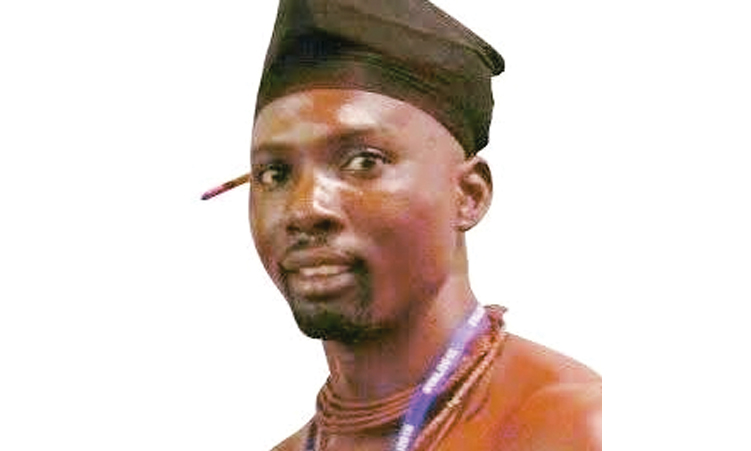
– Alphons Koruhama is a computer scientist and indigenous knowledge researcher, and main researcher for the OvaHimba Biocultural Protocol (BCP), launched in 2024.
In an age of information overload, Sunrise is The Namibian’s morning briefing, delivered at 6h00 from Monday to Friday. It offers a curated rundown of the most important stories from the past 24 hours – occasionally with a light, witty touch. It’s an essential way to stay informed. Subscribe and join our newsletter community.

The Namibian uses AI tools to assist with improved quality, accuracy and efficiency, while maintaining editorial oversight and journalistic integrity.
Stay informed with The Namibian – your source for credible journalism. Get in-depth reporting and opinions for
only N$85 a month. Invest in journalism, invest in democracy –
Subscribe Now!