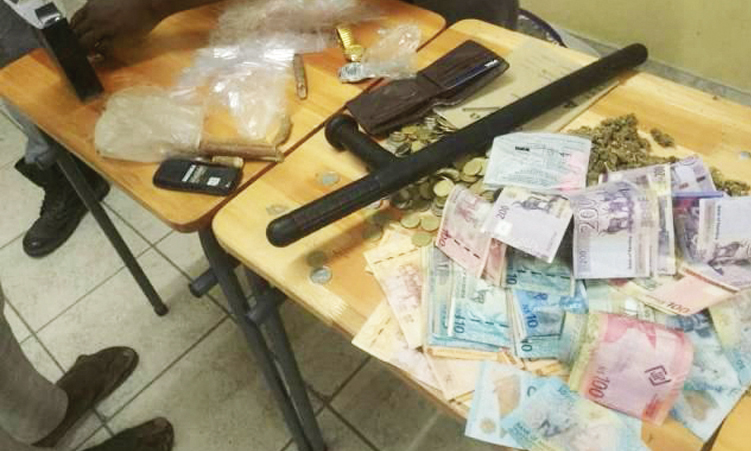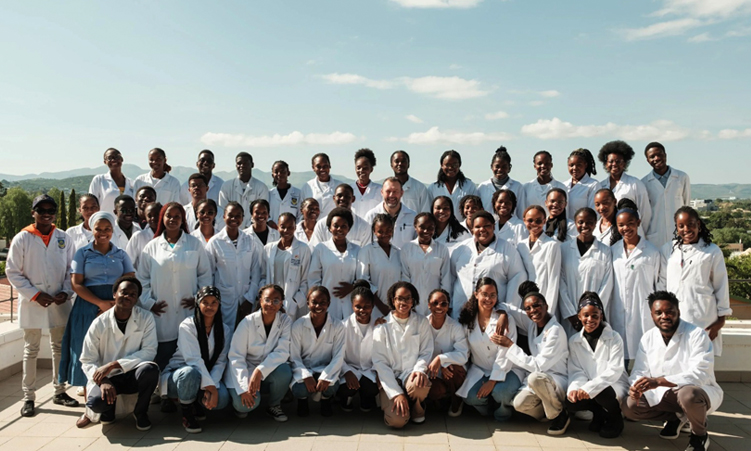




In Namibia, the ongoing challenge of allocating government funds between education and correctional services reflects a broader question of national priorities.
Recent figures indicate that the government spends nearly 17 times more on prison inmates than schoolchildren – about N$366 058 annually per inmate, compared to N$20 838 per pupil between grades 0 and 12.
These figures are based on the budget speeches delivered by minister of home affairs, immigration, safety and security Lucia Iipumbu and minister of education, innovation, youth, sport, arts and culture Sanet Steenkamp, respectively.
The home affairs ministry has allocated about N$1 billion to safe custody and about N$19 million to the rehabilitation and reintegration of inmates for the 2025/26 financial year.
This amounts to a total of over N$1 billion allocated to the Namibian Correctional Service.
A 12 June 2024 article by The Namibian on presidential pardons issued last year suggests that there are now roughly 2 909 inmates nationwide, excluding those released by the said pardons and reprieves. Based on these numbers, the government will be spending roughly N$366 058 on a single inmate for the 2025/26 financial year.
LESS FOR CHILDREN
The education ministry, in contrast, has allocated about N$17 billion to basic education, and a further N$1 billion to policy coordination and support services for the same period.
According to the Fifteenth School Day Report for 2024, there are 896 311 pupils enrolled in basic education countrywide. This translates to government spending of approximately N$20 838 per pupil for the 2025/26 financial year.
It is, therefore, safe to conclude that the government is set to spend 17 times more on an inmate than on a schoolchild.
THE COST OF PRISONS
It is, however, important to recognise that correctional services come with inherently high fixed costs.
Providing secure accommodation, 24-hour supervision, medical care, food, and rehabilitation programmes requires a significant operational budget to ensure humane treatment and uphold basic human rights.
Many countries, including those with high living standards and low crime rates, struggle with the same dilemma.
Finland, often praised for its effective social systems, also allocates substantially more per inmate than per pupil.
However, it should be noted that Finnish schoolchildren are not learning under trees or in dilapidated classrooms.
This contrast illustrates that higher inmate spending does not necessarily have to come at the expense of quality education.
NATIONAL PRIORITIES
This inconsistency speaks volumes about our national priorities.
Investing more effectively in education is not only critical for the immediate well-being and future prospects of our children, but is also a proven long-term strategy to reduce crime and the future burden on correctional facilities.
The groundbreaking work of James Heckman demonstrates the value of early childhood care and education.
He found that “quality economic returns come from quality investments in early childhood development”, and that the returns on such investments outweigh those made in adulthood.
This principle is captured in what is now known as the Heckman Curve.
The question Namibia must ask itself is whether current spending reflects a balanced strategy – one that prioritises prevention through education while maintaining humane and effective correctional services.
The humane treatment of prisoners is non-negotiable.
Equally non-negotiable is the right of every child to learn in safe, well-equipped environments.
Redirecting more resources towards educational infrastructure and teacher support can help break cycles of poverty and reduce future incarceration rates.
Ultimately, tackling this complex challenge requires a dual approach: maintaining responsible correctional budgets while significantly enhancing education funding.
Only then can Namibia build a safer, more prosperous society grounded in opportunity, equity, and justice for all.
– Tulonga Nakale is a teacher and is currently pursuing a law degree at the University of Namibia.
In an age of information overload, Sunrise is The Namibian’s morning briefing, delivered at 6h00 from Monday to Friday. It offers a curated rundown of the most important stories from the past 24 hours – occasionally with a light, witty touch. It’s an essential way to stay informed. Subscribe and join our newsletter community.

The Namibian uses AI tools to assist with improved quality, accuracy and efficiency, while maintaining editorial oversight and journalistic integrity.
Stay informed with The Namibian – your source for credible journalism. Get in-depth reporting and opinions for
only N$85 a month. Invest in journalism, invest in democracy –
Subscribe Now!