


Aussenkehr’s status as a settlement is preventing residents and companies from building proper, bank-financed housing.
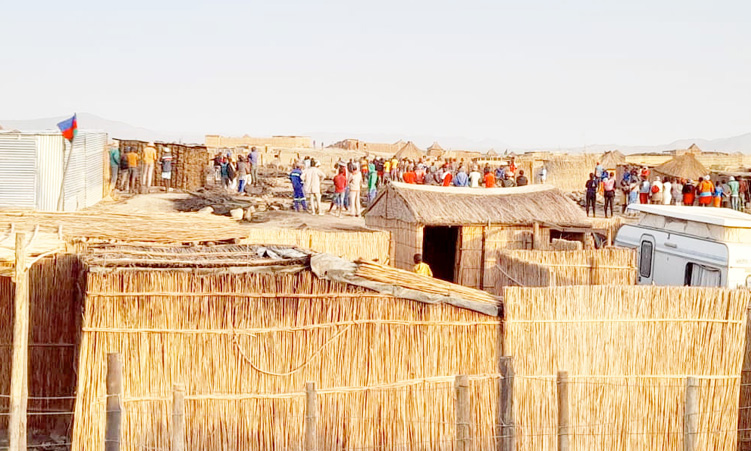
This has left more than 25 000 people living in reed structures without sanitation and exposed to frequent fires, according to the ||Kharas Regional Council.
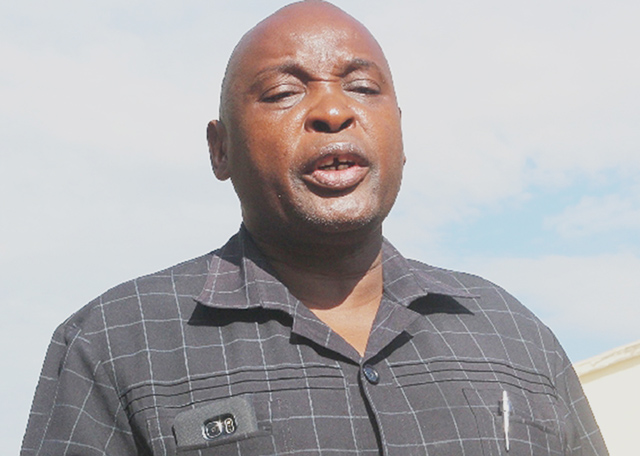
Acting chief regional officer Ralph Sachika says the lack of title deeds in settlement areas makes it difficult for residents to invest in housing, as banks do not recognise leasehold agreements for home loans.
“Ultimately, in a settlement area like Aussenkehr, you are not going to expect to have mass housing as a project that is ongoing. Because Aussenkehr, by its nature, does not have title deeds to the property. You can’t build a premises or a house or property that is bankable,” says Sachika.
He says this has also made companies operating at Aussenkehr reluctant to invest in staff housing.
Aussenkehr, located on the banks of the Orange River, is home to the grape and date industries and has long relied on reed housing.
A fire in December destroyed 56 reed houses, leaving families without furniture, clothing and other belongings. Before that, two other fires were recorded in 2025, one of which claimed a life.
Sachika is now calling on the government to allocate an additional N$20 million to N$25 million to fix a sewerage treatment plant that has been vandalised and replace underground water pipes that are cracking.
“Since the back and forth in investment was taking place, this infrastructure was not utilised and is in a dilapidated state,” says the acting chief regional officer.
Despite these challenges, the regional council allocated 100 erven to the Namibia Grape Company and another 100 erven to Silverlands Grape Company last December to build houses for employees.
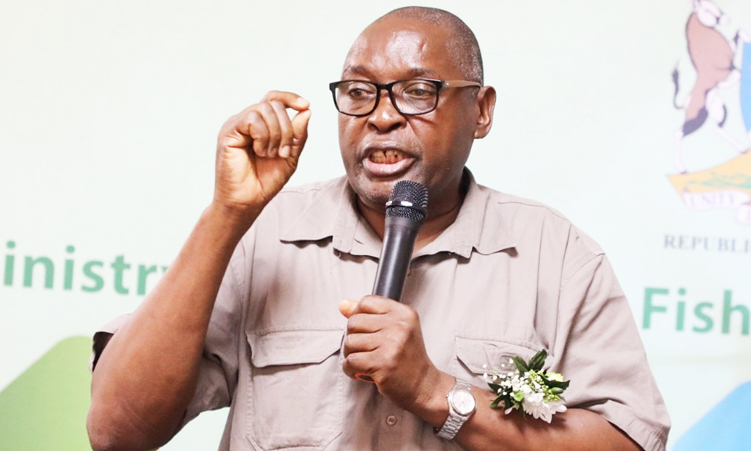
Namibia Grape Company general manager Gideon Nuunyango says three houses have been completed and foundations have been cast for 96 more.
He says the company and its partners, CapeSpan, provided an initial N$3 million for the project.
According to Nuunyango, the housing development is facing further obstacles because the newly allocated township area has no water.
“It requires us as a company to install water tanks for all our employees and build communal ablution facilities with pit latrines for them. That will cost the company an additional N$2.2 million,” Nuunyango says.
He adds that discussions are still ongoing about how much workers will contribute to the houses, as leasehold agreements also make it difficult to raise funding.
“The workers have to contribute as it is a challenge to raise funding with these leasehold agreements,” he says.
Karasburg West constituency councillor Katrina Cloete says the regional leadership is worried about the safety risks faced by residents living in reed houses.
“We held a community meeting on Sunday. I informed the people that they need to get out of the reed houses because one day more lives can be lost. I’ve contacted the regional council and the Shack Dwellers Association to come and they agreed to come next week and introduce the two programmes,” Cloete says.
She adds that upgrading Aussenkehr to village status is not being considered yet.
In an age of information overload, Sunrise is The Namibian’s morning briefing, delivered at 6h00 from Monday to Friday. It offers a curated rundown of the most important stories from the past 24 hours – occasionally with a light, witty touch. It’s an essential way to stay informed. Subscribe and join our newsletter community.

The Namibian uses AI tools to assist with improved quality, accuracy and efficiency, while maintaining editorial oversight and journalistic integrity.
Stay informed with The Namibian – your source for credible journalism. Get in-depth reporting and opinions for
only N$85 a month. Invest in journalism, invest in democracy –
Subscribe Now!