


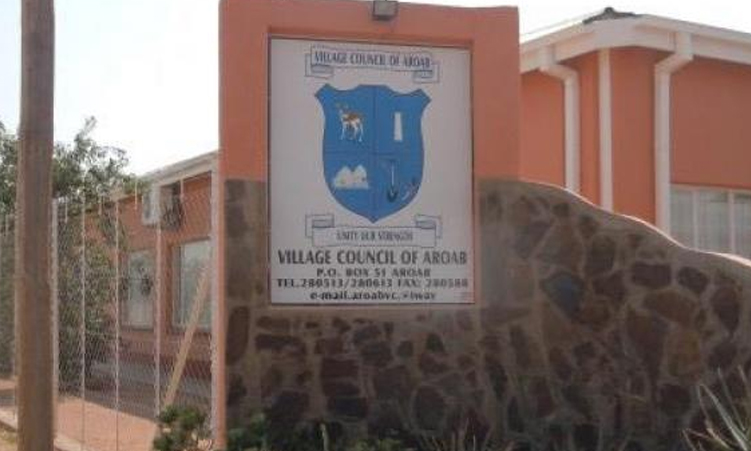
A report by the auditor general reveals that the Aroab Village Council faces N$4.4 million in debt alongside significant accounting discrepancies and missing financial documentation.
The report, which was for the year ended 30 June 2019, was tabled in the National Assembly last week.
It indicates that consumers owe the council over N$1.4 million, while the village’s Build Together debt stands at N$2.4 million.
Auditor general Junias Kandjeke says he gave the council a disclaimer audit opinion indicating that, due to significant limitations, material, or pervasive uncertainties, the auditor cannot determine if the financial records are accurate.
“It is recommended that the council should ensure it has an acceptable accounting reporting framework in place and that the reporting framework is disclosed in the financial statements, “ he says.
Kandjeke says the auditors noted that provision for bad debt expenses was not updated, thus leading to an understatement of bad debt expenses for the year.
He says the auditors have noted a difference amounting to about N$500 000 between the trial balance (N$4.4 million) and the council’s annual financial statements (N$4.9 million).
The auditor further notes a difference amounting to N$500 000 between the closing balance of N$1.41 million and annual financial statements standing at about N$900 000 for consumer debtors, however, the accuracy of the tariffs used could not be verified.
Kandjeke has recommended that the council ensures that reconciliations are performed and tariffs are updated.
In addition, the auditors could not confirm the existence, completeness, rights and obligations pertaining to trade and other payables amounting to N$2 million, as no supporting documents were provided.
Kandjeke recommends that the council ensure supporting documents are provided.
A difference amounting to N$460 000 between the closing balance (N$482 000) and annual financial statements (N$900 000) was further noted for external loans.
The auditors were also not provided with supporting documentation for an adjustment made to accumulated funds amounting to N$35.2 million.
Meanwhile, Kandjeke has cited similar issues in his audit report on the Oshana Regional Council for the years ended March 2022 and 2023.
He says after the auditors ran a recoverability debt test, the provision made by the council was inadequate and understated by N$800 000 (for 2023) and N$277 000 (for 2022).
Receivable debts were too high, while debt that is unlikely to be collected requiring a write-off was too low.
This follows a difference between N$886 000 in 2023 and N$1 million in 2022) as per the council’s financial statements.
Kandjeke gave the council an adverse opinion, which means financial statements are misleading and do not accurately represent its financial position.
In an age of information overload, Sunrise is The Namibian’s morning briefing, delivered at 6h00 from Monday to Friday. It offers a curated rundown of the most important stories from the past 24 hours – occasionally with a light, witty touch. It’s an essential way to stay informed. Subscribe and join our newsletter community.

The Namibian uses AI tools to assist with improved quality, accuracy and efficiency, while maintaining editorial oversight and journalistic integrity.
Stay informed with The Namibian – your source for credible journalism. Get in-depth reporting and opinions for
only N$85 a month. Invest in journalism, invest in democracy –
Subscribe Now!