



The government says while the ongoing unrest in Angola over fuel increases will not have an impact on Namibia, it could help in tackling the illegal Angolan fuel, or ngungula, trade.
Unrest in Angola erupted after its government’s decision to increase the country’s diesel price by 33%.
The move is expected to spell trouble for traders who smuggle fuel into Namibia, but could also prove to be positive news for the Namibian government, which has been battling the trade of ngungula in recent years.
The viability of informal trade is expected to decline, potentially redirecting more consumers to formal fuel stations and increasing Angola’s revenue from its national fuel levy.
“In Angola fuel is subsidised by the government, and in Namibia our fuel is not subsidised. Meaning if you calculate properly, the fuel in Angola will still be cheaper than in Namibia, because we use our own mechanisms to source fuel and there is not likely to be an impact in Namibia because we do not source our fuel from Angola,” executive director of industries, mines and energy Ben Nangombe says.
“Most likely the unrest might affect the ngungula traders. If the fuel becomes expensive, they would not be able to bring it to Namibia.”
The ngungula trade, driven by the stark price difference between Angola’s heavily subsidised fuel and Namibia’s regulated market, has flourished for years, particularly in the northern border regions.
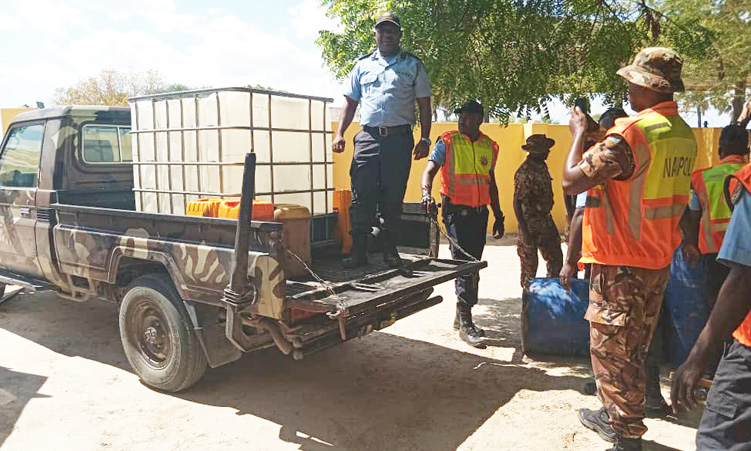
Smugglers often use jerrycans, motorcycles, and informal routes to move fuel across the border, bypassing customs and taxes. In Namibia, this black-market activity has led to several arrests at towns such as Oshikango and Rundu, where individuals have been caught transporting and selling illicit fuel without proper licences.
Economist Omu Kakujaha-Matundu agrees with Nangombe’s sentiments. “The smugglers’ trade could be impacted as fuel prices in Angola increase. These unfavourable terms in the ngungula market will be good news for the Namibian government in terms of an increased fuel levy,” he says.
The ongoing Angolan protest began as a three day-taxi strike escalated into widespread unrest, including looting, blocked roads and violent clashes with the police.
Over 100 people have been arrested.
Kakujaha-Matundu says fuel subsidies are not a good strategy to address poverty and income equality.
“Wherever you have fuel subsidies, their withdrawal by the government always leads to protests. It seems fuel subsidies are not a good strategy to address poverty and income inequality.
“Angola has failed to redistribute its income, using its vast natural resources.
“Millions are living in squalor. So the moment Angola withdrew or removed the fuel subsidies it was immediately felt by the poor. The protests are a lesson for the region to look at the skewed income distribution in their respective countries. You can’t fool the people all the time by granting them morsels and unceremoniously withdrawing them,” he says.
MIGRATION IMPACT
Meanwhile, economist Joseph Sheehama says the unrest could lead to the massive migration of Namibians living in Angola, which would have a significant impact on Namibia and other Southern African Development Community (SADC) countries.
“Apart from the trade relationship, we also need to consider the fact that some Namibians have family in Angola, that Kwanyamas, Nkhumbi and Kimbundu will migrate to Namibia, and that uncontrolled unrest could have a significant impact on Namibia and other SADC countries, affecting economic growth and regional stability,” he says.Sheehama says despite the fact that Namibia is not directly impacted by the unrest, the developments in Angola could impact commercial relations as the two nations share borders, particularly Oshikango.
Questions sent to Angola’s ambassador to Namibia as well as the Ministry of Home Affairs, Immigration, Safety and Security were not responded to by the time of going to print yesterday.
In an age of information overload, Sunrise is The Namibian’s morning briefing, delivered at 6h00 from Monday to Friday. It offers a curated rundown of the most important stories from the past 24 hours – occasionally with a light, witty touch. It’s an essential way to stay informed. Subscribe and join our newsletter community.

The Namibian uses AI tools to assist with improved quality, accuracy and efficiency, while maintaining editorial oversight and journalistic integrity.
Stay informed with The Namibian – your source for credible journalism. Get in-depth reporting and opinions for
only N$85 a month. Invest in journalism, invest in democracy –
Subscribe Now!