


The fetid boil of police corruption that has been lanced in the wake of General Nhlanhla Mkhwanazi’s bombshells-that-have-been-public-for-years is nearing the source of its cause.
Just last week, Cedrick Nkabinde, special adviser to sidelined Police Minister Senzo Mchunu, had his home raided by balaclava-wearing police carrying assault rifles.
This was while National Police Commissioner Fanie Masemola was given a sizzling cross-questioning by MPs at the parliamentary police committee’s ad-hoc inquiry into police graft and criminality.
Suspended deputy national commissioner of crime detection Shadrack Sibiya’s electronic devices were seized on the same night that Nkabinde’s home was raided.
Stop ‘intimidation and defamation’ campaign, Mchunu’s lawyers warn SAPS
Lawyers acting for sidelined Police Minister Senzo Mchunu – due to be quizzed at the parliamentary police committee’s ad hoc inquiry into SA Police Service corruption this week – have written to national police commissioner Fannie Masemola about an attempted “search and seizure” of his premises.
Sandile July of Werksmans Attorneys wrote on 9 October to national police commissioner Fannie Masemola, informing him that Mchunu had been informed by police guarding his home that the SAPS had arrived on 8 October seeking the seizure of electronic devices.
“Our client seeks an undertaking from you and your members that you will cease and desist with your campaign of intimidation and defamation against him,” noted July.
During his testimony to the ad hoc committee, Masemola confirmed the operation by members of the KZN SAPS. The homes of General Shadrack Sibiya and Cedrick Nkabinde, Mchunu’s special adviser, were raided last week.
July requested Masemola to furnish him with the search and seizure warrant to challenge its validity in a “competent forum” and that he had been instructed to bring urgent proceedings should this not occur.
The loop
Both Nkabinde and Sibiya have become key figures, named at Parliament’s ad hoc committee and the Madlanga Commission, and their history loops right back to around 2012 when leadership battles within the ANC came to a bloody head.
At the centre of all this is former president Jacob Zuma.
In 2007, at the ANC’s 52nd national conference in Polokwane, everything changed.
The party was torn apart between those battling for power and control, with former President Thabo Mbeki convinced he would be victorious.
Every single candidate on the Zuma slate won. Elections for top (NEC) positions in the party that year yielded the same result.
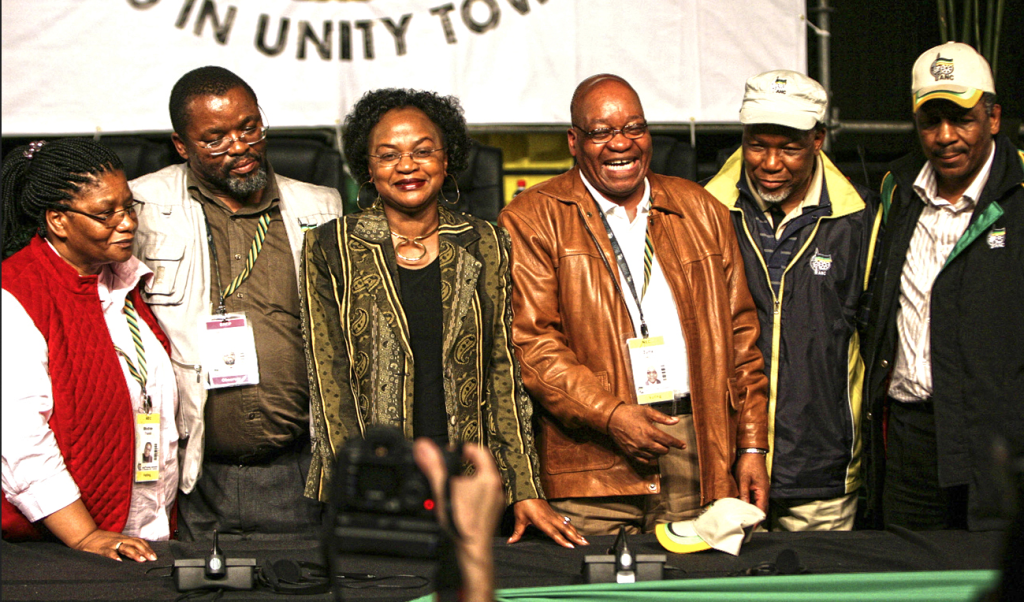
In 2012, then deputy president Kgalema Motlanthe stood as a “protest” vote against the Zuma Tsunami and the endemic corruption and State Capture that was beginning to be exposed.
Provinces with the highest ANC members in 2012 were KwaZulu-Natal, with 331,000 members, Eastern Cape, with 186,000 and Gauteng at only 135,000.
Mangaung paved the way for Cyril Ramaphosa to be elected deputy president of the ANC. Motlanthe was ousted for refusing to succumb to pressure from Zuma supporters for him to strike a “no contest” deal.
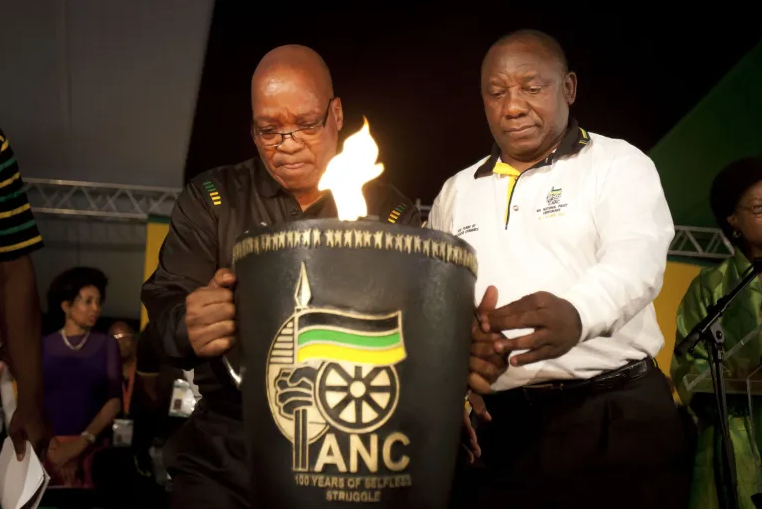
Ramaphosa returned to ANC politics after a long absence in business to prop up Zuma, making a formidable double-headed hydra.
“Operation Hibela” first came to light during court proceedings in the Tshwane Commercial Crimes Court, where one Morris Lesiba Selaki Tshabalala, aka “Captain KGB”, appeared on charges of fraud, theft and corruption.
Tshabalala was convicted for armed robbery in 1996, was never jailed and was rearrested only in 2013. While on the run, Tshabalala joined the elite SAPS crime intelligence unit, based in Erasmuskloof, east of Pretoria.
In 2013, he was arrested in a pre-dawn raid linked to a R3-million cash-in-transit heist in Sasolburg, Mpumalanga. He was later acquitted of the crime.
Tshabalala was implicated in a R200-million heist at OR Tambo International Airport in 2013, and was caught when he was arrested over the Sasolburg raid.
At his court appearance on 19 January 2018, state prosecutor Chris Smith revealed that Tshabalala had headed an intelligence operation at the ANC’s Mangaung elective conference and had been given a R50-million budget, which had not been accounted for.
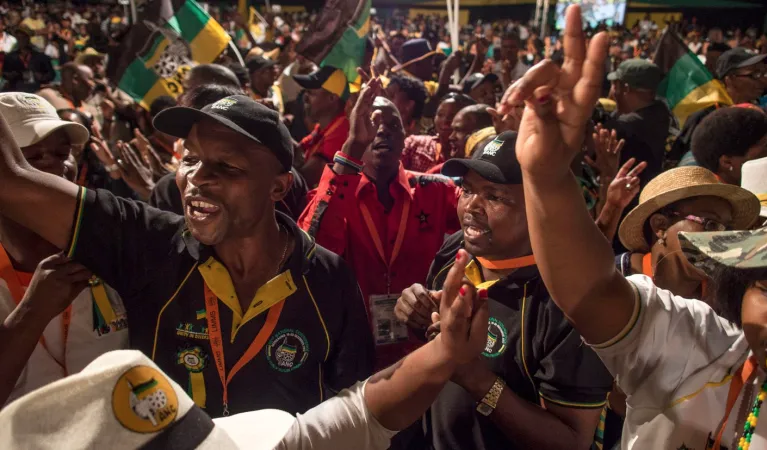
“In 2012, he was appointed as the head of an operation named Rapid Deployment Intelligence. The operation was established to conduct intelligence work for [the] Mangaung 53rd ANC conference, which took place in December 2012,” Smith told the court.
Tshabalala and a SAPS warrant officer, “Pope” Maluleke, were both part of Hibela.
Evidence at a bail application for Tshabalala was that Nkabinde had offered to testify on behalf of Tshabalala’s bid for freedom.
He denied this, however, and when the court provided him with an opportunity to counter the version of Tshabalala’s attorney, Nkabinde failed to pitch up.
In that instance, seasoned magistrate Nicca Setshogoe found that Nkabinde had withheld evidence from the court and that his version could not be trusted.
In 2015, Tshabalala was released on parole and in spite of being a convicted criminal, remained on the SAPS payroll, receiving a monthly salary. He re-enlisted with the Crime Intelligence undercover unit, the Independent Police Investigative Directorate (Ipid) later uncovered.
Enter Nkabinde
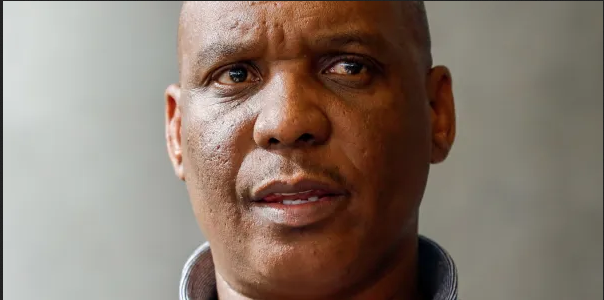
Nkabinde was an investigator at Ipid and, as General Mkhwanazi has testified, it was he who had informed him that he had met Mchunu when he was premier of KZN.
Nkabinde had been investigating a murder case in which Mchunu had been accused of interfering with the docket.
In 2014, Robert McBride was appointed to head Ipid, which is when the fireworks began, which led to his controversial suspension later in 2019.
Writing to then police minister Bheki Cele, McBride stated that Ipid had received a formal complaint from Mchunu himself regarding the murder of Zolani Nkosi, his protector.
A case of defeating the ends of justice was later registered at Empageni. It turned out the murder docket had been sent to the NPA, which had declined to prosecute. However, a Warrant Officer Mpangase had decided to reopen the matter, with no explanation. Mchunu had a target on his back, it seems.
Later, Nkabinde was to re-emerge when McBride, suspicious of all his colleagues at Ipid (and rightfully so), overlooked Nkabinde for an IT job which he contracted out to specialist Theresa Botha.
McBride was investigating acting national police commissioner Khomotso Phahlane at the time. Phahlane was dismissed in 2020.
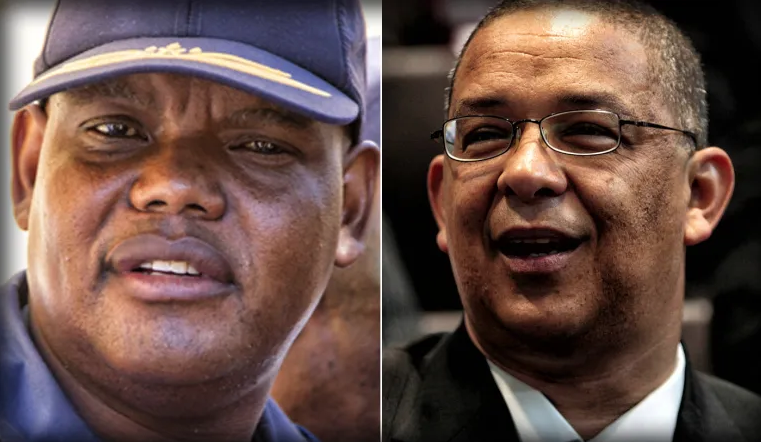
Nkabinde complained later about the employment of Botha to Cele, resulting in the decision in 2019 not to renew McBride’s contract.
Before this, Ipid had made several “bombshell” revelations to Parliament’s Standing Committee on Public Accounts (Scopa), which are worth revisiting at this crucial moment and as the ad hoc committee has called for secret hearings.
Nasrec, here we come
Concerning the ANC’s 54th conference at Nasrec, in 2018, Ipid told Scopa that in December 2017, it received a tip-off that R45-million would be redirected from Crime Intelligence to a supplier, Brainwave, trading as I-View Integrated Systems.
“The amount was alleged to be for the payment of a Grabber system, which is valued at between R7-million and R10-million,” said Ipid.
The money directed to I-View, however, said Ipid, “was in fact to be laundered for the buying of votes at the ANC conference”.
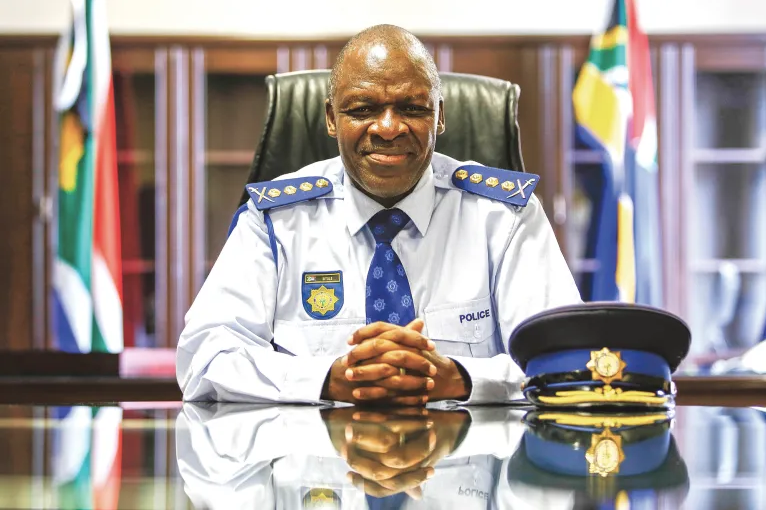
An investigation confirmed that the transaction was being “pushed at all costs”. Ipid had contacted former police commissioner General Khehla Sitole and had asked for the payment to be stopped. Video footage had been obtained of a meeting between SAPS officials and the supplier.
Later, after SAPS had been unwilling to declassify the documents, the matter was taken to court by Ipid. This resulted in Sitole being found guilty of a “breach of duty”.
A scathing judgment, handed down on 13 January 2021 by Judge Norman Davis in the Gauteng Division of the High Court in Pretoria, found that Sitole and his two deputies, Francinah Vuma and Lebeoana Tsumane, had placed the interests of the governing party, the ANC, ahead of those of the country.
Back in 2108, a report titled State of Procurement Spent in National and Provincial Departments, tabled by then finance minister Nhlanhla Nene in Parliament in April, showed that the SAPS was the largest procurer among national departments, responsible for R17.8-billion of the R79-billion spent on procurement nationally in the 2016/17 financial year.
It is this pot of gold that some seem to have dipped into to prop up the ruling party. The man who sits at the centre of these allegations is the elephant in the room, Jacob Zuma.
Members of his newly established party, MK, the official opposition, sit on the police ad hoc committee. This is reason enough for all the hearings to be open and transparent. DM
In an age of information overload, Sunrise is The Namibian’s morning briefing, delivered at 6h00 from Monday to Friday. It offers a curated rundown of the most important stories from the past 24 hours – occasionally with a light, witty touch. It’s an essential way to stay informed. Subscribe and join our newsletter community.

The Namibian uses AI tools to assist with improved quality, accuracy and efficiency, while maintaining editorial oversight and journalistic integrity.
Stay informed with The Namibian – your source for credible journalism. Get in-depth reporting and opinions for
only N$85 a month. Invest in journalism, invest in democracy –
Subscribe Now!