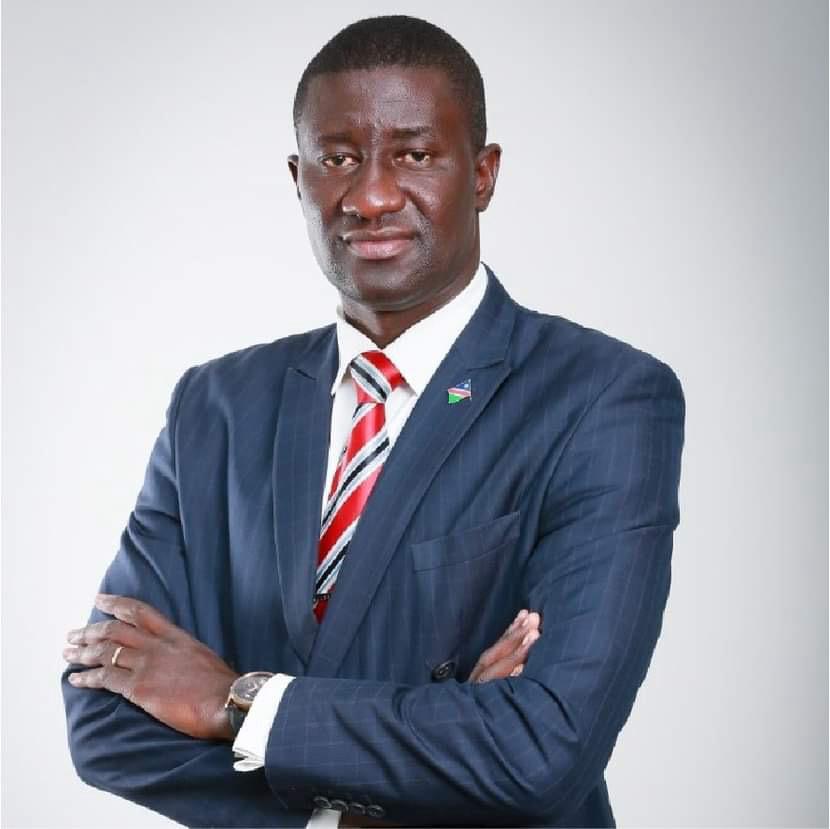
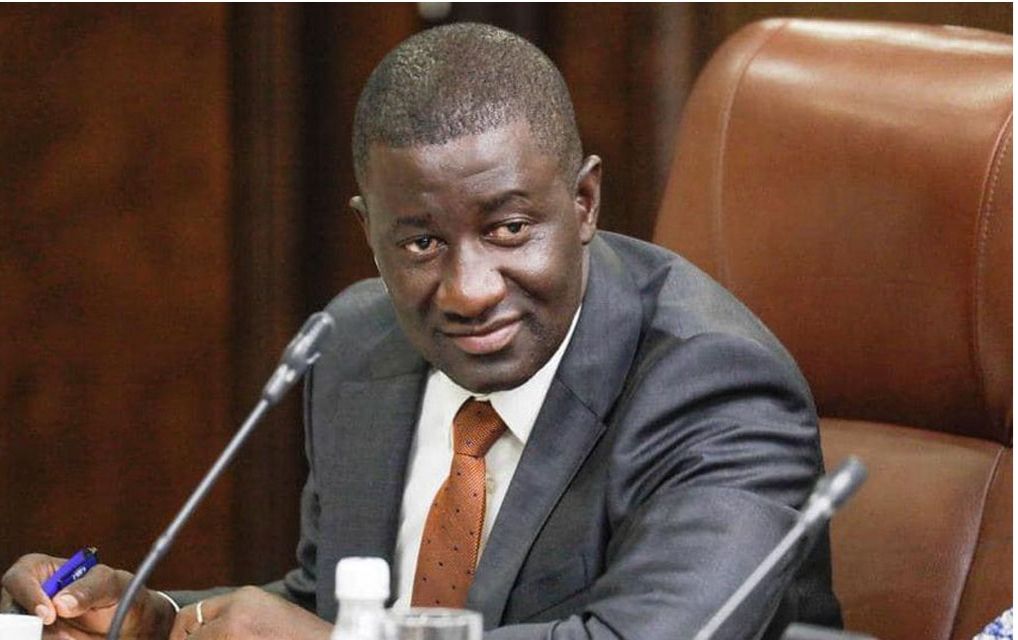
EXPECTATIONS are high as minister of finance and public enterprises Iipumbu Shiimi tables the national budget for the 2023/24 financial year this afternoon.
Today’s budget comes at a time that Namibia grapples with economic hardships, compounded by increasing interest rates and soaring food prices.
The minister is allegedly dedicating the new fiscal year’s budget to pensioners, domestic workers and labourers under the theme ‘Economic Revival and Caring for the Poor’.
Sources claim Shiimi has invited these groups to accompany him to the parliament this afternoon.
Commentators are cautious, however, speculating that the Swapo-led government may use the budget as a campaign tool for next year’s elections.
Shiimi tabled a N$70,7 billion budget for the 2022/23 financial year, with government spending projected in last year’s budget to increase to N$73,6 billion in 2023/24.
POWER AND POLITICS
“I think we must acknowledge that we are moving closer to the elections in 2024. So the ruling party will most probably use this budget as an election tool.
“So you will see some rhetoric that basically speaks to what the ruling party intends to do to win the elections,” Rally for Democracy and Progress (RDP) parliamentarian Mike Kavekotora says.
“Some resources will be allocated to electioneering, and I would expect that the youth would feature prominently, because the ruling party knows that come 2024, the youth will be a significant number of people,” he told Desert Radio yesterday.
Kavekotora’s sentiments were earlier echoed by University of Namibia associate professor Lesley Blauw, who advised opposition parties to ensure the government does not make unpopular economic decisions in the run-up to next year’s elections.
Speaking at a retreat for the Landless People’s Movement last month, Blauw said with the global economy expected to remain subdued, governments in Africa, including Namibia’s, may be forced to implement unsustainable economic policies to remain in power.
“We have elections next year and we all know what politicians do when we have elections,” Blauw said.
Meanwhile, Kavekotora said he expects the budget to prioritise agriculture and social welfare programmes.
“I still believe the ministries that are responsible for the social good of the society need to have a restructured budget and perhaps an increase in budget allocation.
“Ministries responsible for things such as housing need a significant increase to ensure that social housing is actually delivered.
“The ministry responsible for agriculture needs to be given enough resources to facilitate food security.
“They have to make sure they put systems and processes in place to ensure that Namibia becomes food [self] sufficient.
“The Ministry of Health and Social Services as well . . . We have seen a lot of dilapidated hospitals and Namibians are still walking long distances to reach the nearest clinics after independence,” he said.
EMPLOYMENT CREATION
Rinaani Musutua from the Economic and Social Justice Trust hopes the budget will focus on employment creation.
“I think it is important to focus on things that help us create employment. We really need to start focusing on industrialising this country. That is the best way to tackle the high unemployment rate – especially among the youth,” she recently told Desert radio.
Meanwhile, Musutua also called for the prioritisation of agriculture and social safety net programmes.
“I would like to see, for example, the Ministry of Agriculture, Water and Land Reform getting a fair share of the budget, so we can start producing our own food, and in that way also start improving industrialisation.
“Otherwise we will be shocked by external forces,” she said.
“When you look at the total amount the agriculture ministry has been receiving, it is so much lower than for example the Ministry of Defence and Veterans Affairs and the Ministry of Home Affairs, Immigration and Safety and Security.”
President Hage Geingob has themed 2023 the ‘Year of Revival’ to enhance competitiveness in all areas.
As a result, Musutua said the government should reconsider a basic income grant.
“If the government continues to ignore social welfare policies and not spend much on them as needed, the minister just sends a signal that this country’s resources belong to a certain group of the population only,” she said.
It is expected that the country’s debt would balloon to N$140 billion.
Public debt stood at N$135,7 billion at the end of September 2022, of which N$101,5 billion is domestic debt and N$34,2 billion foreign debt, according to the Institute of Public Policy Research (IPPR).
The finance ministry expects this to reach 69,6% of Namibia’s gross domestic product (GDP) during 2022/23, peaking at 71% in the 23/24 financial year, before declining somewhat to 69,8% of GDP in the 2024/25 period.
HOPE PREVAILS
Other than pensioners being promised an increase in benefits during the mid-term budget review, it remains to be seen what domestic workers and labourers will be promised in the fiscal year ahead.
The country’s farmers are hoping the budget would enable especially communal farmers to make a decent living from their enterprises.
Namibia National Farmers Union (NNFU) acting secretary general Kunibeth Shamathe says: “The government should allocate more financial resources to the agricultural sector to tackle the numerous challenges the sector faces, including job creation and ensuring food security.”
His sentiments were echoed by Michael Mulunga, a poultry producer who runs National Poultry Enterprise outside Windhoek.
He expects the minister to present a people-centred budget which would alleviate poverty and create youth employment through agriculture.
Mulunga, who is a member of the Poultry Producers Association, says although the association has not been consulted on the budget, it expects the government to allocate more money towards making green schemes more sustainable and productive.
“We hope to see subsidies in the poultry and horticultural sectors,” he says.
SMALL BUSINESS OWNERS
Johannes Shiwombolo, the owner of Absolute Cleaning Solutions, a company that manufactures and sells cleaning materials in Windhoek’s northern industrial area, says the minister should allocate funds to more development projects to create jobs.
“At times giving small and medium enterprises (SMEs) money alone does not help, because they end up using the money on other things, even buying food. However, giving them work could sustain and grow their small enterprises.
“If I could get tenders to supply cleaning materials to, say, supermarkets, this could sustain my small business more than when I just get a grant,” he says.
The executive director of the Namibia Informal Traders’ Association, Tangeni Shindondola, says they are not expecting much for informal traders in the budget, since they have not been consulted on it.
“Most budgets do not address the issues at hand,” she says.
Shindondola says the most glaring shortcoming in budgets is a lack of accountability, transparency and clarity.
“Ministries have budgets, but issues are not addressed. Schools have no desks, and hospitals do not have medicine, but nobody knows where the money allocated to goes,” she says.
Shindondola says the Ministry of Industrialisation and Trade has policies to promote SMEs to turn Namibia into an industrialised nation, but these are not being implemented.
Economist Theo Klein says improved tax revenue collection is expected.
In October, revenue was at 51% of the budgeted target, which was the highest in the last three financial years.
It can therefore be that revenue comes in higher than initially expected.
Since it is an election year, Klein said whether we see an increase in public wages remains difficult to say.
“On the one hand fiscal space to do so is limited, but political pressure may be heightened due to the election on the other hand,” he says.
Klein says income tax rates will remain unchanged, with no new tax benefits to be announced either.
FROM THE SOCIALS
Meanwhile, many Namibians have aired different views on their expectations on social media.
Heikki Nauyoma commenting on Facebook, says: “I am expecting the honourable minister of finance to budget more to the agriculture sector and education . . . If our country starts funding this sector more, we will be boosting our economy fast and creating more employment for the youth . . . “
Ventislaus Katiti says: “The ministry of education should be given enough funds so schools are renovated and rebuilt to standard, and the government must buy stationery so that we move away from letting parents do all the buying.”
Silke Ahrens says: “A dedicated section to availability of orphans and vulnerable children grant payments … Plans for safe houses. Plans for rolling out awareness campaigns on the Child Protection Act.”
In an age of information overload, Sunrise is The Namibian’s morning briefing, delivered at 6h00 from Monday to Friday. It offers a curated rundown of the most important stories from the past 24 hours – occasionally with a light, witty touch. It’s an essential way to stay informed. Subscribe and join our newsletter community.

The Namibian uses AI tools to assist with improved quality, accuracy and efficiency, while maintaining editorial oversight and journalistic integrity.
Stay informed with The Namibian – your source for credible journalism. Get in-depth reporting and opinions for
only N$85 a month. Invest in journalism, invest in democracy –
Subscribe Now!