




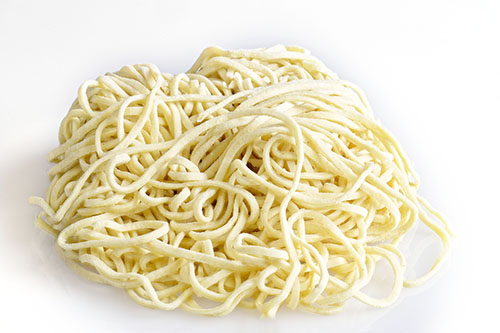
I am going through a ramen craze at the moment. Usually, when I am amidst one of these temporary stages of food compulsion and obsession, I repeat the same dish over and over: morning, noon, night and in-between.
This time each dish is different except they all contain noodles, of course.
For those not in the know: ramen is a Japanese soup and noodle dish. Although the exact origins of ramen are unclear and contested, its early names seems to contain reference to China: shina soba or chuka soba. After Momofuku Ando invented instant noodles in 1958, ramen became a truly global food. All we now had to do was add boiling water.
There are quite a few styles of ramen (Shio, Tonkotsu, Shoyu and Miso) with important regional variations and a bewildering variety of toppings (scallions, sprouts, eggs, pork, chicken, corn, etc.). But this is not the focus of our writing here. Today, it is all about the noodles.
Most Namibians’ ramen experience comes from a two-minute packet, i.e. instant noodles. Despite our growing Chinese community, fresh noodles are hard to come by, unless you have the right connections, of course (after all, this is Namibia).
Thus, I embarked on this culinary journey to make my own, fresh ramen noodles. This, dear reader, is my progress thus far.
Two seemingly unrelated incidences put my on this path. Both occurred in Hong Kong, and both have stewed in my subconscious until now.
Incident 1: I watched a young chef make hand-pulled noodles for about an hour. It was mesmerising: how he manipulated the dough by twisting and stretching it; slamming and pulling it. Everything was sheer food poetry in motion, and the noodles were outstanding. Chewy. Right there I decided that, one day, I’d figure out how to make these noodles. It would have saved my endless frustrating hours if I’d simply asked him to show me.
Incident 2: A few years later when passing through Hong Kong once more, I went on an extended noodle binge that lasted nearly a week. Health issues aside, it was the texture of the noodles that fuelled my desire. It was nothing like any other noodle I have tasted before. Yet it was out of reach. No packet of dried noodles tasted like that. Over the years I must have bought hundreds of packets, all of them good, but nevertheless disappointing. Perhaps it would have helped if I could read the text on the packets and knew what I was looking for.
It turns out that I was looking for noodles made with kansui or alkaline salts. Kansui is made from three ingredients: sodium carbonate, potassium carbonate and sodium biphosphate dodecahydrate. Holy moly! Try and find these in Windhoek!
My quest for proper homemade ramen noodles thus ended in raging disappointment, sprinkled with hard-to-find kansui.
Until just recently…
Pinched with the tongs of desperate desire for ramen, I dived drunk with frustration and madness into a kansui finding mission. Short of a few chemical recipes and options to buy 50-kilogramme bags on-line, I once more came up empty.
In an unrelated search, I consulted Harold McGee’s website curiouscook.com. Harold writes about the science of food and cooking and is the man Heston Blumenthal consulted on how to prevent green vegetables from going dull and grey when cooked. He is also the food writer for the New York Times.
I will say this only once: if you are someone who is interested in the scientific elements of food and cooking, or someone who is naturally curious about food and cooking, you should make extraordinary effort to follow the work and writing of Harold McGee. Finish-en-klaar.
McGee’s solution is very simple: bake your baking soda. Bet this thought never crossed your mind! Makes me wish I had paid more attention in science class all those years ago, or better even, that I had consulted McGee a lot sooner.
Baking soda is one of the few alkalis that we use in the kitchen. Unlike their chemical opposites – acids – most of us will not have used alkalis such as lye for example. I bet that you did not know that the same substance that you use to clean your household drains is also used to make pretzels or Oreo cookies, for example.
Note: Now is a good time to inform you that lye is very strong and corrosive and that it should be handled with protection and care. Baked baking soda is milder but can still irritate skin so it is best not to handle it directly.
McGee explains the chemistry of baking baking soda as follows: “Baking soda is sodium bicarbonate, which already includes one proton and so has a limited ability to take up more. But if you heat baking soda, its molecules react with one another to give off water and carbon dioxide and form solid sodium carbonate, which is proton-free”. This means that you are creating a stronger alkali and one that is safer to use (than lye for example) from something that is already in our kitchen cupboards. If stored away from moisture in an airtight container, it could be kept almost indefinitely.
Fuchsia Dunlop, celebrated writer of Chinese cuisine, wrote that baked soda is a common ingredient in some parts of China where it is known as jian. I searched online for references to the use of jian, but found only links to a man who was accused of choking and slapping women, so I abolished my search immediately. It can wait for another day.
A far more meaningful discovery was that the dough for hand-pulled noodles also contains kansui, meaning that my two noodle longings do have something in common. Now all that remains for me to do is to become really good at making chewy, stretchy noodles, and that quest starts today.
Alkaline Semolina Noodles a la Harold McGee
Ingredients
• 4 tablespoons baking soda
• 1 1/2 cups semolina flour
• 6 1/2 tablespoons water
• Place the baking soda on a piece of foil and bake
in a 120ºC oven for an hour.
• Put the flour in a food processor. Dissolve one
In an age of information overload, Sunrise is The Namibian’s morning briefing, delivered at 6h00 from Monday to Friday. It offers a curated rundown of the most important stories from the past 24 hours – occasionally with a light, witty touch. It’s an essential way to stay informed. Subscribe and join our newsletter community.

The Namibian uses AI tools to assist with improved quality, accuracy and efficiency, while maintaining editorial oversight and journalistic integrity.
Stay informed with The Namibian – your source for credible journalism. Get in-depth reporting and opinions for
only N$85 a month. Invest in journalism, invest in democracy –
Subscribe Now!



