



The Office of the Auditor-General has unearthed a series of non-compliance issues and unexplained alleged financial mismanagement at the Kavango East Regional Council.
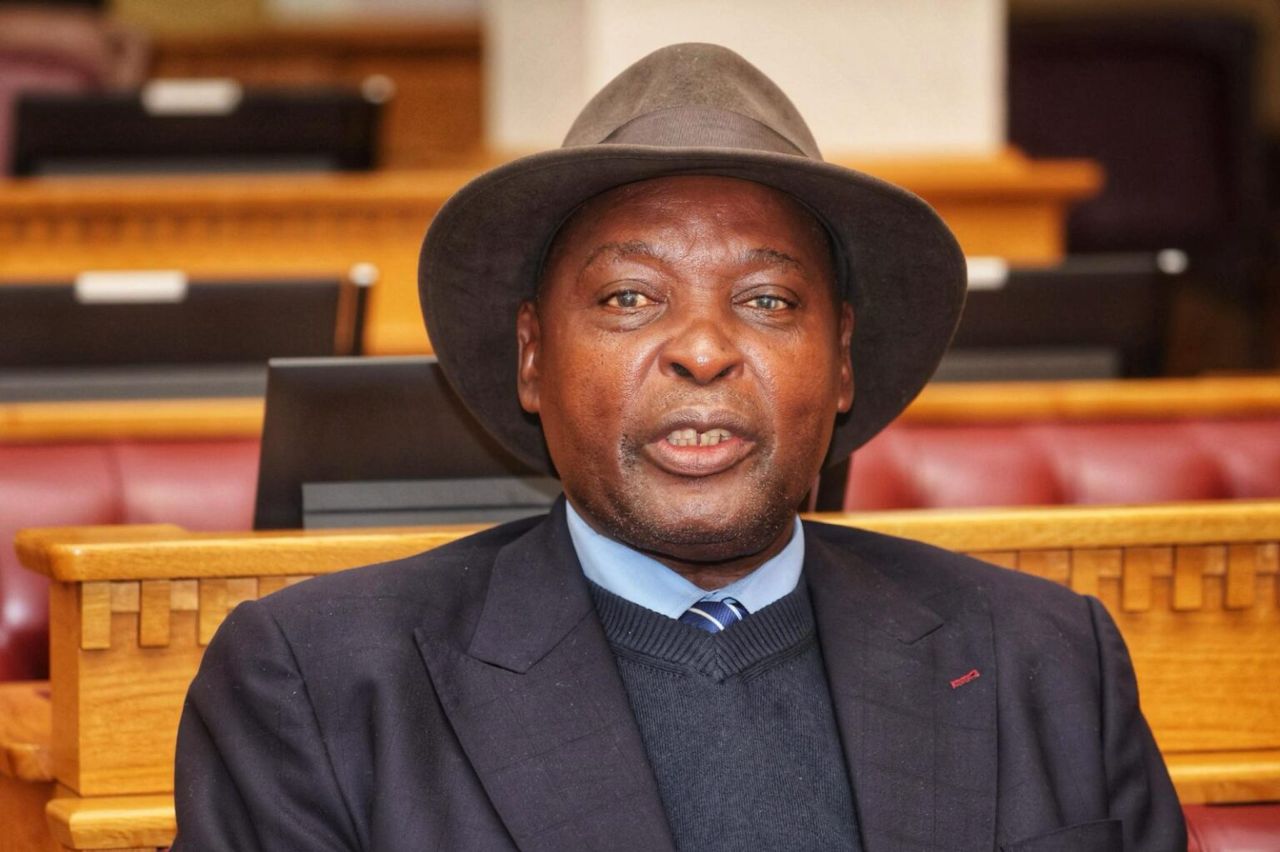
Auditor general Junias Kandjeke, in his latest audit report into the council’s financial statements for 2019, tabled in parliament recently states that the financial reporting framework used by the council is not appropriate for a public interest entity.
Kandjeke gave the council an adverse audit opinion for not being presented fairly in all aspects.
“In my opinion . . . the financial statements do not present fairly, in all material respects, the financial position of the Kavango East Regional Council as of 31 March 2019, and its financial performance and cash flows for the year then ended in accordance with international financial reporting standards,” Kandjeke said.
He said the council’s financial statements were not presented in accordance with the Ministry of Urban and Rural Development as per its circular of September 2019.
In 2019, the ministry distributed out a circular to regional councils and local authorities to adopt the International Public Sector Accounting Standards (Ipsas) for implementation.
“We have not received the report from the AG. In actual fact, when the report was tabled, we were supposed to be given that report also,” said the council’s chief regional officer Ludgela Nangura when contacted for comment on Tuesday.
“We are only going to respond when we have received the report and through the right channels,” she said telephonically after questions were sent to council.
The AG’s audit report unearthed unexplained retained earnings amounting to N$ 21,9 million without any detailed explanation or supporting information provided in relation to the adjustments.
The notes of the report indicated that there were certain omissions, resulting in errors in the 2018 financial year.
Total retained earnings of N$21,9 million were used to make the adjustments, the report says.
“It is recommended that the council should ensure that journals are provided by the council and that it provides supporting information for all the adjustments made, as well as all journals,” Kandjeke recommended.
He said there was no indication that the adjustments were approved by the council.
Some of the non-compliance issues were the failure to enact a strategic plan, submitting its old strategic plan for 2017-2022, its extended strategic plan for 2022-25, its annual plan for 2023/24, and its annual reviews for 2022-23.
Additionally, Kandjeke said although these documents were submitted by 15 March, they were not approved, and as a result auditors could not perform any tests on the implementation of the extended strategic plan for 2023-2025 or its effectiveness.
Kandjeke recommended that the council ensure that the extended strategic plan is approved and implemented as a matter of urgency, and that it adopt the financial reporting framework as directed by the minister of urban and rural development.
In compliance with other legal and regulatory requirements, it was established that the financial statements were only submitted on 11 November 2022, instead of three months after year-end, as required by the act.
In 2018, the council had a total income of N$59,2 million, a government subsidy of N$50,7 million, with a total expenditure of N$55,9 million, while in 2019 it was a different story.
Including government subsidies, the council had an income of N$54,3 million, made from royalties and dividends from the Northern Regional Electricity Distributor, 5% from the Rundu Town Council’s rates and taxes, and from the Road Fund Administration.
Its total expenditure was N$54,6 million, with a deficit of N$202 395.
Looking further into Kandjeke’s report, the council’s current assets convertible into cash stood at N$47,6 million in 2018, and N$50,6 million in 2019.
As of April 2018, the council’s non-current assets, including property, plant and equipment were at N$91 million, with unexplained accumulation of N$13 million, bringing it to N$103 million in 2019.
Its current assets were at N$46 million in 2018, and N$50 million in 2019, with an unexplained adjustment of N$3 million, bringing its total assets to N$151 million in 2018.
The council’s biggest expenditure is salaries.
In 2018, the council spent N$28 million on salaries, while in 2019 it spent N$ 27 million – almost half its income.
In an age of information overload, Sunrise is The Namibian’s morning briefing, delivered at 6h00 from Monday to Friday. It offers a curated rundown of the most important stories from the past 24 hours – occasionally with a light, witty touch. It’s an essential way to stay informed. Subscribe and join our newsletter community.

The Namibian uses AI tools to assist with improved quality, accuracy and efficiency, while maintaining editorial oversight and journalistic integrity.
Stay informed with The Namibian – your source for credible journalism. Get in-depth reporting and opinions for
only N$85 a month. Invest in journalism, invest in democracy –
Subscribe Now!