


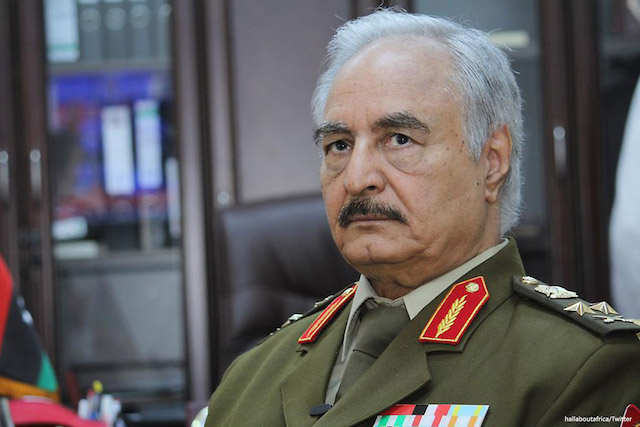
CAIRO — Libya’s warring parties will continue talks this month to try to reach a lasting ceasefire in a war for control of the capital Tripoli, the United Nations said on Saturday, after a first round in Geneva last week failed to yield an agreement.
The UN hosted indirect talks between five officers from the Libyan National Army (LNA) led by Khalifa Haftar, which has been trying to take Tripoli since April, and the same number from forces of the internationally recognised government in Tripoli. Fighting has calmed down since last month although skirmishes with artillery have continued in southern Tripoli, which the LNA has been unable to breach in its campaign. Both sides had agreed to continue the dialogue with the UN proposing a follow-up meeting on 18 February in Geneva, the UN mission to Libya (UNSMIL) said in a statement.
Johannesburg — The South African National Editors’ Forum (Sanef) has condemned the assault of a journalist allegedly by taxi association members. In the incident in Embalenhle, Secunda, last week, freelance journalist Desmond Latham as well as a female staff member from Frayintermedia and female Unicef employee were assaulted allegedly by members of a local taxi association. At the time, they were covering an ongoing dispute between the taxi association and a local bus company. “There has been no report about this [story], and we were attacked without warning… The police are involved because the Unicef person is from Brazil,” said Latham in a statement released by Sanef. “These men are punching women. They appear to be hired by the association. There was no anger or even a sign of any trouble before we were attacked. The taxi company is targeting reporters.”
YAOUNDE — There is tension in Cameroon’s anglophone regions ahead of parliamentary and local elections on Sunday. Separatist fighters have ordered a lockdown in the North-West and South-West provinces, the country’s English-speaking heartlands where there has been unrest for several years. Some residents have fled their homes to avoid any confrontation between the separatist militants and security forces. One resident of the south-western town of Kumba in South-West region said: “The town is very, very quiet. There are neither taxis nor motorcycles to transport people to their work stations. I live very far away. I am forced to walk several kilometres to reach my work. So I leave my house very early in the morning to start walking to work.” In Bamenda, the capital of the North-West region, a 36-year-old woman has left her home to seek refuge in the west of the country.
MAPUTO — People are fleeing a surge of attacks in northern Mozambique where witnesses have described beheadings, mass kidnappings and villages burned to the ground, the United Nations has said. United Nations officials said armed groups have stepped up assaults in Cabo Delgado province, where a rebellion by a group that espouses its brand of Islam as an antidote to what it describes as a corrupt ruling elite, has killed hundreds since it started in 2017. Displaced villagers have described killings, maiming, torture and destroyed crops, said Andrej Mahecic, the spokesman for the United Nations High Commissioner for Refugees. “They speak of men in particular being targeted and beheaded, and many, many reports of women and children … being kidnapped or simply disappearing,” he told a briefing in Geneva on Friday. In all, 100 000 people have been uprooted by the violence.
– Nampa-Reuters-Al Jazeera-BBC News
In an age of information overload, Sunrise is The Namibian’s morning briefing, delivered at 6h00 from Monday to Friday. It offers a curated rundown of the most important stories from the past 24 hours – occasionally with a light, witty touch. It’s an essential way to stay informed. Subscribe and join our newsletter community.

The Namibian uses AI tools to assist with improved quality, accuracy and efficiency, while maintaining editorial oversight and journalistic integrity.
Stay informed with The Namibian – your source for credible journalism. Get in-depth reporting and opinions for
only N$85 a month. Invest in journalism, invest in democracy –
Subscribe Now!