


It is time for Namibia and the rest of Africa to develop socio-economic measures that provide better value for our people and countries, other than relying on the gross domestic product (GDP) measure.
Here is why. Although GDP still serves as a tool to assist countries to mobilise aid and attract investors, it is time to find other measures that speak to the African context to quantify and measure our resources.
Namibia is one of the 193 countries that have adopted the United Nations Sustainable Development Goals (SDGs).
These goals have been incorporated into the fifth National Development Plan, and other development policies in the country.
In terms of the implementation of the SDGs, Namibia ranks 109/166, with a score of 64,3 in the world. This score is fairly good compared to other sub-Saharan African countries. Namibia, Malta, and the Bahamas also scooped the award for adopting effective approaches and methodologies in implementing the 17 SDGs at a national level.
This article will focus on goal 8 of the 17 goals and continue with the discussion on whether GDP is an effective measure for sustainable development and economic growth.
Goal 8 of the SDGs focuses on promoting inclusive and sustainable economic growth, employment and decent work for all.
According to the Implementation of Sustainable Development Goals in Namibia Voluntary National Review of 2018, Namibia is classified among the top 10 most unequal countries in the world.
The review further cited that although economic growth has been well recorded over the years, that growth does not have “commensurate employment opportunities, resulting in high unemployment rates and increased levels of inequality”.
With high unemployment and inequalities, Namibia cannot expect to see an increase in its GDP. Does that mean the country is not progressing?
There has been a growing dissatisfaction among scholars and economists, especially in developing countries, who felt that the GDP does not comprehensively measure the social or human developmental aspects that contribute to economic growth.
One of those experts was Mahhub ul Haq, a Pakistani economist, who invented the Human Development Index in 1990.
The index aimed to shift the focus from assessing a country’s growth from using economic statistics to social development outcomes.
It aimed to put people’s knowledge and skills, health, life expectancy, standard of living and the gross national income, as criteria for assessing the development of a country.
As useful as this index is, it was criticised for not assessing ecological sustainability, especially since human economic related activities are responsible for the increase in greenhouse emissions and biodiversity loss.
Then we also have the Multidimensional Poverty Index (MPI). This is an international measure, which looks at the multidimensional poverty factors affecting countries.
This measure is used in over 100 developing countries.
It measures acute deprivations in health, education and living standards that people face.
The targets in this index also do not comprehensively cover factors that are akin to developing countries, nor the natural environment.
The MPI consists of three dimensions of poverty, which are health, education and living standards.
Under the health dimension, nutrition, child morality and years of schooling are measured.
For education, years of schooling and school attendance are measured.
Under living standards, cooking fuel, sanitation, drinking water, electricity, housing and assets are measured.
Although these measures are noble, they do not consider variables that developing countries face.
Therefore, it will be worthwhile to either improve the variables that are measured or develop another index that is more inclusive.
If the MPI were to be more effective in measuring multidimensional poverty, then I believe they can be improved by adding additional indicators, such as access to quality medical centres with machinery like X-rays, access to mental health facilities and workers around the country, the number of mortuaries and their infrastructure quality, the number of child-headed home measures and number of quality tarred roads and streetlights in informal suburbs.
Going back to whether the GDP is an effective measure for sustainable economic growth: Well, the challenge with targets such as those set in goal 8 have adverse effects on the environment and natural resources.
Reducing greenhouse gas emissions within the 2 degrees Celsius will not be possible if Namibia wants to improve its GDP.
It is important to understand that what is measured can be managed. It is thus vital to develop comprehensive measures that speak to the Namibian ethos and context.
Canada, for example, has a measure called the Canadian Index of Well-being, used as a source of data to monitor how SDGs progress and how it impacts their people and the economy. What is stopping Namibian economists from coming up with a measure that suits our context?
Mahhub ul Haq has shown it can be done.
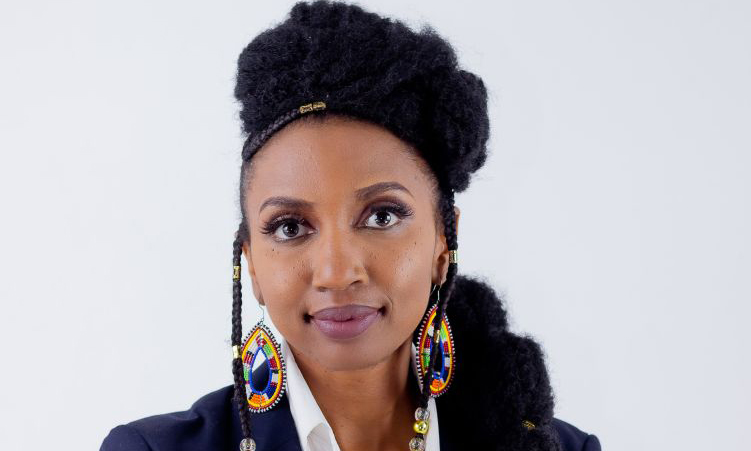
- Morna Ikosa is a seasoned communications and stakeholder engagement consultant with a specific affinity for sustainable development. Find her on LinkedIn, or email her at micommunicationscc@gmail.com
In an age of information overload, Sunrise is The Namibian’s morning briefing, delivered at 6h00 from Monday to Friday. It offers a curated rundown of the most important stories from the past 24 hours – occasionally with a light, witty touch. It’s an essential way to stay informed. Subscribe and join our newsletter community.

The Namibian uses AI tools to assist with improved quality, accuracy and efficiency, while maintaining editorial oversight and journalistic integrity.
Stay informed with The Namibian – your source for credible journalism. Get in-depth reporting and opinions for
only N$85 a month. Invest in journalism, invest in democracy –
Subscribe Now!